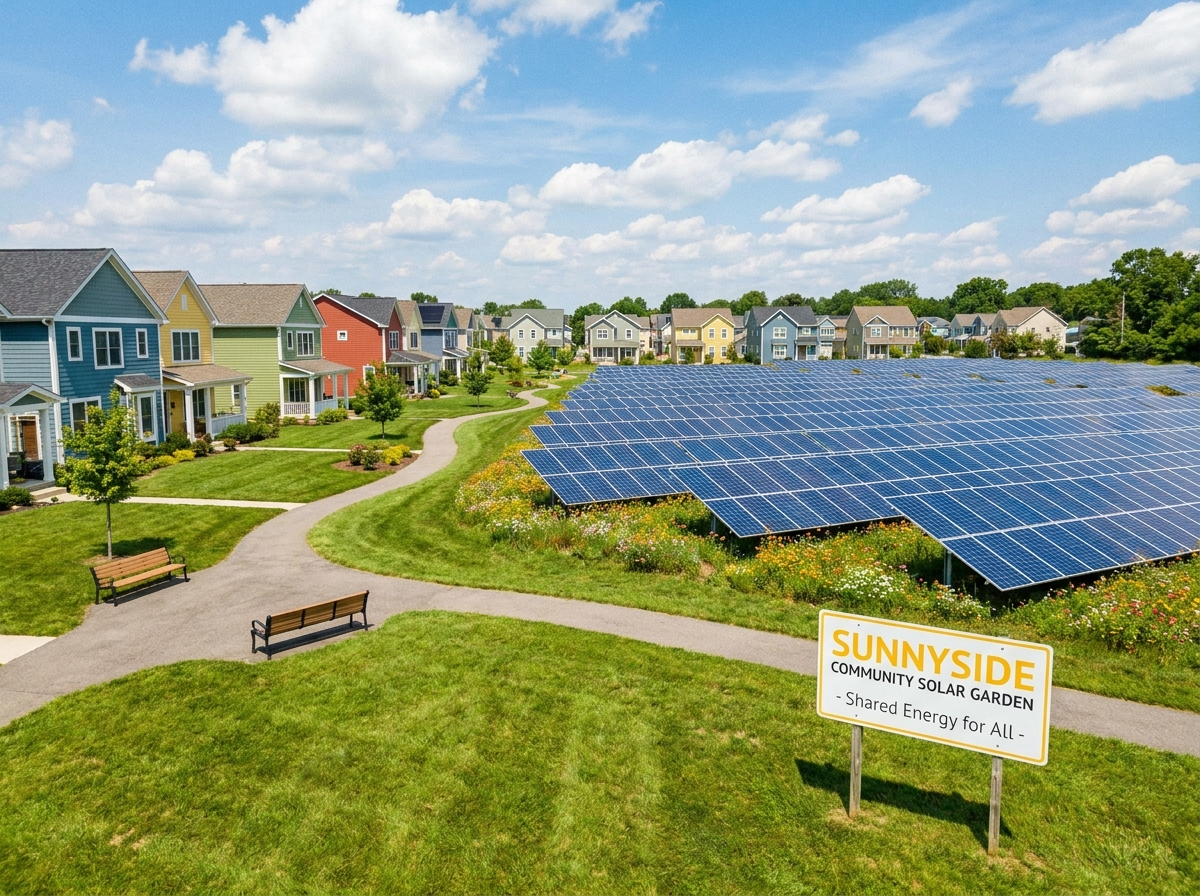
Community solar resolves the access problem that prevents a significant proportion of electricity consumers from participating in the renewable energy transition. Renters cannot install panels on rooftops they do not own. Apartment dwellers have no suitable roof area. Industrial tenants in leased facilities face landlord approval barriers. Households in bushfire-prone or heritage overlay zones may be excluded by planning rules. Community solar gardens cut through all of these constraints by locating generation where it is technically and economically optimal and distributing the financial benefit to subscribers through their existing electricity accounts.
Project Development and Site Selection
Viable community solar gardens require land with high irradiance, manageable network connection costs, proximity to the subscriber base, and a regulatory and planning environment that supports shared benefit arrangements. Apex Grid conducts full development feasibility assessments across all of these dimensions before committing to a project. We have developed community solar projects on council-owned land, underutilised agricultural parcels, commercial rooftops, and network-owned assets — each with a distinct ownership, financing, and subscriber management structure.
- Site identification and irradiance modelling using satellite-derived hourly datasets and on-ground validation
- Network connection pre-study and DNSP engagement to confirm connection capacity and anticipated works costs
- Planning and development approval management including agricultural land use consent, heritage overlay review, and flora and fauna assessment where required
- Financial modelling of subscriber economics under current and projected tariff structures including VPP participation scenarios
- LGC-eligible project registration and certificate generation for subscriber renewable claims
- Community engagement programme design including subscriber recruitment, information sessions, and ongoing reporting
- Virtual net metering and bill crediting mechanism design compatible with existing retailer billing infrastructure
Subscriber Economics and Bill Credit Mechanisms
Subscribers in a community solar garden receive a credit on their electricity bill proportional to their share of the garden's output. The mechanism varies by jurisdiction and retailer participation — in some markets this is a direct bill credit applied by the subscriber's existing retailer; in others it requires a switching arrangement to a retailer operating the virtual net metering scheme. Apex Grid designs subscriber arrangements to maximise simplicity of entry and exit, protect subscribers from stranded cost risk if they move premises, and deliver a genuine and measurable reduction in delivered energy costs.
Typical subscriber bill savings range from 20–30% on the portion of consumption covered by their garden share, depending on the garden's generation profile relative to the subscriber's load shape. Subscribers who over-allocate relative to their consumption can export excess generation to the grid under standard feed-in tariff arrangements. We model subscriber-level economics at P50 and P90 irradiance scenarios and disclose these projections clearly in subscriber agreements.
Ownership, Finance, and Community Models
Community solar projects can be structured across a wide range of ownership models. Apex Grid can act as developer-owner with subscribers holding long-term subscription agreements. Alternatively, the project can be structured as a community-owned cooperative or special purpose vehicle with Apex Grid providing development, EPC, and O&M services. Local government and community energy group clients increasingly favour co-investment structures where Apex Grid contributes development equity and the community entity holds a meaningful ownership stake. We design the ownership and governance structure to match the community's appetite for risk, return, and participation — not to maximise our own fee income.
Operations, Monitoring, and Subscriber Reporting
Community solar gardens require ongoing metering, generation reporting, subscriber allocation calculation, and coordination with retailers for bill credit application. Apex Grid operates a dedicated community solar management platform that handles all of these functions, producing monthly subscriber statements, annual LGC reports, and system performance summaries. We interface directly with retailer billing systems where automated data exchange is supported, eliminating manual data entry and the billing errors that undermine subscriber confidence. Operational performance is reported against contracted P50 generation benchmarks quarterly, with variance analysis and corrective action reporting where generation falls short of target.