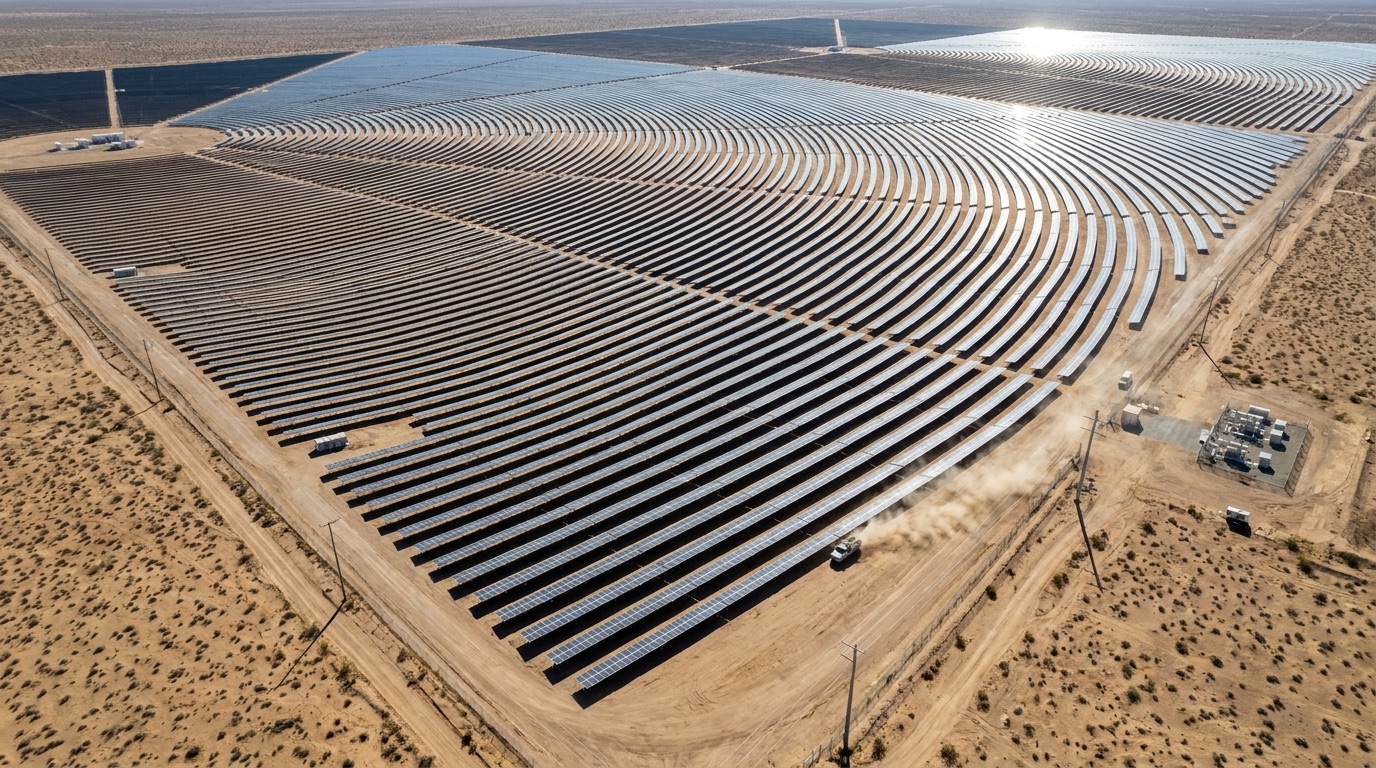
Utility-scale solar is an infrastructure asset class, not an energy product. The difference between a project that reaches financial close and one that stalls permanently in development is rigorous technical work at every stage: grid connection studies that reflect actual AEMO network constraints and not idealised assumptions, solar resource assessment using long-run satellite datasets combined with ground-station validation, and EPC contracts structured to the bankability standards that institutional debt and equity can underwrite. Apex Grid has in-house capability across every phase of this process. We are not a developer that outsources engineering to a third-party consultant, and not an EPC contractor that outsources development to a separate entity. Every function that determines project success sits under one roof.
Development and Grid Connection
Grid connection for utility solar in Australia is governed by the National Electricity Rules, the Generator Performance Standards (GPS) framework, and AEMO's connection process under Chapter 5 of the NER. Projects must demonstrate compliance with power system security standards including fault ride-through capability, reactive power range, and rate of change of frequency response. Detailed dynamic plant models must be submitted to AEMO and validated against real commissioning test data. Apex Grid carries all connection studies, GPS negotiations, and plant modelling in-house, reducing the development timeline by eliminating the handoff lag between developer intent and engineering execution that typically consumes six to twelve months in outsourced development programs.
- Site selection and solar resource assessment using SolarAnywhere, MERRA-2, and on-site ground-station data sources
- Transmission connection application management including REZ queue strategy, SIS, and connection capacity studies
- Planning and environmental approvals coordination across state and federal frameworks including EPBC Act referral
- Fixed-price or target-price EPC contracting with performance liquidated damages aligned to offtake requirements
- Single-axis tracker and fixed-tilt array design optimised for latitude, soil bearing capacity, and LCOE target
- High-voltage substation design and 132kV or 330kV transmission line construction management
- AEMO registration as a Market Generating Unit including GPS testing, compliance demonstration, and NEM registration
Offtake and Revenue Structuring
Utility solar revenue is driven by the spread between the contracted offtake price and the wholesale spot exposure retained by the project. Apex Grid's advisory desk structures offtake arrangements across corporate PPAs with ASX-listed and multinational counterparties, retailer offtake agreements, and state government renewable energy tender responses. We model revenue at P50 and P90 generation against both flat and time-shaped pricing structures, and stress-test the revenue stack against wholesale price cannibalisation as regional solar penetration increases toward constraint-limited conditions. Every project proceeding to debt finance receives a bankability assessment aligned to major infrastructure lender requirements, including an independent engineer review process that we coordinate and project-manage end-to-end.
EPC Delivery and Commissioning
Apex Grid executes utility EPC contracts under a fixed-price lump-sum or target-price structure depending on risk allocation preferences established during commercial negotiations. Our construction methodology uses modular DC block design — typically 5MW to 20MW per block depending on inverter platform — to allow parallel string commissioning and early energisation of completed blocks while the remainder of the array is still under construction. This compresses the period of construction finance draw and accelerates time-to-revenue. All projects are commissioned in compliance with IEC 62446-1, with string-level IV curve tracing documented across 100% of strings prior to practical completion. Thermographic inspection of combiner boxes and AC wiring is completed within the first three months of operation.
Post-commissioning, Apex Grid operates a 25-year O&M program covering scheduled preventive maintenance, vegetation management, single-axis tracker drive and actuator servicing, central and string inverter health monitoring, transformer tap inspection, and substation maintenance in accordance with the relevant network connection agreement. Performance is benchmarked against the P90 generation model used in the project's lender debt service cover ratio calculations, with monthly reporting delivered to project owners, senior lenders, and offtake counterparties in a standardised format. Apex Grid retains a financial interest in project performance through our O&M contract structure, which directly aligns our operational incentives with the long-term asset performance targets set at financial close.