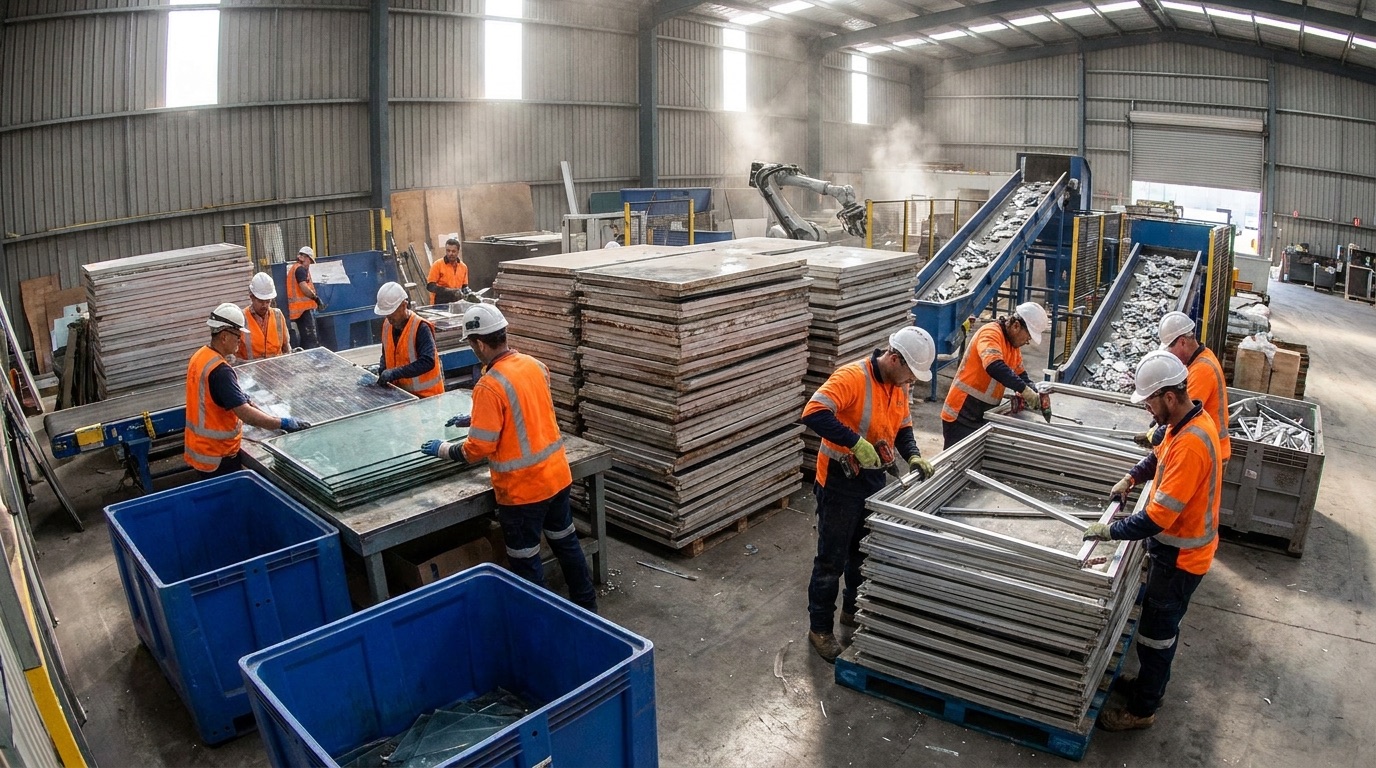
The solar industry installed hundreds of gigawatts of capacity between 2005 and 2020. The first wave of those panels is now approaching end-of-life. Crystalline silicon modules degrade at 0.5–0.8% per year under standard conditions, but hail damage, delamination, PID, and junction box failures routinely push utility-scale arrays into economic replacement territory before the 25-year mark. What happens to those panels is no longer an afterthought. It is a regulatory obligation in multiple jurisdictions and an increasingly material ESG disclosure requirement.
What We Recover
A standard crystalline silicon module contains recoverable aluminium framing, tempered glass, copper interconnects, silver contact paste, and silicon wafer material. Thin-film modules — CdTe and CIGS variants — contain cadmium, tellurium, indium, and gallium compounds that require specialist hazardous material handling. Apex Grid's processing facilities handle both module types under EPA-licenced conditions.
- Aluminium frame removal and smelter-grade recovery — 100% of framing material directed to secondary aluminium producers
- Tempered glass cullet separation for glass manufacturing feedstock — 90%+ recovery rate
- Silver and copper conductor reclaim via certified precious metal refinery pathway
- Silicon wafer material processing for secondary semiconductor and metallurgical silicon markets
- CdTe and CIGS thin-film module processing under EPA-licensed hazardous waste protocols
- Inverter, combiner box, and balance-of-system component processing and resale or material recovery
- Chain-of-custody documentation compliant with Product Stewardship Act reporting obligations
Field Decommissioning and Logistics
Apex Grid does not subcontract decommissioning field work. Our crews hold electrical contractor licences and work under safe work method statements approved for utility-scale DC systems, including string and central inverter disconnection, earthing continuity verification, and high-voltage cable removal. We coordinate directly with DNSPs for connection point isolation where grid connection agreements require network notification of decommissioning activity.
Transport from site to processing facility is conducted in compliance with dangerous goods transport regulations for partially degraded modules, which can exhibit residual voltage under ambient light conditions. Vehicles are fitted with light-blocking load covers and manifest documentation accompanies every consignment from pickup to facility gate.
Compliance Documentation and ESG Reporting
Asset owners operating under voluntary net-zero commitments, institutional ESG frameworks, or Power Station Operator licence conditions require auditable evidence that decommissioned panels have been disposed of responsibly. Apex Grid issues a Certificate of Responsible Disposal for every decommissioning project, supported by EPA consignment tracking numbers, processing facility weight receipts, and material recovery statements. Documentation packages are formatted to satisfy GRI 306 waste disclosure requirements and are accepted by major ESG assurance providers without additional audit steps.
Refurbishment and Module Resale
Not every module removed from a utility-scale array is at end-of-life. Panels removed during capacity upgrades, hail damage replacements, or early project repowering may carry 10–15 years of remaining useful life. Apex Grid tests, grades, and remarketed serviceable modules through our secondary market platform — with proceeds credited against the cost of decommissioning services. This reduces net project cost and extends the productive life of embedded energy and materials.