Most conversations about energy in commercial buildings go straight to solar. Before you commit to a generation asset, you need to know what your actual consumption pattern looks like and how much of it is simply waste. Efficiency measures consistently deliver faster payback than generation, and they reduce the system size you need if you do decide to add solar later.
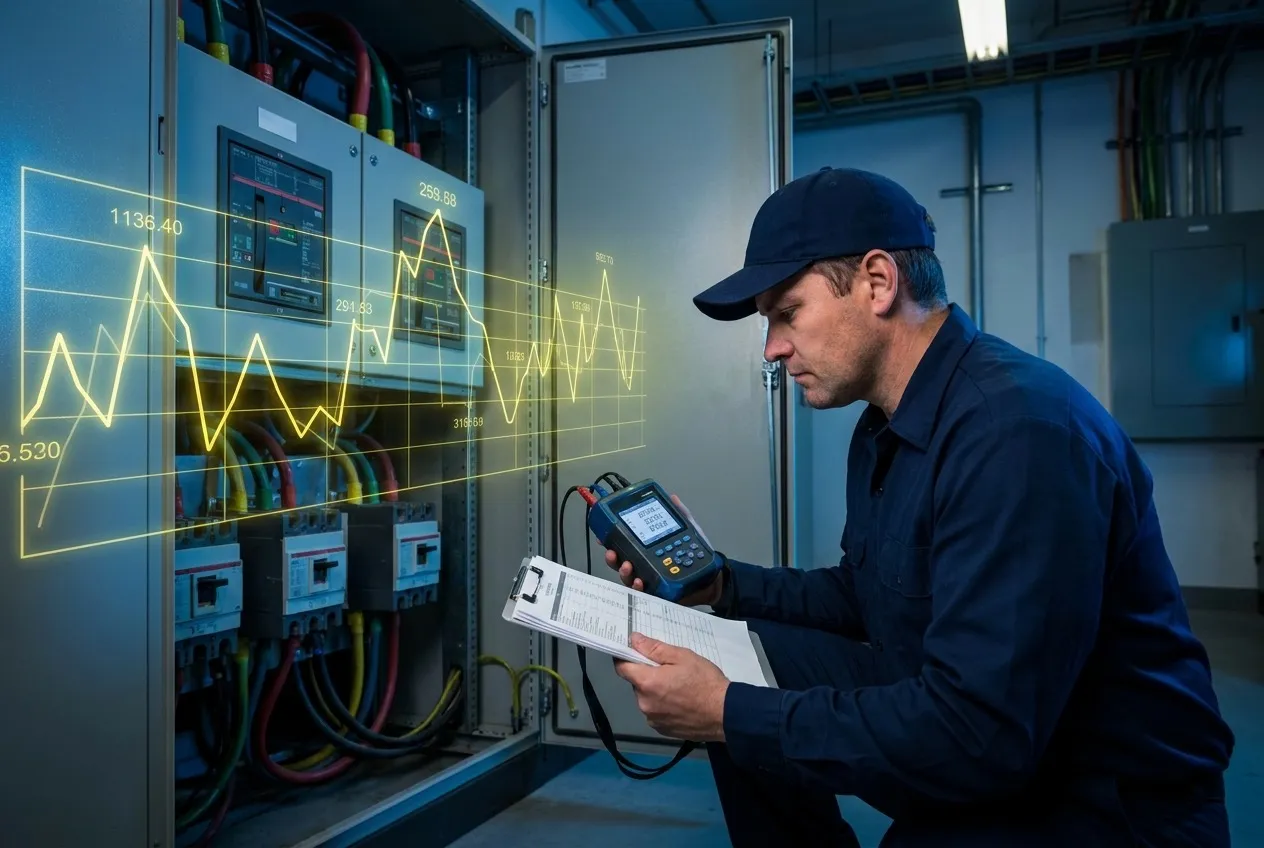
MetroPulse Electric carries out metered energy audits using data loggers, power analysers, and your existing interval meter data. We do not produce generic reports based on floor area benchmarks. We measure what is actually happening on your circuits and give you findings grounded in evidence.
What a metered energy audit actually measures
- Half-hourly interval data analysis to identify demand peaks, base load, and out-of-hours consumption
- Lighting load metering and lux level assessment against AS/NZS 1680 design standards
- Power factor measurement and reactive power cost analysis against your network tariff
- Sub-circuit logging to identify high-drain equipment and standby losses
- HVAC load profiling and comparison against hours-of-use records
- Motor load efficiency assessment for pumps, fans, and compressors on industrial sites
- Demand charge analysis and peak-demand reduction opportunities
Every measurement is timestamped and traceable. The data sits behind every recommendation in our report, so you are not being asked to trust a rule-of-thumb — you are looking at what your building actually drew at 2 am on a Tuesday.
Lighting: consistently the fastest payback
In most commercial and strata buildings, lighting accounts for 20 to 40 percent of total electrical consumption. Older T8 fluorescent systems running on magnetic ballasts, decorative lighting on continuous circuits, and car park or external lighting without adequate sensing are all common sources of significant waste. We measure actual wattage drawn per circuit and compare it to what an LED equivalent would consume under the same schedule.
We also assess lighting controls — occupancy sensors, daylight harvesting, and zone switching. A well-designed LED upgrade with appropriate controls can cut lighting energy by 60 to 75 percent, and in strata common areas those savings flow directly to the owners corporation's operating budget.
Power factor and demand charges: the hidden line items
Many commercial and industrial customers pay demand charges based on their peak kilowatt demand in each billing period. A single high-demand event — a large motor starting, a compressor cycling on at the same time as the HVAC — can set the billed demand for the entire month. Power factor correction reduces reactive power draw and can dramatically cut network charges on some tariff structures.
Our audit identifies whether power factor correction is economic for your site, what size and connection point is appropriate, and what the payback period looks like against your current tariff. We provide calculations based on your actual tariff rates and measured power factor, not industry averages.
The ranked payback list: where to spend first
Our audit report delivers recommendations ranked by estimated payback period, from the fastest to the longest. Behavioural and control changes with zero capital cost come first. Low-cost hardware changes — sensor retrofits, timer adjustments, setpoint corrections — come next. Capital items like LED upgrades, power factor correction, and motor replacements follow, each with a calculated simple payback based on your current tariff.
We also identify whether solar generation makes sense at your site and what system size would be justified after efficiency measures are applied. A building that has addressed its waste load needs a smaller solar system to reach the same net position — meaning efficiency and generation together deliver more value than generation alone.
Frequently asked
A solar quote tells you what size system you would need to offset your current consumption. An energy audit tells you what your current consumption actually looks like, where it is coming from, and how much of it is unnecessary. Auditing first means you address waste before you size a generation asset, which almost always results in a smaller and therefore cheaper solar system delivering the same net outcome.
Ideally we want 12 months of interval meter data from your DNSP or retailer, your current electricity bills showing tariff structure and any demand charges, and a basic floor plan or tenancy schedule showing operating hours. If interval data is not available, we install data loggers as part of the audit process. The more billing history we have, the more precisely we can quantify the financial benefit of each recommendation.
Consistently, yes. Common-area power is one of the largest and most controllable items in a strata levies budget. Lighting in car parks, corridors, lobbies, and external areas, along with pump and lift loads, are almost always carrying significant efficiency improvement potential. Reductions in common-area consumption flow directly to the owners corporation's quarterly expenses, and the audit provides the documented justification for any capital expenditure approved through a general meeting.