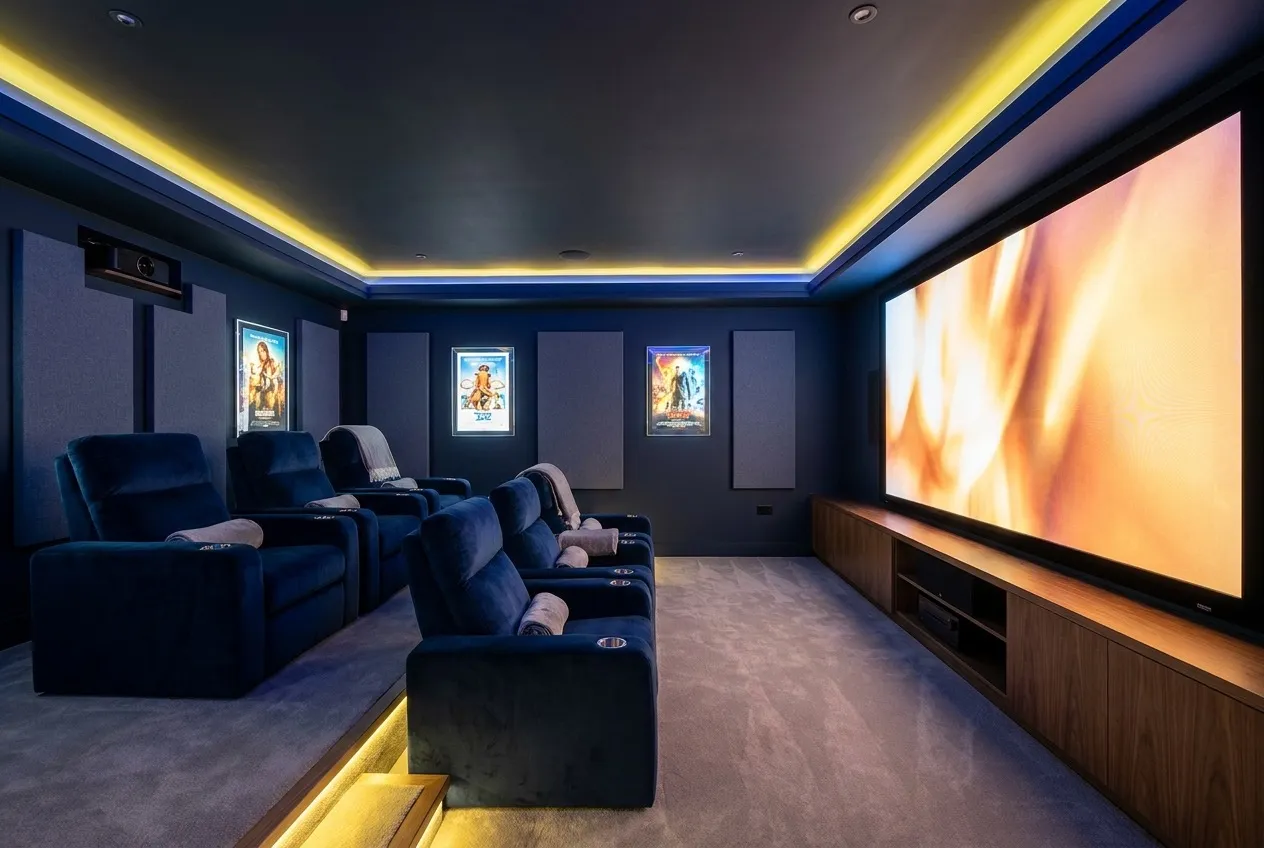
A home theatre is only as good as the electrical installation underneath it. Hum on the subwoofer, ground loops through the HDMI matrix, nuisance RCD trips when the amplifiers power up, and overloaded circuits that throttle power to a projector at the wrong moment are all electrical problems dressed up as AV problems. The solution is not more expensive equipment — it is getting the electrical infrastructure right before any AV gear goes in.
MetroPulse Electric works with homeowners, builders, and AV integrators to deliver the electrical and structured cabling infrastructure that a serious home theatre or multiroom audio system needs. We are not the AV integrator — we do not program receivers or calibrate screens — but we make sure the room the AV integrator walks into is wired for the job.
Dedicated circuits and power conditioning for AV rooms
The most important single improvement you can make to an AV electrical installation is dedicated circuits: separate branch circuits from the switchboard to the AV equipment, sharing nothing with lighting, air conditioning motors, or kitchen appliances. Motor loads, dimmers, and switched-mode power supplies all generate electrical noise that couples into shared wiring and appears as hum, interference, or instability in sensitive AV equipment.
For a proper home theatre we install a minimum of two to three dedicated 20 A circuits for the equipment rack, a separate circuit for the projector or display, and a circuit for the in-room HVAC. We use RCBOs rather than shared RCDs on AV circuits to prevent a fault in the AV gear from tripping the rest of the house, and we can integrate a power conditioner or line filter at the point of connection to further clean the supply before it reaches the equipment.
Conduit, cable management, and structured cabling
- Dedicated 25 mm or 32 mm conduit runs from the AV rack location to the display wall for HDMI, fibre, and speaker cables
- Conduit to each in-ceiling speaker location with pull string left in place for future cable additions
- Dedicated data conduit from the AV rack to the home network distribution point or patch panel
- Rack room or AV cupboard ventilation and cooling circuit for equipment rack thermal management
- Flush wall plates and brush-entry grommets at the display wall for a clean finished appearance
- Labelled cable schedules and as-built documentation handed to the AV integrator on completion
Conduit is the detail that separates a professional installation from one that will frustrate its owner the first time the AV technology needs to be upgraded. HDMI standards change, 8K cables are physically different from their 4K predecessors, and the display technology that exists in five years will require cables that do not yet exist today. Properly sized conduit means new cables can be pulled without opening walls.
Acoustic and environmental considerations
A dedicated theatre room requires more than AV cabling. HVAC for the room needs to be low-noise and on a separate circuit from the main system to avoid compressor noise appearing during quiet passages. Lighting in a theatre room typically runs on DALI or 0-10 V dimming circuits to avoid the RF interference that some leading-edge phase dimmers introduce. Recessed or perforated acoustic panels benefit from correctly positioned in-wall cabling that does not conflict with the room treatment.
MetroPulse Electric coordinates with acoustic consultants, AV integrators, and builders during the design stage to ensure electrical decisions do not compromise the acoustic outcome and vice versa. A theatre room that looks and sounds right on day one — and remains upgradeable for the next decade — starts with this coordination happening before a single cable is pulled.
Frequently asked
You can use existing circuits, but you will likely experience audible hum, occasional RCD trips when high-powered amplifiers start up, and voltage sag during peak load scenes. High-current AV equipment — power amplifiers, projectors, subwoofers — draws heavily from the circuit and generates back-EMF that interferes with other equipment on the same circuit. Dedicated circuits eliminate the shared-load problem and are a one-time cost that pays dividends for the life of the system.
Before the slab is poured or the plaster goes up, whichever comes first. Conduit that runs through the slab to the AV rack location and up the display wall must be laid before the concrete is poured. In-ceiling speaker conduit needs to be in the ceiling framing before insulation and plasterboard. If we are brought in at fit-out stage after the plaster is painted, every cable run becomes a damage and repair job. The cost difference between doing it right at rough-in and retrofitting later is significant.
We are happy to liaise directly with your AV integrator or home-automation programmer to confirm cable specifications, conduit sizing, rack power requirements, and control system wiring before we start. We find this coordination produces a better outcome for everyone: the AV integrator does not arrive to find conduit runs in the wrong location, and we do not have to add extra conduit after the fact. If you do not yet have an AV integrator engaged, we can recommend professionals we have worked with successfully on previous projects.