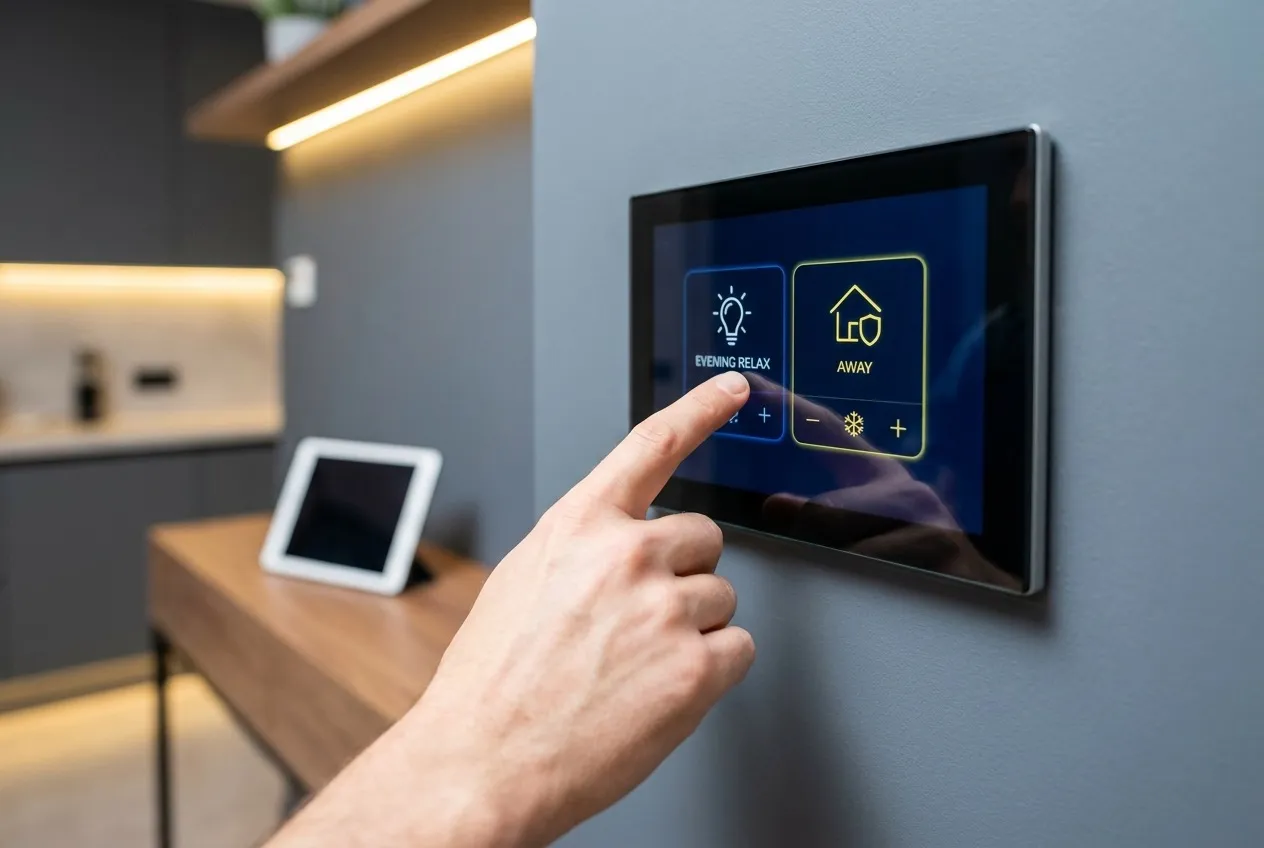
Smart-home technology has matured considerably, but the gap between a system that genuinely improves daily life and one that frustrates its owners comes down almost entirely to how it is designed and installed. Consumer Wi-Fi smart devices can work well for individual fittings, but an integrated whole-home system — where lights, blinds, heating, cooling, and security respond to each other and to your routine — needs a properly engineered backbone.
MetroPulse Electric works from the wiring up. Whether we are involved at the design stage of a new build or assessing a completed home for a retrofit, our starting point is the electrical infrastructure: the right cable types in the right locations, the right switchboard arrangement for automation modules, and the right integration between the electrical installation and the chosen automation platform.
Wired versus wireless: choosing the right backbone
C-Bus (Clipsal) and KNX are the two dominant wired smart-home protocols in the Australian market. Both run on dedicated bus cable installed during construction, are largely independent of the home Wi-Fi network, and have a track record spanning decades in residential and commercial buildings. They are the right choice for new builds and major renovations where access to walls is available, and for any application where the owner needs a high level of reliability without ongoing maintenance overhead.
For completed homes where running new cable is impractical, hybrid systems using a combination of wired mains circuits and wireless mesh protocols (Zigbee, Z-Wave, or Matter-compliant devices) can deliver good results when designed carefully. The key is appropriate gateway hardware, a stable local network, and a commissioning process that accounts for mesh coverage and device update management — not just a bag of smart switches plugged in and connected to a cloud app.
What a professionally integrated smart-home system covers
- Lighting control with scenes, schedules, and occupancy sensing across every zone
- Climate integration connecting HVAC systems to the automation controller for schedule and remote operation
- Motorised blinds and curtains on the automation bus for privacy, solar control, and energy efficiency
- Security system integration providing alarm status, door and window sensing, and access control within a single interface
- Multiroom audio and AV control through the same scenes and app platform
- Whole-home energy monitoring with per-circuit or per-device consumption data
Retrofit smart-home upgrades for established homes
Not every smart-home project starts with a blank slab. MetroPulse carries out retrofit upgrades for established homes, working out the best approach for the existing wiring layout. In many cases a C-Bus or KNX retrofit is achievable by running bus cable through ceiling cavities and down cavity walls — a skilled installation team can do this with minimal cosmetic damage. Where that is not practical, we select wireless solutions with appropriate hardware quality and design the system to be as independent of the cloud as possible, reducing the risk of the system becoming unusable when a manufacturer discontinues a product.
We also take over and upgrade poorly installed consumer smart-home systems that have become unreliable. If your current setup requires regular rebooting, drops devices from the network, or has scenes that no longer trigger correctly, the issue is almost always in the network infrastructure or the original commissioning rather than the devices themselves. We can audit the system, fix the underlying problems, and document the configuration so it is maintainable going forward.
Frequently asked
C-Bus uses dedicated bus cable that carries both communication data and low-voltage power to the control units. It operates independently of your home Wi-Fi and internet connection, so scenes and schedules continue to work even during an internet outage. Wi-Fi systems depend on your router and, in most cases, a cloud server operated by the manufacturer. C-Bus also has a track record of 20-plus years in Australian residential and commercial buildings and is widely supported by qualified integrators for long-term maintenance.
Yes, in most cases. For lighting control the least disruptive retrofit option is replacing existing wall switches with smart switch modules that fit in standard wall boxes and communicate wirelessly. Climate and blind control can similarly be added with compatible receiver modules at the unit rather than at the switchboard. A wired C-Bus or KNX retrofit is also possible in many homes by routing bus cable through roof cavities and down internal walls with limited plaster damage. The right approach depends on your existing wiring, your goals, and your budget.
Yes, and this is why involving us at the design stage matters. A C-Bus or KNX installation requires dedicated bus cable to every switch location in addition to standard power cabling. Conduit for AV, data, and control cabling needs to be in the slab or walls before concrete and plaster. Speaker cable, security sensor wiring, and camera cabling all need to be planned before rough-in. Decisions made at the slab stage — about cable routes, conduit sizing, and switchboard layout — either enable or constrain the system design, so the earlier we are involved the better the outcome.