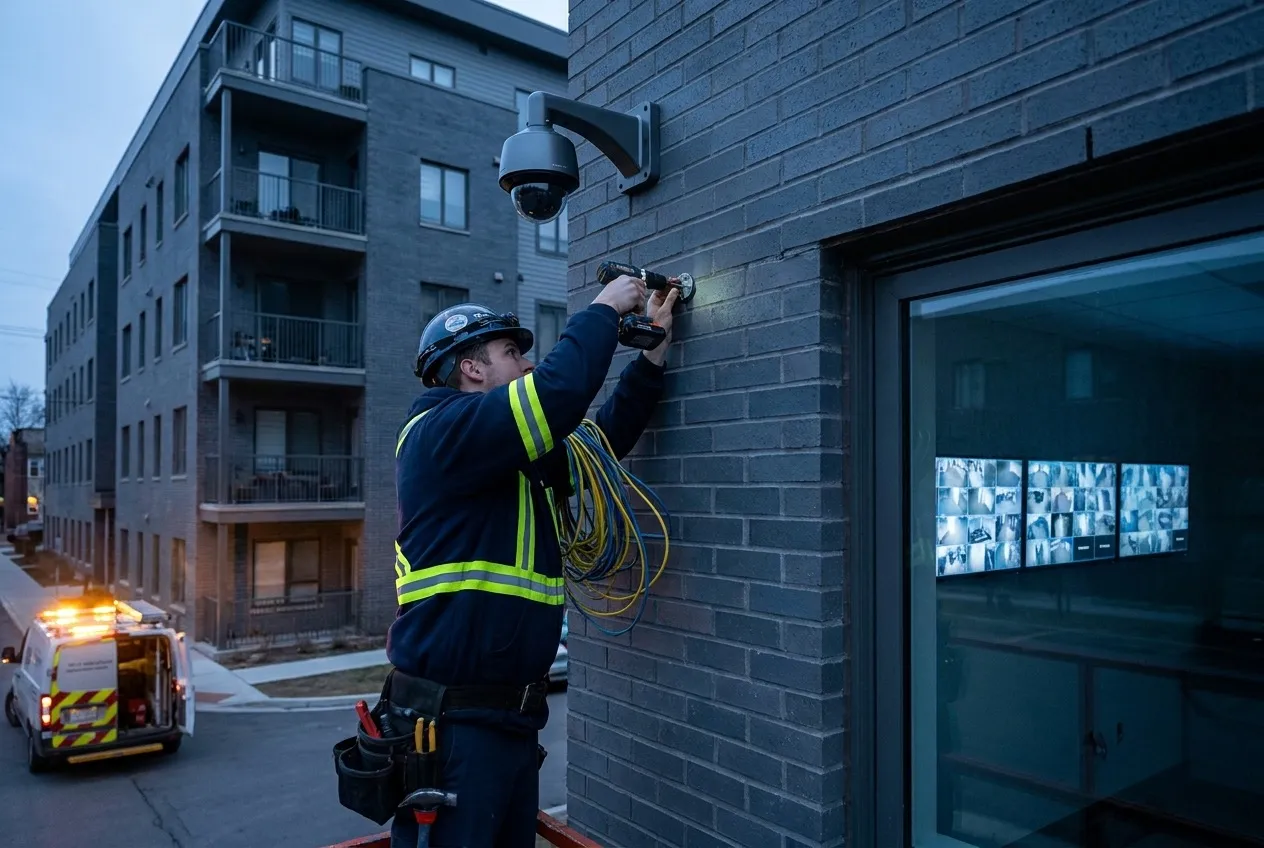
A security camera pointed at the wrong angle, a NVR with no remote access, an intercom that buzzes but does not unlock the door — these are the results of systems installed by people focused on the hardware, not the outcome. Good security electrical work starts with understanding how the building is used, where the vulnerabilities are, and what the monitoring and access arrangement needs to achieve.
MetroPulse Electric installs security and CCTV systems as an integrated electrical scope: we run the cabling, install the power infrastructure, mount and commission the equipment, and test the whole system end to end. For strata buildings and commercial premises, we document the installation so building managers and future contractors can work with what we put in.
CCTV camera placement, cabling, and NVR installation
Camera placement is a planning exercise before it is a trade job. Coverage angles, lighting conditions at night, cable run distances for signal quality, and the physical security of the cameras themselves all need to be thought through before the first hole is drilled. We walk the site with the client, establish coverage requirements, identify camera mounting positions, and plan the cabling routes before we quote the job. This means the quote reflects the actual scope, not a best-guess that changes on the day.
For IP camera systems, cabling is Cat6 from each camera back to the NVR location, with PoE switches or a PoE NVR providing power and data over a single cable. For larger installations, we run a structured cabling system with a comms rack at the head-end, patch panels for cable management, and UPS backup for the NVR and network equipment. That infrastructure investment pays off when cameras need to be added, moved, or replaced without rewiring the building.
Intercoms, access control, and building entry management
Modern intercom and access control systems go well beyond a buzzer and a button. Video intercoms with app integration let a resident or business owner answer their door from anywhere. Access control panels manage who can enter which areas, log entry events, and integrate with alarm systems to trigger alerts when a door is forced. For strata buildings, master-keyed access control across common area doors replaces physical key management and gives the building manager an audit trail.
- IP CCTV systems with Cat6 cabling, PoE infrastructure, and NVR head-end
- Video intercoms with app integration for residential and commercial entry
- Access control panels, card readers, and electric strike or magnetic lock hardware
- Alarm systems including motion detection, door contacts, and monitoring integration
- Strata building security infrastructure covering common areas, car parks, and lobbies
Alarm systems and monitoring integration
A well-designed alarm system combines motion detectors, door and window contacts, and a central panel that can trigger local sounders, send alerts to a monitoring centre, and push notifications to the owner's phone. MetroPulse Electric installs the cabling and power infrastructure for alarm systems and works with monitoring providers to integrate the panel into the monitoring network. We can also connect alarm systems to CCTV so that a triggered detector prompts the camera system to record and flag the relevant footage.
For commercial premises, we design systems around your after-hours schedule — perimeter detection that arms automatically at close of business, zone-based access for staff who work late, and panic buttons at high-risk locations like reception desks and back-of-house cash handling areas. The system should fit the way the business actually operates.
Strata and body corporate security infrastructure
Strata and body corporate buildings have security needs that span common areas, car parks, lift lobbies, and individual lot entry points. Coordinating a building-wide security upgrade involves working with the building manager, obtaining works approval from the owners corporation, and staging the installation to minimise disruption to residents and tenants. MetroPulse Electric understands this process and communicates with all relevant parties throughout the project, not just at the start and the end.
We also carry out security system maintenance and fault rectification for strata buildings under existing installations. If a camera is offline, an intercom entry panel has failed, or an access reader has stopped responding, we can respond promptly and carry out the repair with minimal building disruption. For buildings without a maintenance agreement, we recommend a scheduled annual inspection to catch failing components before they become a security gap.
Frequently asked
Analog systems use coaxial cable to transmit video to a DVR. IP systems use network cable and transmit compressed digital video to an NVR, which can be accessed remotely over the internet. For new installations, IP is almost always the better choice: higher image resolution, simpler cable infrastructure using Cat6, remote access via app, and easier expansion. Analog makes sense only when you are upgrading cameras on an existing coaxial cable infrastructure and rewiring is not practical.
Yes. IP NVR systems can be integrated with most professional monitoring platforms, allowing the monitoring centre to view live or recorded footage when an alarm is triggered. We install and configure the network infrastructure required for remote access and work with your chosen monitoring provider on the integration specifics. For commercial premises, this arrangement is often required by insurers as a condition of the security endorsement on the policy.
A strata works approval is needed from the owners corporation before any installation affecting common property. We can assist with the technical component of the approval submission: a site plan showing proposed camera positions, a specification of equipment and cabling, and confirmation that the installation meets relevant Australian standards. Once approval is granted, we coordinate the installation with the building manager to minimise disruption, and we provide as-built documentation so the system is properly recorded in the building's maintenance records.