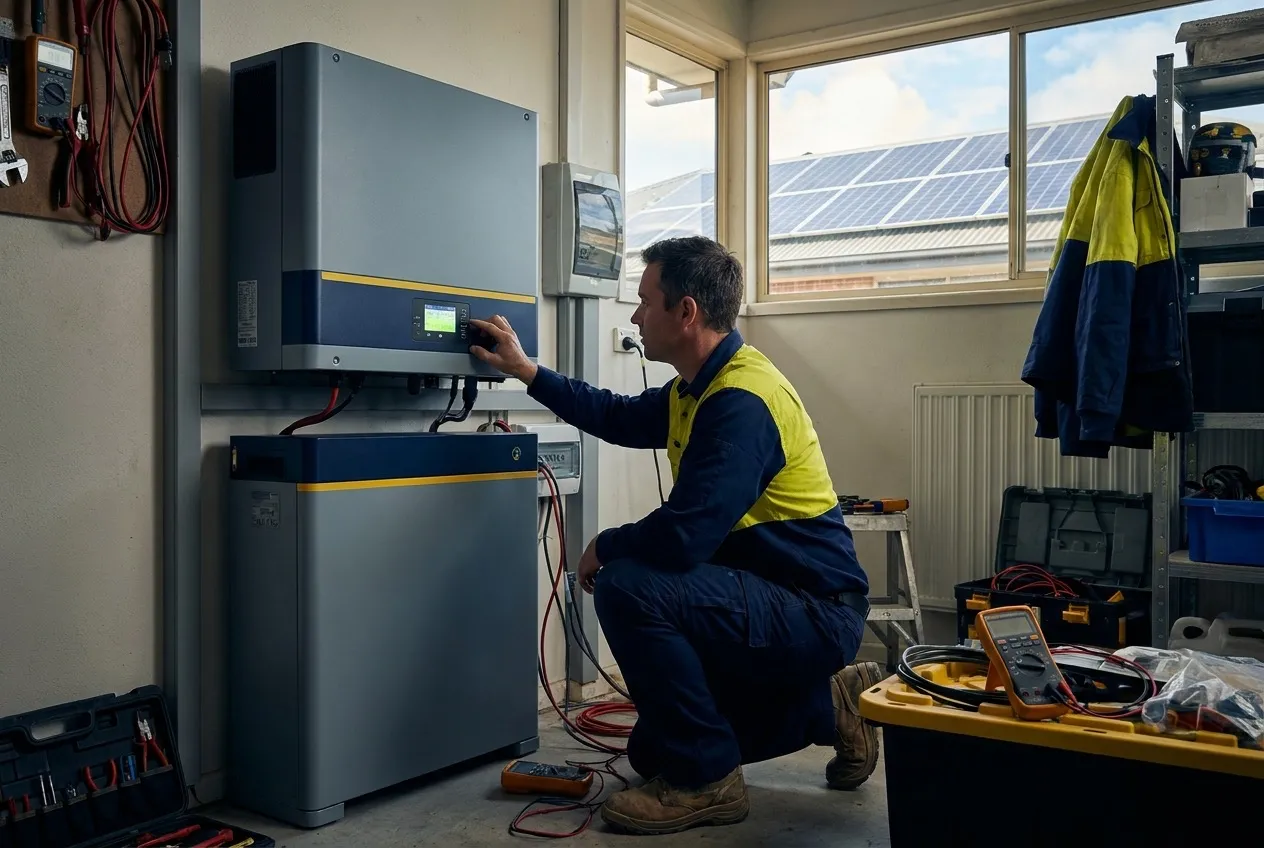
A solar and battery system is a long-lived asset but it is not maintenance-free. Inverters develop faults, DC isolators degrade in UV exposure, connections loosen with thermal cycling, and string performance drops as panels age or become shaded by new growth. Most system owners do not know there is a problem until their next power bill tells them — by which time months of yield have already been lost.
MetroPulse Electric carries out scheduled and fault-response servicing on residential and commercial PV systems and battery storage installations. We are not a new solar sales operation — our entire focus in this service is on keeping the systems already installed running as efficiently and safely as possible.
What a proper solar maintenance inspection covers
- Visual inspection of all panels for soiling, cracking, delamination, and bird proofing condition
- String voltage and current measurements to identify underperforming strings or failed bypass diodes
- DC isolator inspection and replacement if units show UV degradation, moisture ingress, or arcing evidence
- AC isolator and switchboard connection check, torque verification on all lugs
- Inverter fault log review, firmware status, and error history
- Battery state of health check, cell voltage balancing, and BMS communication verification
- Monitoring system configuration confirmed and generation data reconciled against rated performance
After the inspection we give you a written report with findings ranked by severity. Some items are rectified on the same visit. Others — a panel replacement, a battery cell fault, an inverter under manufacturer warranty — we document with enough detail for you to act on immediately.
DC safety: the part most installers skip
DC wiring on a solar system sits at elevated voltage any time sunlight hits the panels, and it cannot simply be switched off at the breaker. That makes DC connector integrity, cable insulation condition, and isolator function genuinely critical safety items rather than optional checks. AS/NZS 5033 covers PV array wiring and IEC 62109 covers inverter safety — we work to both standards.
Aged DC plug-and-socket connectors from early installations are a known risk. When we find connectors showing signs of resistance heating, moisture damage, or incompatible pairing between brands, we replace them with correctly rated, matched connectors and re-terminate to manufacturer specifications. The cost is minor. The alternative is an arc fault that may not trip a standard circuit breaker.
Battery storage health and degradation management
Battery systems lose capacity gradually over their lifecycle, but they can lose it faster through incorrect charge and discharge parameters, poor thermal management, or firmware that has not been updated to the manufacturer's current recommendations. We connect to the battery management system with manufacturer-approved diagnostic tools and assess state of health against the warranted degradation curve.
For commercial and strata installations with larger battery banks, we also review the load profile against the battery's designed operating window. A system that is being cycled outside its optimal depth of discharge will age faster than the warranty assumes. Identifying and correcting this through setpoint adjustments protects both the asset and the warranty.
Commercial and strata PV systems: keeping the whole building on budget
Commercial rooftop systems and building-integrated PV serving common-area loads or embedded network customers need regular attention to maintain their financial contribution. A 10 percent generation loss on a 100 kW commercial system represents real money every quarter. MetroPulse Electric can be appointed as the ongoing O and M contractor for commercial and strata systems, providing scheduled inspections, priority fault response, and generation reporting that your strata manager or building owner can review alongside the energy account.
Frequently asked
The clearest indicator is comparing your current generation to what your installer projected for the same time of year, or looking at a drop in output on your monitoring app compared to previous years. Unexplained inverter errors, an increase in your grid import despite sunny weather, or a monitoring portal that shows gaps in generation data are all reasons to book an inspection.
Yes. Discolouration and heat on a DC isolator typically indicates resistance heating from a loose connection, a deteriorating contact, or moisture ingress. Under solar irradiance, DC voltage is always present on those cables regardless of whether the inverter is running. This is a fault that needs prompt attention — switch the inverter to standby mode and contact us to arrange an inspection.
Most residential and commercial battery warranties guarantee a minimum capacity retention at a stated number of cycles or years — commonly 60 to 70 percent at end of warranty period. They do not cover losses caused by operation outside the specified charge parameters, overheating, or non-approved firmware. Our battery health check confirms your system is operating within warranted conditions and gives you documented evidence if you ever need to make a capacity-related claim.