Full-Speed EV Charging, Engineered to Last
Starwatt Systems installs residential and commercial EV charging infrastructure across the full power spectrum — from 7.2 kW single-phase wallboxes to 22 kW three-phase AC chargers and multi-bay smart charging stations — engineered with dedicated circuits, load management and OCPP integration for the long term.
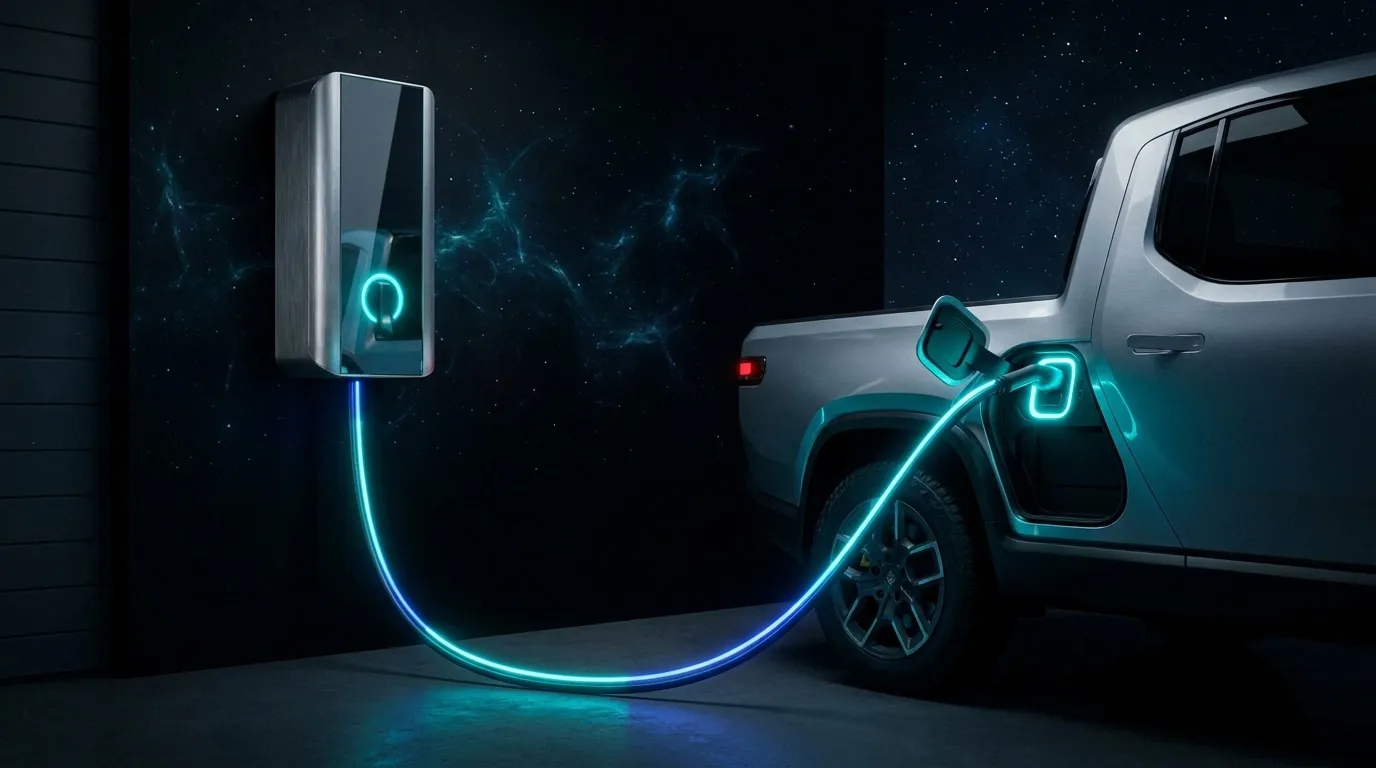
Every kilometre your electric vehicle gains while plugged in at home costs a fraction of what the equivalent fuel volume would. But that calculation only works if your charging infrastructure is correctly engineered. An undersized cable, an overloaded circuit, or a charger installed without load management can trip circuit breakers, cause nuisance RCD faults, and — in the worst case — create a fire hazard at the switchboard. Starwatt Systems treats EV charger installation as the dedicated electrical infrastructure project it is.
We install charging hardware from Ocular, Wallbox, EVBox, EVSE Australia and Tesla Wall Connector across residential, commercial and strata properties, and we are accredited through the Clean Energy Council (CEC) EV charger installer scheme. Every installation includes a dedicated circuit from the switchboard, correct cable sizing, compliant earthing, RCD protection and a Certificate of Compliance for Electrical Work.
Single-Phase 7 kW Residential Charging
A 7.2 kW (32A, 230V single-phase) wallbox is the most common residential EV charging solution in Australia, and it is the correct choice for most households. At 7.2 kW, a typical electric vehicle will gain approximately 35–45 km of range per hour of charging — sufficient to recover a full day of average driving (around 60 km) in under two hours. The dedicated 32A circuit requires a minimum 6 mm² TPS cable run from the switchboard to the charger location, with correct voltage-drop calculation across the cable length. Starwatt installs the circuit, the weatherproof wallbox, and the earth electrode or bonding connection as a complete scope.
- 32A dedicated circuit from switchboard with correctly sized 6–10 mm² TPS cable
- Weatherproof IP55 or IP65 rated wallbox for outdoor and garage installation
- RCD Type B protection where required by charger specifications
- Earthing to AS/NZS 3000 requirements including equipotential bonding
- Network registration and app commissioning for smart scheduling and monitoring
Three-Phase 22 kW Charging
Vehicles that accept three-phase AC charging — including the Tesla Model 3, Volvo XC40 Recharge, Audi Q4 e-tron and most European EVs — can charge at up to 22 kW (32A per phase on a 415V three-phase supply). At 22 kW, a 75 kWh battery can be recovered from near-empty in under four hours. Three-phase charging requires a three-phase supply to the property — most commercial premises have this already — and a dedicated 32A three-phase circuit with 10 mm² cable and three-phase RCD protection. Where a residential property has only a single-phase service, Starwatt coordinates the three-phase connection application with the network distributor on your behalf.
- Three-phase 32A dedicated circuit with 10 mm² TPS or SWA cable
- Three-phase RCD Type A or Type B to suit charger on-board rectifier type
- Load management relay or CT-based dynamic load limiter to prevent main fuse overload
- Three-phase metering sub-metering for accurate charge energy billing in commercial settings
- Network distributor connection application managed by Starwatt for three-phase service upgrades
Smart Charging and OCPP Integration
A smart charger communicates over Wi-Fi or 4G using the Open Charge Point Protocol (OCPP), enabling time-of-use scheduling, solar self-consumption maximisation, remote diagnostics and — in commercial settings — billing and access management. Starwatt configures OCPP-capable chargers on your chosen back-end platform, programs time-of-use charge windows aligned to your electricity tariff structure, and integrates with your solar inverter's export signal where dynamic solar charging is desired. OCPP compliance also future-proofs your installation for vehicle-to-grid (V2G) bidirectional charging as that technology reaches the Australian market.
- OCPP 1.6 and 2.0.1 charger configuration on client-selected management platform
- Time-of-use scheduling to charge exclusively during off-peak tariff windows
- Solar integration via Modbus or API connection to inverter for excess-generation charging
- CT-based dynamic load management to protect the main service fuse under peak household load
- Remote monitoring, diagnostics and firmware management through the OCPP backend
Multi-Bay Commercial EV Charging Stations
Commercial EV charging infrastructure — car parks, strata buildings, fleet depots and hospitality venues — requires a fundamentally different engineering approach to residential installations. Starwatt designs multi-bay AC charging systems with shared load management controllers that dynamically allocate available power across active charging sessions, preventing the total installed load from exceeding the site's maximum demand. Sub-metering on each bay enables occupant billing in strata settings or fleet cost-allocation in corporate environments. Cabling is installed in conduit rated for the environment, with cable trays, cable entry kits and labelling compliant with AS/NZS 3000.
Switchboard Assessment and Upgrade
Adding EV charging load to an existing property without assessing the switchboard first is how charger installations create problems. Starwatt conducts a full switchboard survey before every EV project — verifying the main fuse rating, available capacity on the bus bar, presence and rating of existing RCDs, and the condition of the earthing system. Where the switchboard cannot safely accommodate the new load, we scope and price a concurrent switchboard upgrade. Where the network connection itself is the limitation, we manage the distributor application for a capacity increase. The goal is a charging installation that the switchboard — and the network — can actually support.
EV Charger Installation questions
It depends on the age and rating of your existing switchboard and how much spare capacity it has. Many modern switchboards can accommodate a 32A EV circuit with no modifications, while older boards with ceramic fuses or a saturated bus bar may need upgrading first. Starwatt assesses this before quoting so there are no unexpected costs during installation. We will tell you exactly what is required and why.
Type A RCDs protect against AC residual currents and pulsating DC residual currents. Some EV charger on-board rectifiers can produce a smooth DC residual fault current that a Type A device cannot detect, requiring a Type B RCD instead. The charger's specification sheet defines which type is required. Starwatt selects the correct RCD type for every charger we install — it is not an optional upgrade, it is a compliance requirement.
Yes. Smart OCPP chargers can be configured to charge your vehicle only when your solar system is exporting above a set threshold — effectively directing excess solar generation into your car's battery rather than selling it back to the grid at a low feed-in tariff. This requires a compatible charger, your solar inverter's Modbus or API output, and correct configuration by an installer who understands both systems. Starwatt handles this integration as part of the standard installation scope.
Ready to deploy ev charger installation?
Tell us about your site and we will model the yield, returns and the fastest path to energised.