Workplace Electrical Safety, Documented and Certified
StarWatt Systems delivers AS/NZS 3760-compliant testing and tagging for portable electrical appliances across construction sites, commercial premises and industrial facilities — complete with asset registers, RCD testing and compliance records your WHS documentation demands.
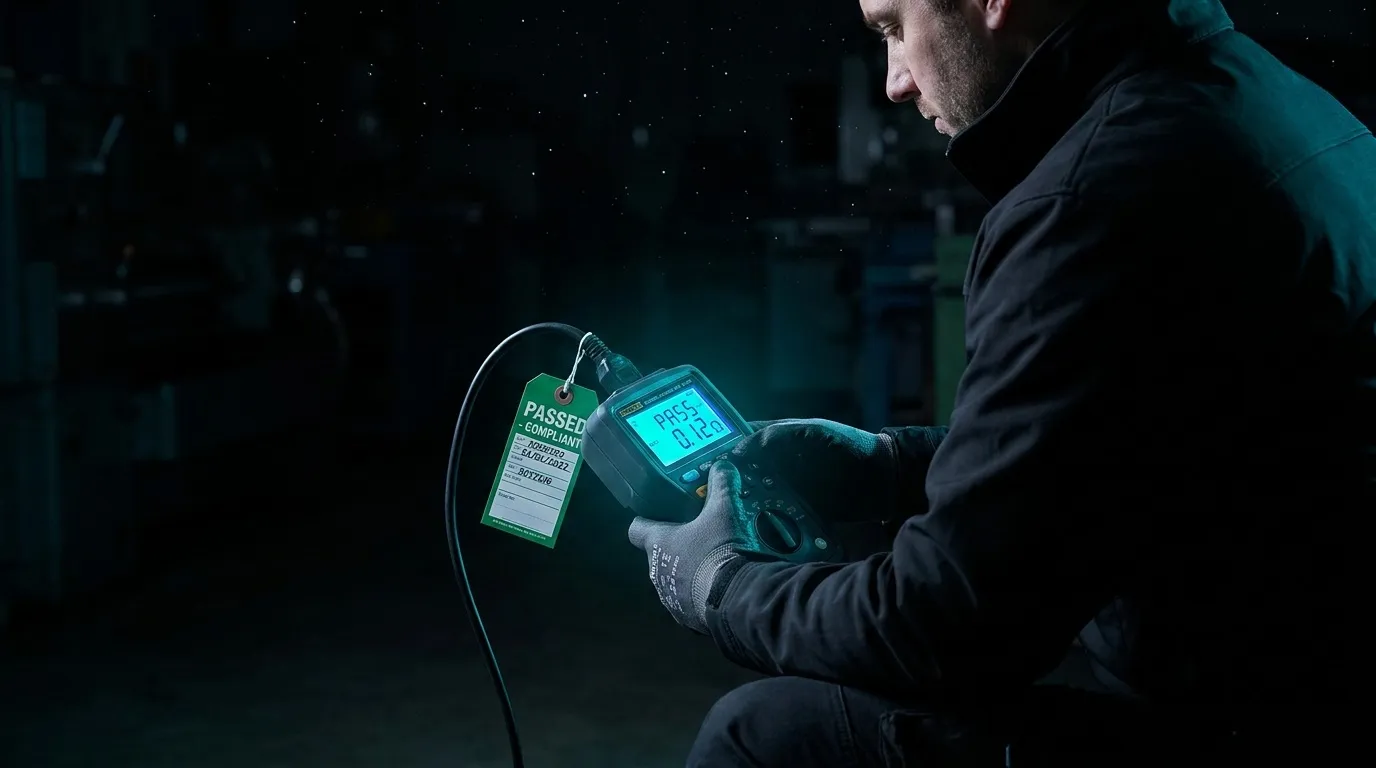
Every power tool, extension lead, laptop charger and portable appliance in an Australian workplace is subject to the inspection and testing requirements of AS/NZS 3760 — In-service safety inspection and testing of electrical equipment. The standard exists because portable electrical equipment is the category most exposed to physical damage, moisture ingress and insulation degradation through repeated use, and faulty portable appliances are a leading cause of workplace electrical fires and electrocutions. Testing and tagging is not a paperwork exercise; it is the systematic process of finding faults before they cause harm.
StarWatt Systems employs licensed electricians trained and equipped to perform every inspection and test required under AS/NZS 3760, from visual examination through to insulation-resistance and earth-continuity measurement using calibrated test instruments traceable to national standards. Our testers work quickly and methodically to minimise site disruption while maintaining the rigour the standard requires.
What AS/NZS 3760 Inspection and Testing Involves
Testing and tagging is a three-step process: visual inspection, electrical measurement and application of the compliance tag. The visual inspection checks the plug, lead, strain reliefs, housing and any visible internal wiring for damage, modification or signs of overheating. Electrical measurements include insulation resistance between live conductors and earth (measuring the integrity of the appliance's insulation) and earth-continuity resistance (confirming the protective earth connection is sound). Class II double-insulated equipment requires a different measurement protocol. Each test result is recorded against the appliance's asset number, serial number and location.
- Visual inspection of plugs, leads, strain reliefs, housings and internal wiring
- Insulation resistance measurement to detect degraded or damaged insulation
- Earth-continuity resistance measurement for Class I equipment
- Polarity and wiring-integrity checks for equipment with accessible terminals
- Application of colour-coded compliance tag with test date and next-due date
- Individual test records logged against asset number and serial number
RCD Testing and Portable Safety Switch Verification
Residual current devices (safety switches) are the last line of electrical defence before current passes through a human body. AS/NZS 3760 requires RCDs to be tested separately from the appliances they protect, with trip-time measurements recorded at rated sensitivity. StarWatt tests both fixed RCDs in switchboards and portable RCDs (plug-in safety switches) to the required trip-time specification — typically 30 mA at less than 300 ms. Construction sites under AS/NZS 3012 face additional requirements, including RCD testing every three months and specific documentation of each test event.
Testing Intervals by Environment
The standard prescribes different maximum intervals between tests based on the environment where equipment is used, reflecting the different levels of physical risk each environment presents. StarWatt recommends a test schedule calibrated to your specific environment — we do not apply a blanket interval that may leave high-risk equipment under-tested or generate unnecessary cost through over-testing of low-risk office equipment.
- Construction and demolition sites: 3-month retest interval per AS/NZS 3012
- Industrial workshops, warehouses and manufacturing: 6-month interval
- Commercial kitchens and cleaning equipment: 6-month interval
- Offices, retail and commercial premises: 12-month interval
- Hire equipment and equipment used in hostile environments: 3-month interval
- New or repaired equipment: tested before first use regardless of environment
Asset Registers and Digital Compliance Records
A physical tag on an appliance proves it was tested. A complete asset register proves every appliance in scope was tested, which is what a workplace safety auditor, insurer or regulator actually needs to see. StarWatt delivers a digital asset register after every test cycle listing every appliance by location, description, serial number, test result and next-due date — formatted for easy import into your existing WHS management system. Failed appliances are flagged and quarantined on the day of testing, with a separate report identifying each failed item and the test that caused the failure.
Construction Site Compliance Under AS/NZS 3012
Construction sites operate under AS/NZS 3012 — Electrical installations — Construction and demolition sites — which imposes stricter requirements than the general workplace standard. All electrical equipment on site must be tested to AS/NZS 3760 before use and at three-monthly intervals, RCDs must be provided for all socket outlets, and the site's electrical installation must meet specific earthing and isolation requirements. StarWatt provides construction site test-and-tag programs that integrate with the site's induction process, ensuring subcontractors cannot bring non-compliant equipment onto the site and that the site manager has a complete compliance register at all times.
Test & Tag questions
Under the Work Health and Safety Act 2011 and its Regulations, every person conducting a business or undertaking (PCBU) has a duty to manage risks from electrical equipment in the workplace. AS/NZS 3760 is the accepted method for managing portable appliance risk. While the standard does not specify who must perform the testing, SafeWork Australia's guidance indicates testing should be performed by a competent person — typically a licensed electrician with calibrated test equipment.
Failed appliances are immediately tagged with a red out-of-service tag and documented in a separate fault report. They must not be returned to service until repaired by a licensed electrician and re-tested. StarWatt's testers can perform minor plug and lead repairs on the day for simple faults, or refer the appliance to our workshop for more complex internal repairs — all with a re-test certificate before the appliance is returned to service.
Yes. StarWatt manages multi-site test-and-tag programs for clients with offices, warehouses or construction sites across multiple locations, maintaining a single consolidated asset register that gives the safety manager a whole-of-business compliance view. We coordinate visit schedules to minimise disruption to operations and generate a single integrated compliance report across all sites for each test cycle.
Ready to deploy test & tag?
Tell us about your site and we will model the yield, returns and the fastest path to energised.