Precision Wiring for Every Modern Home
From complete rewires on heritage homes to smart-ready cable runs in new builds, Starwatt Systems delivers residential wiring that exceeds AS/NZS 3000 compliance — engineered to handle the electrical demands of today and the automation of tomorrow.
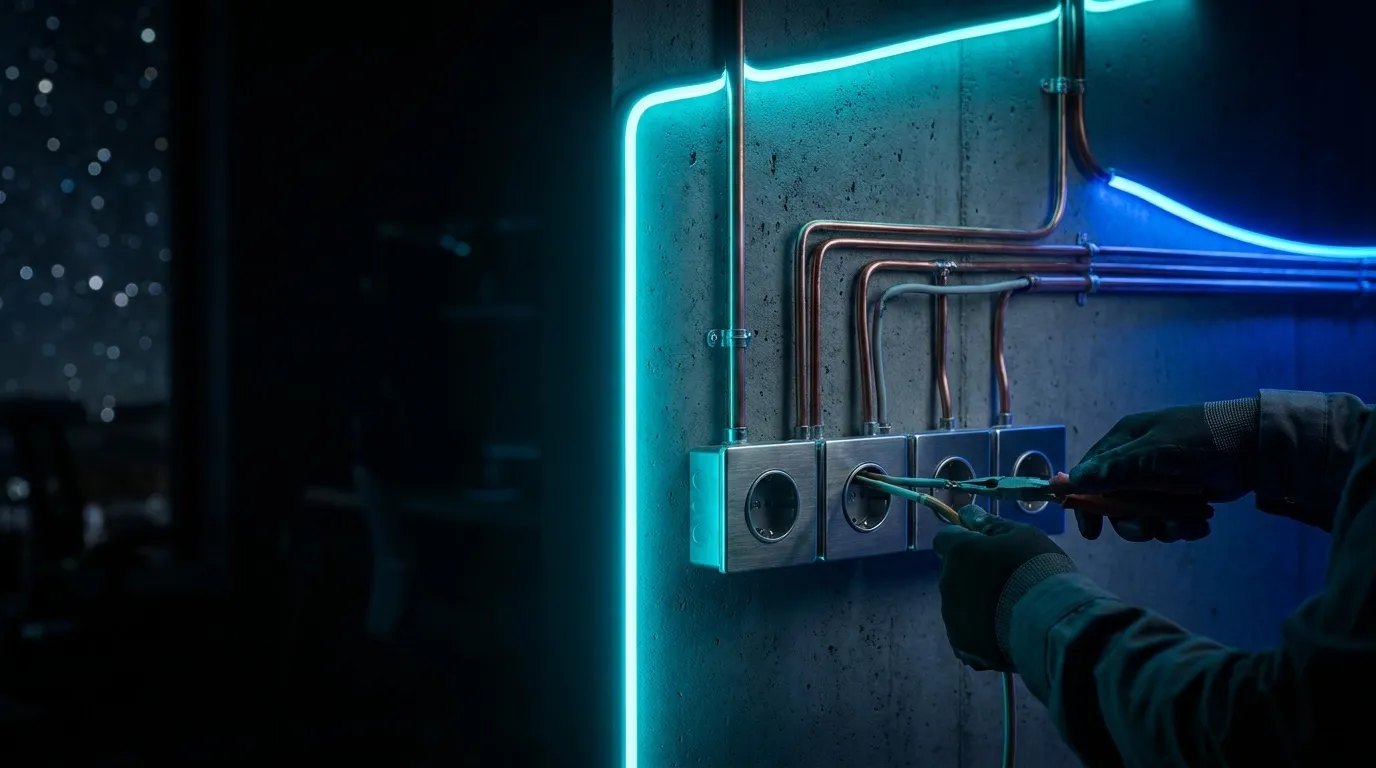
Most Australian homes built before 1990 carry wiring that was never designed for today's electrical loads. Air conditioning, induction cooktops, EV chargers, and dense smart-home device clusters push original circuits far beyond their rated capacity. Starwatt Systems approaches residential wiring not as a maintenance task but as a precision engineering exercise — mapping load requirements, future demand, and safety margins before a single cable is pulled.
We work across single-circuit additions and complete whole-home rewires, treating each project with the same methodical rigour. Every job is documented, every circuit is labelled, and every installation is tested under load before we consider it complete.
Whole-Home Rewires
Older homes with rubber-sheathed TPS wiring, aluminium conductors, or two-wire earthless circuits represent a genuine fire and electrocution risk. A full rewire replaces deteriorated cable throughout the home, installs a compliant modern switchboard, and brings every circuit up to current code. Starwatt crews minimise wall damage through careful cable routing and reinstatement, and we co-ordinate with your plasterer or painter if required.
- Complete replacement of rubber, cloth, or aluminium wiring with modern TPS copper cable
- New earthing conductors installed to every outlet and fitting
- Circuit mapping and load balancing to eliminate overloaded runs
- Switchboard replacement or upgrade completed as part of the rewire scope
- Final inspection and certificate of compliance issued on completion
New Circuit Additions and Alterations
Adding a dedicated circuit for a workshop, a second air conditioner, or an induction cooktop requires more than running a new cable. Starwatt engineers calculate the available capacity in your existing switchboard, assess the main service cable and meter, and confirm the network distributor's connection agreement before committing to any new load. This prevents nuisance tripping, voltage drop issues, and — critically — the risk of overloading a switchboard that simply cannot take another circuit breaker.
RCD and Safety Switch Installation
Australian Standard AS/NZS 3000 requires residual current devices on all power and lighting circuits in new residential work. Homes without RCD protection on every circuit are statistically over-represented in electrical fires and electrocution incidents. Starwatt retro-fits safety switches to existing switchboards and installs combination RCBO devices that provide both overcurrent and earth-leakage protection on a single breaker, preserving valuable switchboard real estate.
- RCD protection added to all power and lighting circuits as required by code
- Combination RCBO installation where switchboard space is limited
- Testing of trip times to AS/NZS 61008 and AS/NZS 61009 standard
- Documentation of protection coverage for insurance and compliance records
Smart-Ready Cabling
Retrofitting smart-home infrastructure into finished walls is expensive and disruptive. Starwatt installs smart-ready conduit runs, Cat 6A data cabling, and pre-wired switch positions during any new build or renovation project, so that adding automation later is a configuration task rather than a construction one. We work from your automation system plan or coordinate directly with your home technology integrator to ensure the cable topology matches the final system design.
Switch and Outlet Placement
Poor switch and outlet placement is one of the most common complaints in both new and renovated homes. Starwatt reviews your furniture layout, appliance locations, and workflow before finalising any outlet schedule. We apply the AS/NZS 3000 minimum spacing rules as a floor, not a ceiling — and we routinely exceed them to deliver a home where extension leads are never needed and every appliance lands at a correctly rated outlet.
Residential Wiring questions
Key indicators include flickering or dimming lights, circuit breakers that trip regularly, outlets that spark on connection, a switchboard still fitted with ceramic fuses or asbestos panels, or wiring that visibly shows cracked or discoloured sheathing in the roof space. If your home was built before 1980 and has never been rewired, a professional inspection is strongly recommended.
Not always. Many circuit additions can be routed through the roof space or sub-floor and dropped directly into new outlet positions without opening wall cavities. Where wall access is unavoidable, our team uses careful chase cuts and makes good on completion. We will always explain the routing plan before starting so there are no surprises.
A typical three-bedroom home takes two to three days for the cabling phase, with switchboard work and final testing completed on day three or four. Larger homes or properties with complex layouts may take a full week. We provide a detailed scope and timeline before work begins, and we minimise disruption by maintaining power to key circuits throughout where possible.
Ready to deploy residential wiring?
Tell us about your site and we will model the yield, returns and the fastest path to energised.