Life-Safety Electrical Engineered to Code
StarWatt designs, installs and certifies fire alarm systems to AS 1670, from addressable detection networks in complex commercial buildings to interconnected smoke alarm arrays in residential properties — every system monitored, documented and ready for a fire brigade inspection.
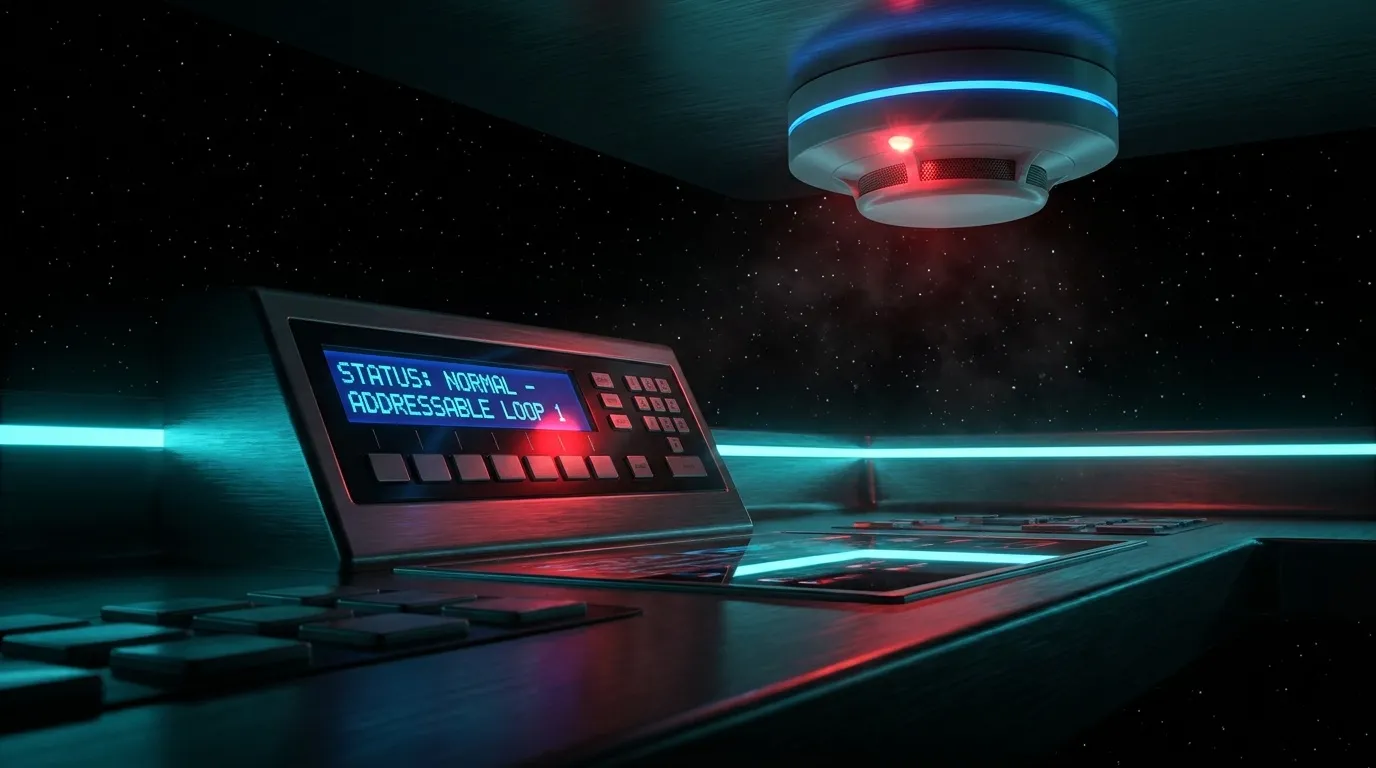
Fire alarm and detection systems are life-safety infrastructure — the consequence of a failure is measured in lives, not downtime. Australian Standard AS 1670.1 sets the engineering requirements for fire detection and alarm systems in commercial, industrial and multi-residential buildings, and compliance is non-negotiable. StarWatt Systems installs fire alarm systems that meet the standard in full, with documentation packages that satisfy building certifiers, insurance underwriters and fire authority inspectors alike.
Our fire-safety electricians hold the specific licensing required to work on fire alarm systems in each state, and we work directly with fire engineers, building certifiers and the relevant fire authority to ensure each installation is coordinated correctly. From the initial cause-and-effect matrix through to the final integrated system test, every step is documented and independently verifiable.
Addressable and Conventional Detection Systems
Addressable fire alarm panels identify the exact detector or call point that initiated an alarm, providing emergency responders with precise location information and building management with an auditable event log. Each detector on an addressable loop reports its individual status — clean, dirty, in alarm or fault — allowing proactive maintenance before a nuisance alarm triggers. For smaller buildings where addressable complexity is not warranted, well-engineered conventional systems with clearly zoned panels remain a compliant, cost-effective solution. StarWatt designs to the building's actual risk profile, not a one-size-fits-all specification.
- Addressable panels from Bosch, Hochiki and Pertronic with full graphical annunciation
- Conventional panels for smaller commercial and industrial applications
- Photoelectric smoke detectors for general-area detection
- Heat detectors for kitchens, plant rooms and high-dust environments
- Multi-criteria detectors combining smoke, CO and heat sensing
- Manual call points at every required egress point per AS 1670.1
AS 1670 Compliance and Fire Authority Coordination
AS 1670.1 prescribes detector spacing, coverage radii, interconnection requirements, power supply specifications and cause-and-effect logic in precise technical detail. StarWatt's designs are prepared against the standard, peer-reviewed internally and submitted to the relevant fire authority for acceptance before installation begins. On completion, we prepare and lodge the documentation required for a formal handover to the occupant, including as-built drawings, test records and a commissioning certificate signed by a licensed contractor — the package a building certifier needs to issue an occupancy certificate.
Monitored Alarm Systems and Brigade Connection
An unmonitored fire alarm that activates in an empty building at 3 am is not a safety system — it is a false sense of security. StarWatt connects fire alarm panels to monitoring centres via dual-path communications (IP primary, PSTN or radio backup) so that every alarm generates an immediate response, regardless of whether anyone is on site. Where the building classification requires direct brigade connection, we install the approved communicator and coordinate acceptance testing with the relevant fire authority.
- Dual-path monitoring via IP and PSTN or 4G radio backup
- Direct brigade-alerting equipment (BAE) connection where required
- Grade A1 monitoring centre connection meeting AS 2201.5
- Isolator and fault-monitoring integration into building management systems
- After-hours response protocols documented and tested at commissioning
Emergency and Exit Lighting
Emergency and exit lighting is the electrical infrastructure that guides occupants to safety when primary lighting fails. AS/NZS 2293.1 requires emergency luminaires to achieve a minimum 90-minute endurance on internal battery, with maintained exit signs energised continuously and non-maintained emergency lights that activate only on mains failure. StarWatt installs and tests emergency lighting to the full requirements of the standard, using self-testing luminaires in complex buildings where manual testing of hundreds of fittings is impractical, and provides the written test report required for annual compliance certification.
Routine Testing, Maintenance and Compliance Records
AS 1670 and AS/NZS 2293 both require documented periodic inspection and testing — not as a bureaucratic formality, but because detection systems accumulate dust, battery cells age and software configurations drift over time. StarWatt offers annual inspection and testing contracts that include detector sensitivity measurement, battery load testing, cause-and-effect verification, emergency-lighting 90-minute discharge tests and panel event-log review. Every test session produces a written record that building managers can produce immediately to an insurance assessor or fire authority inspector.
Fire Alarm Systems questions
AS 1670.3 requires routine inspections at intervals no greater than six months for most commercial systems, with a comprehensive annual inspection covering detector sensitivity testing, battery load tests, cause-and-effect verification and panel event-log review. Emergency lighting under AS/NZS 2293.2 requires a monthly brief functional test and an annual 90-minute discharge test. StarWatt's maintenance contracts cover all required intervals and provide the written records your building manager needs for compliance files.
A conventional system divides the building into zones — when an alarm triggers, the panel identifies the zone but not the specific detector. An addressable system assigns a unique address to every detector and call point, so the panel displays the exact device location. Addressable systems also report detector health continuously, enabling proactive maintenance. For buildings with more than a few zones, addressable is the preferred solution under AS 1670.
Yes. AS 1670 requires fire alarm systems to interface with HVAC plant — typically shutting down air-handling units or switching to smoke-purge mode on alarm — and releasing electrically held fire doors. StarWatt maps the full cause-and-effect matrix, wires every interface relay and documents the logic so the commissioning agent and fire engineer can verify each trigger condition independently during integrated testing.
Ready to deploy fire alarm systems?
Tell us about your site and we will model the yield, returns and the fastest path to energised.