Your Home, Intelligently Automated
From lighting scenes and motorised blinds to whole-home climate control and voice-activated security, Starwatt Systems engineers smart home automation on enterprise-grade protocols — KNX, C-Bus, and Lutron — with the infrastructure wired correctly from the first conduit pull.
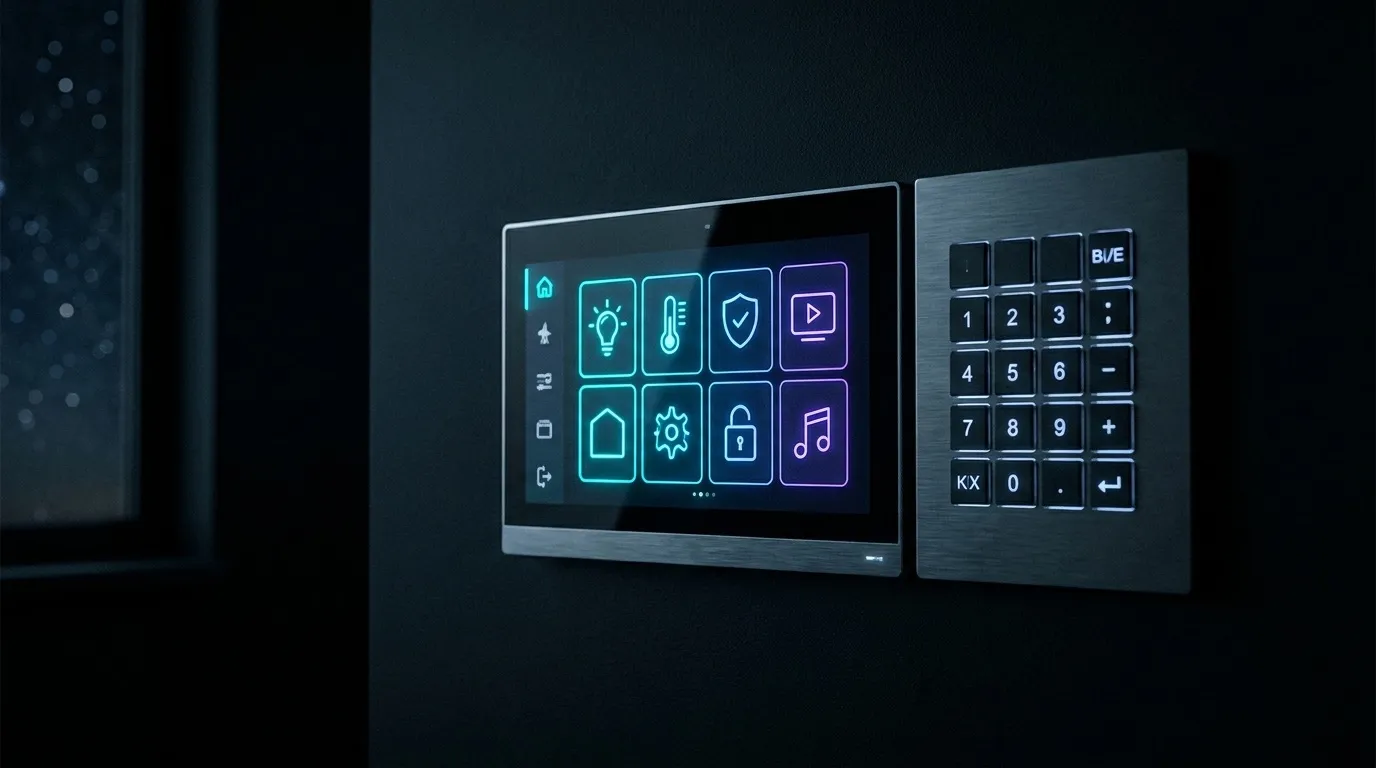
Consumer smart-home devices installed over your existing wiring are a starting point, not a destination. When Alexa struggles to hear you from the kitchen, when the app takes three seconds to respond, or when a firmware update breaks half your automations, the limitations of bolt-on technology become clear. Starwatt Systems builds automation infrastructure from the cable layer up — using open, commercially proven protocols that don't depend on any single manufacturer's cloud server to function.
We partner with homeowners, builders and interior designers from the earliest planning stage to ensure every conduit, every switch position, and every panel location is exactly where the final system needs it. Retrofitting structured automation wiring into a finished home is expensive and disruptive; planning it during construction or renovation costs a fraction and delivers a dramatically superior result.
Automation Protocols: KNX, C-Bus and Lutron
Starwatt designs and installs systems on KNX — the international standard for building automation used in over 500 million devices worldwide — as well as Clipsal C-Bus, Lutron RadioRA and HomePro systems depending on project scale and client preference. These protocols communicate across dedicated twisted-pair or Cat 6 bus wiring and do not rely on Wi-Fi or consumer-grade hubs that can be discontinued. Programming is performed using manufacturer-certified software, and the configuration file is client-owned, ensuring you are never locked out of your own system.
- KNX TP (twisted-pair) bus wiring run as part of the electrical rough-in
- Clipsal C-Bus networks for Australian residential and commercial projects
- Lutron Caséta, RadioRA and HomeWorks for lighting control and shade management
- Dedicated automation server or processor installed in the network cabinet
- Full programming documentation and client-owned configuration files on handover
Lighting Control and Scene Programming
Lighting is the most immediately transformative element of home automation. Starwatt programs scenes — combinations of brightness levels and colour temperatures across every light in your home — that are triggered by time of day, occupancy detection, security events, or a single button press. Morning scenes gradually raise bedroom lighting to simulate sunrise and start the coffee machine. Evening scenes dim the living areas, close the blinds, and lower the air conditioning setpoint. Away scenes confirm all lights are off, verify that appliances in standby mode are de-energised, and arm the security system. The electricity savings from precision-controlled lighting are real and measurable — typically fifteen to thirty percent of lighting-related consumption.
Voice Control, App Dashboards and Remote Access
Starwatt-built systems integrate with Apple HomeKit, Google Home and Amazon Alexa through locally hosted bridges that don't require your automation to traverse a cloud server in another country. Your floor-plan dashboard on a wall-mounted touchscreen or a mobile app shows live status of every device in the home. Remote access is provided through an encrypted VPN connection to your home network, not through a manufacturer portal that may change its terms or be discontinued. You control your home directly, always.
- Apple HomeKit, Google Home and Amazon Alexa integration via local bridges
- Touchscreen keypads and wall-mounted control panels with custom scene buttons
- App-based dashboards showing real-time status of lighting, climate, security and energy
- Remote access via encrypted VPN, independent of manufacturer cloud services
- Occupancy sensors, door/window contacts and motion detectors integrated into automation logic
Future-Proof Wiring and Infrastructure
The automation system you install today will coexist with technology that doesn't exist yet. Starwatt designs the cable infrastructure with that reality in mind. Conduit is over-sized to allow additional cables to be added without breaking walls. Network cabinets are specified with spare rack units. Switch positions are pre-wired with neutral conductors so any switch can become a smart switch without rewiring. Every cable run is labelled and documented in an as-built drawing set that becomes part of your home's permanent record.
Whole-Home Energy Management
Smart home automation and energy management are increasingly inseparable. Starwatt integrates energy monitoring at the switchboard level — tracking consumption by circuit in real time — and coordinates that data with your automation controller to implement intelligent load-shedding and demand-response logic. When your solar inverter reports excess generation, the automation system can automatically shift pool pump operation, start the dishwasher, or pre-condition the HVAC to capture free energy. When grid tariffs spike during demand events, non-critical loads are deferred automatically. The result is a home that is genuinely intelligent about the energy it consumes.
Smart Home Integration questions
Both, but the approach differs significantly. In a new build or major renovation, we install dedicated bus wiring, conduit and neutral-equipped switch positions during the rough-in stage for the best outcome. In an existing home, wireless KNX or Lutron RadioRA devices allow substantial automation capability without major cable work, though the functionality ceiling is somewhat lower than a fully wired system.
A properly engineered smart home runs locally on its own controller and does not require an internet connection for any time-critical function. Lighting, climate, blinds and security all operate normally. Remote access from outside the home and cloud-dependent voice assistants will be unavailable until connectivity is restored, but everything inside your home continues working exactly as programmed.
The initial investment is higher because the hardware is commercial-grade and the installation involves certified programming. However, KNX and C-Bus systems routinely operate for twenty-plus years without a forced upgrade. Consumer ecosystems are discontinued, subscription models change, and devices become obsolete far more quickly. The total cost of ownership over a decade strongly favours engineered systems.
Ready to deploy smart home integration?
Tell us about your site and we will model the yield, returns and the fastest path to energised.