Standby Power That Never Misses a Beat
When the grid goes down, a correctly engineered standby generator and automatic transfer switch keep your home or business running without interruption. Starwatt Systems designs, installs, and commissions generator systems sized precisely for your critical load — from 6.5 kW residential units to 500 kW+ industrial standby sets.
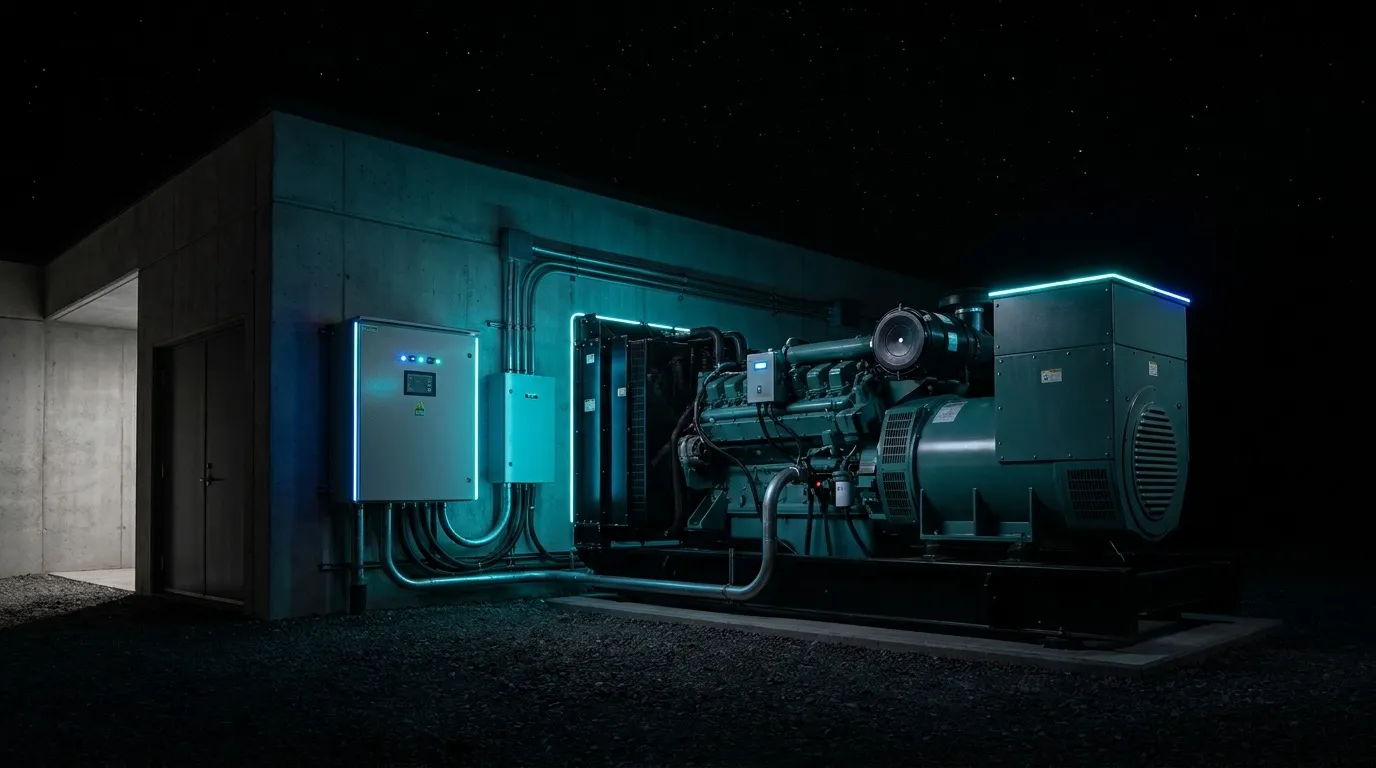
A power outage is a minor inconvenience for a household with a fridge and a phone to charge. For a medical practice, cold-storage business, server room, or family relying on life-support equipment, it is a genuine emergency. Starwatt Systems approaches generator installation as critical infrastructure work — every component, from the alternator to the automatic transfer switch, is selected and sized through formal load analysis rather than rough estimation.
We install petrol, diesel, LPG and natural-gas standby generators across residential, commercial and light-industrial applications. Every installation is engineered to AS 3010 (electrical installations — generating sets) and includes a Certificate of Compliance for Electrical Work from our licensed electricians.
Load Analysis and Generator Sizing
Accurate sizing begins with a detailed load schedule. Starwatt's engineers itemise every load you want the generator to carry — air conditioning, refrigeration, lighting, power outlets, pumps, server racks, and medical equipment — accounting for startup surge currents, power factor, and the realistic coincident demand across all loads simultaneously. From that data, we specify the minimum continuous kW and kVA rating the generator must deliver, then select a unit with appropriate derating margin for your climate and altitude. Oversizing by ten to fifteen percent ensures the engine runs at an efficient load point rather than diesel-slobbering at idle.
- Full load schedule compiled from electrical drawings or on-site metering
- Startup surge analysis for compressors, motors and inverter-driven equipment
- Fuel type selection — diesel, LPG or natural gas — matched to site infrastructure and runtime requirements
- Generator sizing from 6.5 kW single-phase residential to 500 kW three-phase industrial
- Acoustic enclosure selection and noise-attenuation planning for residential zones
Automatic Transfer Switches and Changeover Panels
A manual changeover switch requires someone on-site to physically connect the generator during an outage — which is exactly when key personnel are least likely to be present. Starwatt installs open-transition and closed-transition automatic transfer switches (ATS) that monitor the grid supply, detect a voltage or frequency deviation within milliseconds, start the generator, and transfer the load in under ten seconds without any human intervention. The ATS also manages the return-to-mains sequence, preventing generator disconnection before the grid supply has fully stabilised.
- Open-transition ATS for standard critical-load applications
- Closed-transition (make-before-break) ATS for sensitive electronic loads and data centres
- Configurable delay timers to prevent nuisance starts during brief grid fluctuations
- Critical-load sub-board separation so non-essential loads are isolated during generator operation
- Manual override and maintenance bypass provisions for safe servicing
Fuel Systems, Exhaust and Mechanical Installation
Starwatt manages the complete mechanical scope alongside the electrical installation. Diesel generators require a correctly sized base tank or remote bulk-fuel system with spill containment compliant with Australian Standard AS 1940. Natural-gas and LPG installations require licensed gas-fitting work, which our team coordinates through certified subcontractors we work with directly. Exhaust routing is engineered for safe discharge away from windows, air intakes and neighbouring properties, with flexible exhaust sections to isolate vibration from the building structure.
Commissioning and Load Testing
Every Starwatt generator installation is commissioned under load before handover. We apply a resistive load bank equal to at least eighty percent of the generator's rated output and verify that voltage, frequency, current and power factor all remain within specification across the full test period. ATS changeover time is measured and recorded. Generator exercise schedules — typically a weekly thirty-minute loaded run — are programmed into the controller to maintain battery charge and prevent fuel degradation. You receive a full commissioning report, operation manual, and a clear maintenance schedule.
Ongoing Maintenance and Emergency Response
A standby generator that has never been serviced is not a backup system — it is a false sense of security. Starwatt offers annual service contracts covering oil and filter changes, coolant checks, battery load-testing, alternator output verification, and ATS exercise testing. Our emergency response team is available around the clock, because grid outages do not observe business hours. With Starwatt's maintenance programme, your generator is ready to carry the load every time the grid goes dark.
Generator Installation questions
It depends on which loads you want to power during an outage. A system covering lighting, refrigeration, one air conditioner and general power outlets typically requires 8–15 kW. If you want to run a ducted HVAC system, electric hot water and a pool pump simultaneously, you may need 20–30 kW. We calculate this precisely from a load schedule before recommending any unit.
An automatic transfer switch (ATS) detects when grid power fails, starts the generator, and transfers your critical circuits onto generator power — all within seconds and without any manual intervention. For businesses, medical environments, or any premises where an unattended outage would cause losses, an ATS is essential. For residential use it is strongly recommended for convenience and safety.
Yes, with the right equipment selection and acoustic treatment. Modern inverter-type generators and diesel units in acoustic enclosures can meet standard residential noise limits at the property boundary. We assess your local council requirements and specify a solution — including orientation, concrete base design and acoustic baffling — that achieves compliance without compromising generator performance.
Ready to deploy generator installation?
Tell us about your site and we will model the yield, returns and the fastest path to energised.