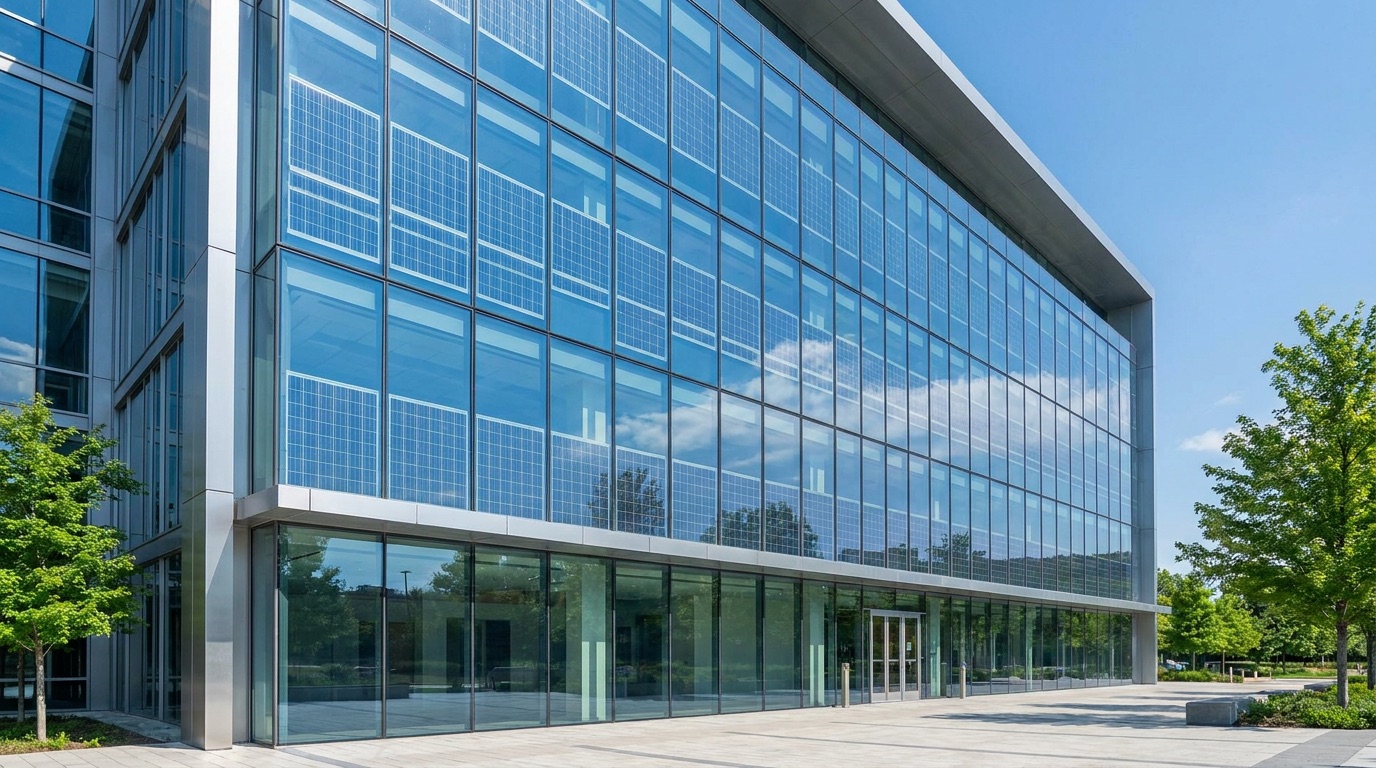
Conventional solar sits on top of a building. Building-integrated photovoltaics become the building. Instead of mounting panels above a finished roof or wall, BIPV materials take the place of that cladding, glazing or roofing - so a single element both encloses the structure and generates electricity.
This matters most where land is scarce and facades are large. A multi-storey building has limited roof but vast vertical surface, and BIPV turns that otherwise passive skin into a productive asset without consuming a single additional square metre of ground.
Facades and solar glass
Vertical PV facades convert the sun that strikes a building's walls into power, performing strongly in the lower morning and afternoon sun common across Australian winters. Architecturally, they read as a designed surface rather than a bolt-on array.
Semi-transparent solar glass goes further, glazing windows, atria and curtain walls while generating quietly in the background. It admits daylight, manages solar heat gain and produces electricity - one material doing three jobs at once.
Spandrel, skylights and roofing
Spandrel panels - the opaque sections between floors in a curtain wall - are ideal BIPV candidates because they never need to be transparent. Replacing standard spandrel with PV recovers generation from surfaces that would otherwise contribute nothing.
- PV facade cladding and rainscreen systems
- Semi-transparent solar glass for windows and atria
- Solar spandrel panels within curtain walls
- Photovoltaic skylights and canopy glazing
- Integrated solar roof tiles and standing-seam membranes
Photovoltaic skylights and canopies generate while providing shelter and shade, and integrated roof tiles and membranes give a clean roofline with no visible racking. In each case the PV element is doing the building envelope's primary job.
Structure and weatherproofing
Because BIPV replaces real building elements, it must meet the same demands as the material it displaces. That means structural loading, wind resistance, water shedding, thermal movement and fire performance all designed to code. We treat each BIPV element as building fabric first and a generator second.
Handled properly, this is an advantage, not a complication. You are not paying twice - once for cladding and again for solar. The PV material earns its place by doing the structural and weatherproofing work you were going to pay for anyway, then generates power on top.
Real estate and asset value
A BIPV envelope changes the economics of a property. On-site generation lowers running costs, improves energy ratings such as NABERS and Green Star, and signals a forward-looking asset to tenants and investors.
For developers and owners, that translates into stronger leasing appeal, reduced operating expenditure and a differentiated building in a competitive market. BIPV is one of the few sustainability features that is both visible from the street and measurable on the balance sheet.
Frequently asked
Rooftop solar sits on top of existing roofing. BIPV replaces the cladding, glazing or roofing itself, so the same element both encloses the building and generates power. It is part of the structure rather than an addition to it.
Semi-transparent solar glass admits daylight and preserves usable views while generating power and managing solar heat gain. Transparency is specified to balance light, outlook and output for each application.
Yes. It lowers operating costs, improves energy ratings like NABERS and Green Star, and differentiates the asset for tenants and investors, supporting both leasing appeal and capital value.