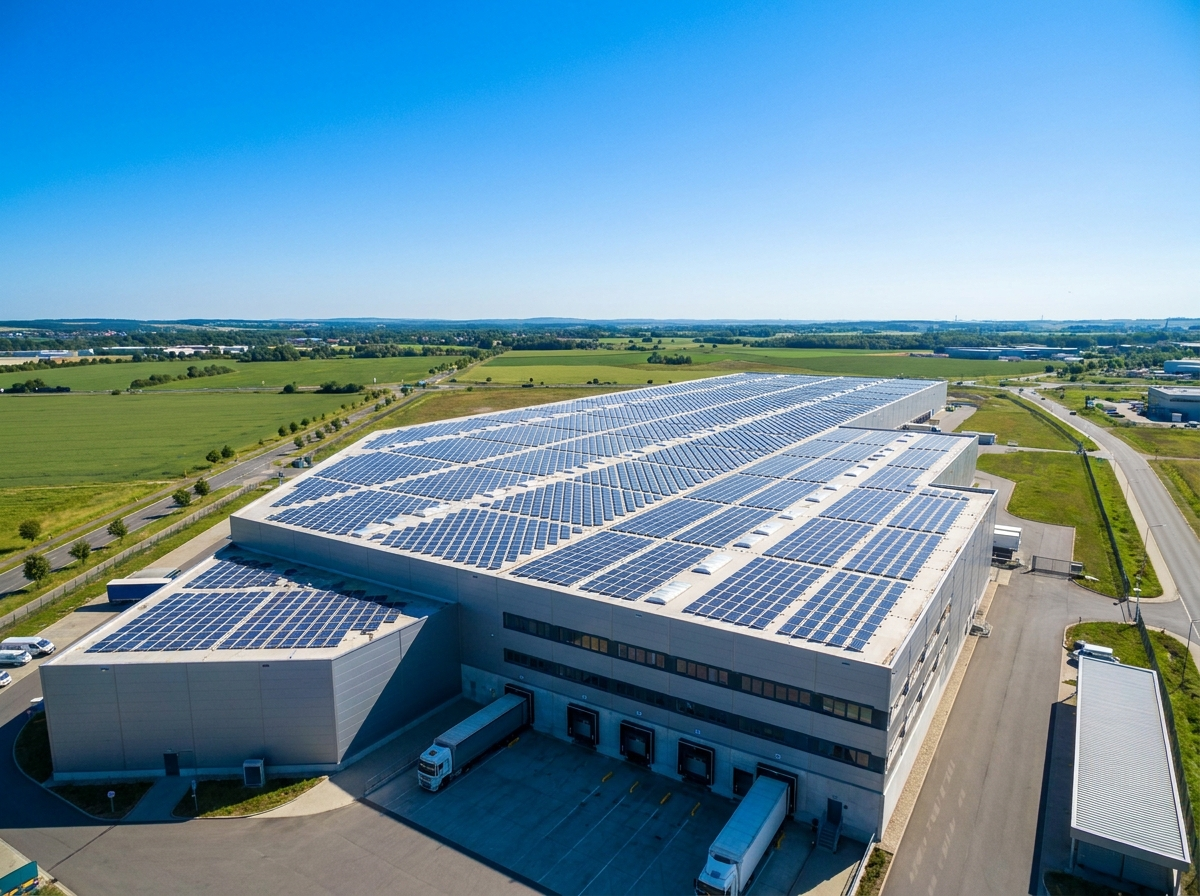
For most businesses, the largest unused asset on site is the roof. A warehouse, factory or distribution centre carries thousands of square metres of structure that does nothing but keep the rain out. Commercial solar converts that space into behind-the-meter generation that offsets daytime load when your consumption and the sun are both at their highest.
Meridian builds commercial and industrial systems as financial infrastructure, not just equipment. We model the project against your network tariff, your demand profile and your cost of capital, then engineer a system that delivers a defensible return and a measurable reduction in operating cost.
Attacking demand charges, not just energy
Many C&I bills are dominated by demand charges, billed on your peak kW or kVA in a window rather than total kWh. Solar that is sized only against energy use misses this. We design to shave the peaks that drive your demand tariff, and where storage is justified we layer in a battery to flatten the profile further and protect against demand spikes.
This is where accurate data matters. We work from your interval meter data and network DMI where available to size the array and inverter precisely, avoiding oversizing that exports cheaply and undersizing that leaves savings on the table.
Roof and land asset utilisation
- Structural assessment of roof load capacity and remaining lifespan
- Ground-mount and carpark canopy options for spare land and hardstand
- Optimised string and inverter layout for shading and obstructions
- Coordination with roof replacement to avoid installing over failing decks
Where land sits idle beside a facility, ground-mount arrays and solar carpark canopies extend the asset further, adding shaded parking or covered yard space while generating power. We assess each surface for what it can carry and what it can earn.
Structural integration and asset protection
On older industrial roofs, the condition of the deck often dictates the project. We assess remaining roof life and load capacity before committing to a design, and we will recommend re-roofing first rather than installing over a sheet that will need replacing inside the system's life. Mounting, penetrations and cable management are engineered to preserve the building's structural and weatherproofing integrity.
Funding, incentives and compliance
Commercial systems above the small-scale threshold generate Large-scale Generation Certificates (LGCs) rather than STCs, and we factor that revenue into the financial model. We can structure projects through capital purchase, finance or a power purchase agreement, and we manage the DNSP connection, metering and Clean Energy Council compliance from application to commissioning.
- LGC eligibility and revenue modelled into the business case
- Capital, finance and PPA structures available
- DNSP connection and protection studies managed
- Ongoing monitoring and O&M to protect long-term yield
Frequently asked
Demand charges are billed on your peak kW or kVA, not just total energy. We size the system, and where justified a battery, to shave those peaks during the demand window, which can cut a meaningful slice of the bill that energy-only sizing would miss.
We assess remaining roof life and load capacity first. If the deck is near end of life we will recommend re-roofing before install, or use ground-mount and carpark canopy options, so you are not putting a 25-year asset on a roof that fails in five.
You can buy the system outright, finance it, or use a power purchase agreement where you pay only for the energy produced. We model each option against your cost of capital and LGC revenue so the structure fits your balance sheet.