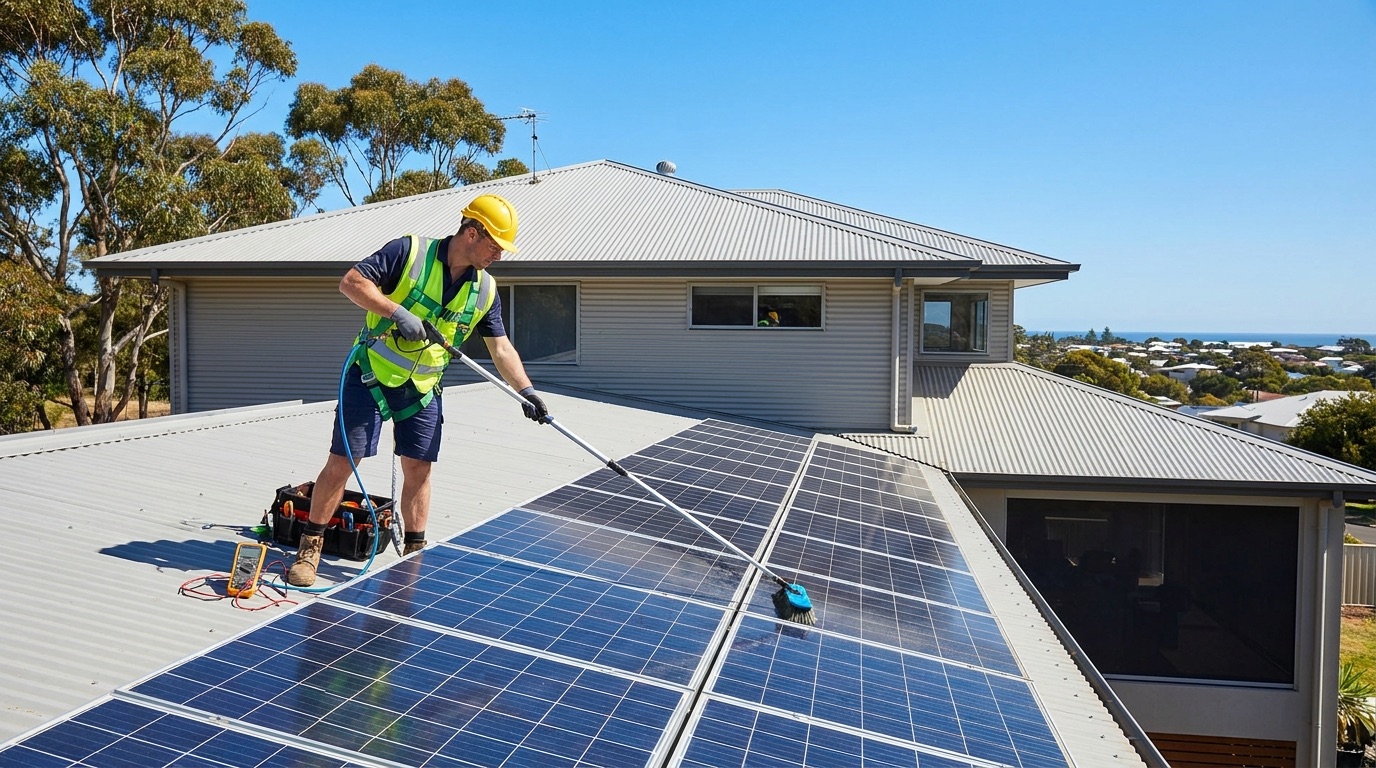
A solar system is a long-lived asset, and like any asset it underperforms if it is left alone. Modules soil, inverters fault, connections degrade and small faults quietly erode yield long before anyone notices the drop on a bill. Operations and maintenance is what keeps a system earning what it was designed to earn.
Meridian provides full lifecycle O&M for residential, commercial and utility-scale solar - combining continuous monitoring, scheduled servicing and rapid fault response under a single accountable agreement built around measurable performance.
Monitoring and SCADA
Everything starts with visibility. For larger sites we monitor generation through SCADA, watching string-level and inverter-level data around the clock and comparing actual output against expected performance for the conditions.
When output drifts below where it should be, the system flags it automatically. That means underperformance is caught in days rather than discovered at the next bill, and a technician arrives knowing what to look for.
Diagnostics and inspection
Finding a fault across thousands of modules needs the right tools. We use drone-mounted thermography to scan large arrays quickly, spotting hot spots, failed cells, bypass diode faults and connection issues from the air without walking every row.
- Aerial and handheld thermographic imaging
- IV curve tracing to pinpoint string and module faults
- Inverter diagnostics, firmware and replacement
- Connection, junction box and DC isolator inspection
On the ground, IV curve tracing characterises the electrical performance of strings and modules, isolating shading, mismatch and degradation that thermal imaging alone cannot fully diagnose. Together these methods turn a vague performance dip into a precise work order.
Soiling and cleaning
Dust, pollen, salt and bird soiling all reduce output, and in dry or agricultural regions the loss can be significant. We measure soiling against clean reference cells so cleaning is scheduled when it actually pays for itself, not on an arbitrary calendar.
Vegetation management, drainage and array access are handled alongside cleaning, because the land around an array affects its performance and safety as much as the modules themselves.
Corrective work and uptime
When components fail, response time protects revenue. We hold critical spares, swap faulty inverters quickly and carry out corrective repairs to restore generation with minimum downtime, all tracked against agreed availability targets.
Every action is recorded - faults, fixes, performance and warranty claims - giving owners a clear audit trail. That documentation protects warranties, supports the asset's value at sale or refinance, and proves the system is doing its job.
Frequently asked
Continuous monitoring, and SCADA on larger sites, compares actual output against expected performance for the weather. When generation drifts low, the system flags it automatically so we can investigate within days rather than months.
It depends on your location and environment. We measure soiling losses against reference cells and clean when the recovered generation justifies the cost, rather than on a fixed schedule that may clean too often or too rarely.
Yes. Documented monitoring, inspection and maintenance is often required to keep manufacturer warranties valid, and our records provide the evidence needed to support any claim.