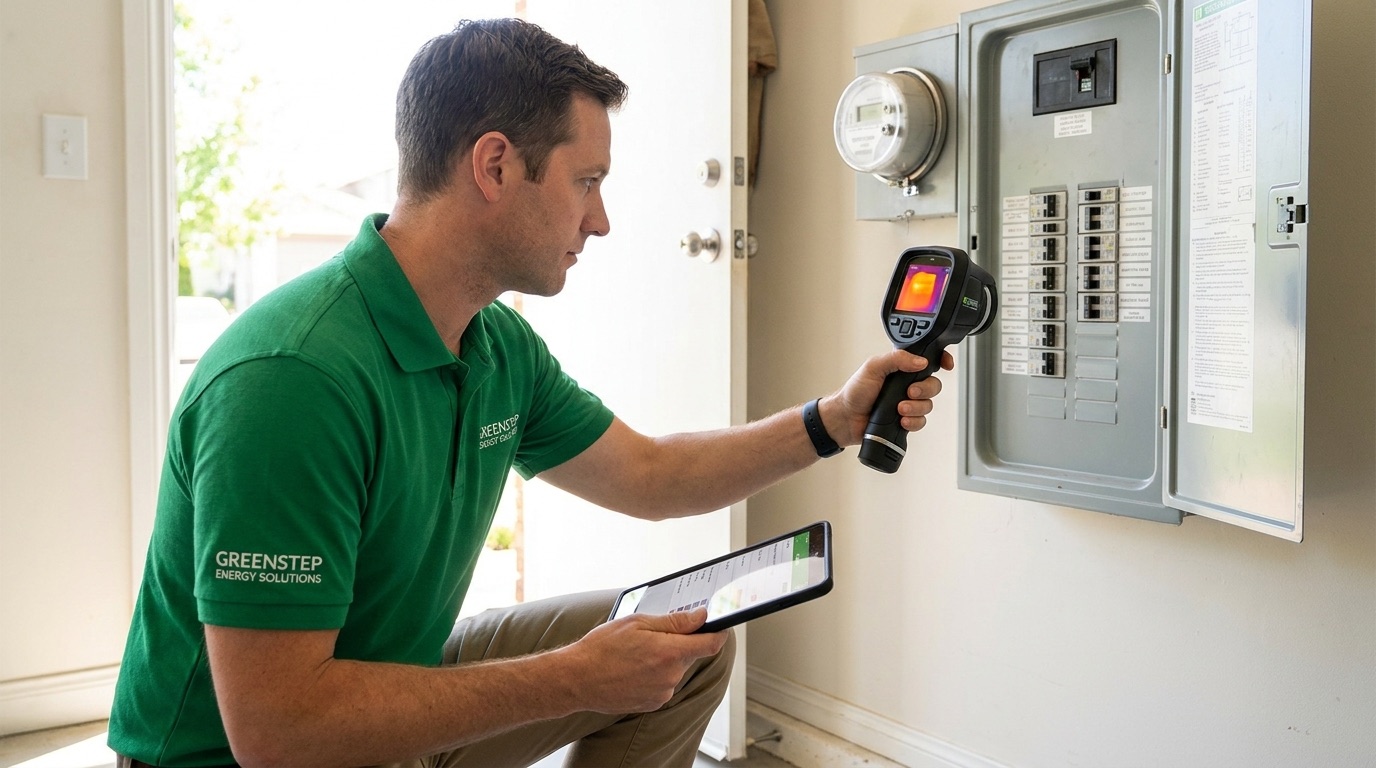
Most solar projects fail quietly in the first hour: the array is sized to a roof or a budget rather than to the load it is meant to offset. The result is an asset that exports cheaply at midday and leaves the expensive evening peak untouched. An energy audit reverses that order. We measure consumption first, understand the tariff structure, and only then design generation around it.
Meridian conducts audits to the three levels defined in AS/NZS 3598, the Australian standard for energy audits. A Level 1 audit is a benchmarking walk-through that flags the largest opportunities. Level 2 quantifies them with metering and analysis to investment-grade confidence. Level 3 drills into a single system, such as HVAC or refrigeration, with detailed sub-metering. We recommend the level that matches the decision you are trying to make.
Interval and NMI data first
Every grid-connected site in the National Electricity Market has a National Metering Identifier (NMI), and most modern meters record consumption in 30-minute or 5-minute intervals. With your authority we retrieve up to two years of that interval data directly from your retailer or metering provider. That single dataset reveals your base load, your peak demand windows, weekend and seasonal patterns, and how much of your bill is energy versus network demand charges.
Reading the half-hourly shape is what separates a credible solar design from a sales pitch. A site that peaks at 8am and 6pm needs storage or load shifting, not just more panels. A site that runs flat around the clock is an ideal candidate for a large behind-the-meter array. The data decides.
Finding the negawatts
The cheapest kilowatt-hour is the one you never use. Before we recommend a single panel, we look for negawatts: efficiency measures that cut demand at lower cost than new generation. Often the audit pays for itself here, and shrinks the array you ultimately need.
- Power factor correction and demand-charge management to cut network costs
- Lighting, HVAC scheduling and refrigeration tuning that trim base load
- Load shifting of pumps, batch processes and EV charging into solar hours
- Voltage optimisation where supply runs persistently high
Measurement and verification
An audit is a promise about future savings, so we hold it to account. Using the principles of the International Performance Measurement and Verification Protocol (IPMVP), we set a measured baseline before works begin and compare it against metered performance afterwards, adjusting for weather, production volume and occupancy. This is how a saving moves from a slide to a number your finance team will sign off on.
Investment-grade measurement and verification also underpins any performance guarantee, power purchase agreement or green financing attached to the project. Lenders and PPA offtakers want evidence, and a documented M&V plan is what turns engineering confidence into bankable terms.
An audit that respects the asset
For owners and developers, an energy audit is also a property exercise. Understanding a building's true energy intensity informs NABERS ratings, lease structures and the embodied value of any solar and storage you add. A well-audited, well-documented asset is easier to finance, easier to insure and worth more when it changes hands. We deliver the audit as a clean evidence pack, not a black box, so it travels with the building.
Frequently asked
Not always. A Level 1 benchmarking audit is often enough to confirm whether a project is worth pursuing. We escalate to Level 2 or 3 only when a specific investment decision needs investment-grade numbers.
With your written authority we retrieve up to two years of interval data against your NMI directly from your retailer or metering coordinator, so the analysis is based on your real load rather than estimates.
It is the disciplined comparison of energy use before and after a project, following IPMVP principles. It proves the savings actually happened and supports any guarantee or financing tied to the work.