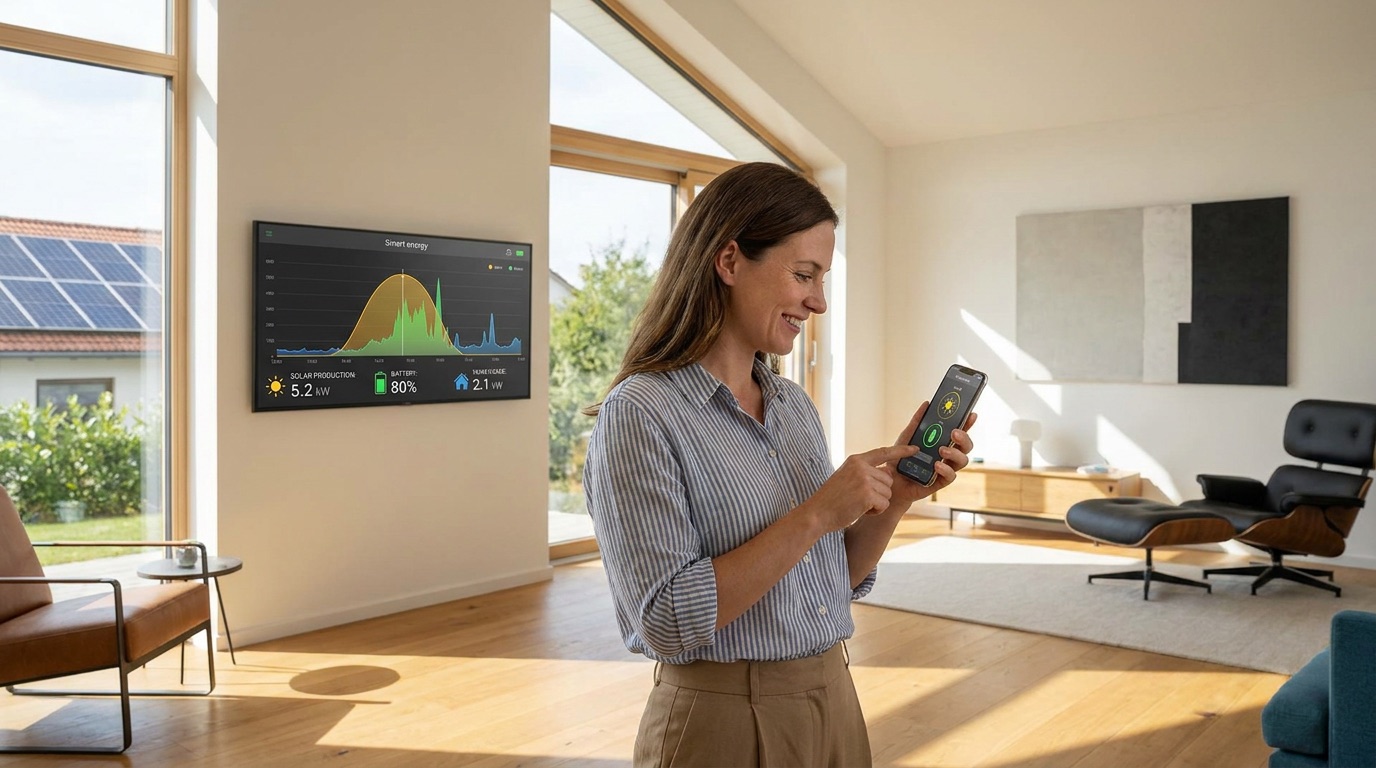
A solar system that simply exports surplus to the grid leaves money on the table. The real value sits in coordination - using your own generation to run the loads that matter, charging the battery and the car at the right moments, and only buying grid power when it is genuinely cheapest.
Meridian builds home energy management around a single controller that sees generation, storage, consumption and tariffs together. Instead of a drawer full of disconnected apps, you get one intelligent system that makes decisions automatically and explains every one of them.
Measuring before managing
You cannot optimise what you cannot see. We install current transformer clamps on the main supply and key circuits to measure real power flow second by second - solar in, grid in, and what each major load is actually drawing.
That metering feeds a home energy management system that knows, at any moment, whether you have surplus solar to spend or a deficit to cover. Every automation decision is grounded in real measurement, not assumptions about your usage.
Coordinating loads
Once the system can see your energy, it can act on it. Hot water, pool pumps, EV charging and air conditioning are the big movable loads in most Australian homes, and shifting them to align with solar generation transforms self-consumption.
- Divert surplus solar to hot water and battery before exporting
- Schedule pool pumps and EV charging into the solar window
- Pre-cool or pre-heat the home on free generation
- Hold battery charge for evening peak tariff periods
Because the controller understands NEM tariff structures, it can also play time-of-use and demand tariffs in your favour - storing cheap or self-generated energy and avoiding expensive peak imports.
Open integration, not lock-in
We favour open protocols so your home automation talks to mainstream inverters, batteries, chargers and smart switches rather than a single closed ecosystem. Lighting, climate and security can sit alongside energy control, but energy logic stays the foundation.
Voice assistants and scenes are welcome additions, yet they ride on top of a system whose first job is to manage power intelligently. Convenience features should never compromise the energy decisions that pay for the system.
Visibility and value
Everything is visible in one app: live generation, consumption, battery state, savings and the actions the system has taken on your behalf. Clear dashboards build trust and help you fine-tune behaviour over time.
An integrated, well-documented energy home is also a more valuable property. Buyers increasingly look for solar, storage and EV readiness working as a coherent whole, and a managed system with proper metering is a genuine selling point.
Frequently asked
Usually not. Most modern inverters and batteries integrate cleanly, and we add metering and a controller around what you have. We confirm compatibility during the assessment.
Current transformer clamps measure real power flow on your circuits without cutting any wires. They give the system accurate, live data so it can divert surplus solar and avoid expensive grid imports.
Yes. It understands your tariff structure and shifts loads and battery use to avoid peak periods, prioritising self-generated and off-peak energy.