Solar panels do not last forever. Output drifts down over twenty-five to thirty years, and Australia's earliest large installations are now ageing out or being damaged by hail and storms. That creates two questions at once: what to do with the old modules, and how to get more from the land or roof they sit on. The answer is rarely just disposal.
Meridian treats end of life as the start of a new cycle. A retired panel is a stack of recoverable materials, and a tired array is an opportunity to repower a site that is already approved, connected and proven. We handle both responsibly and as a single coordinated programme.
What a panel is worth at end of life
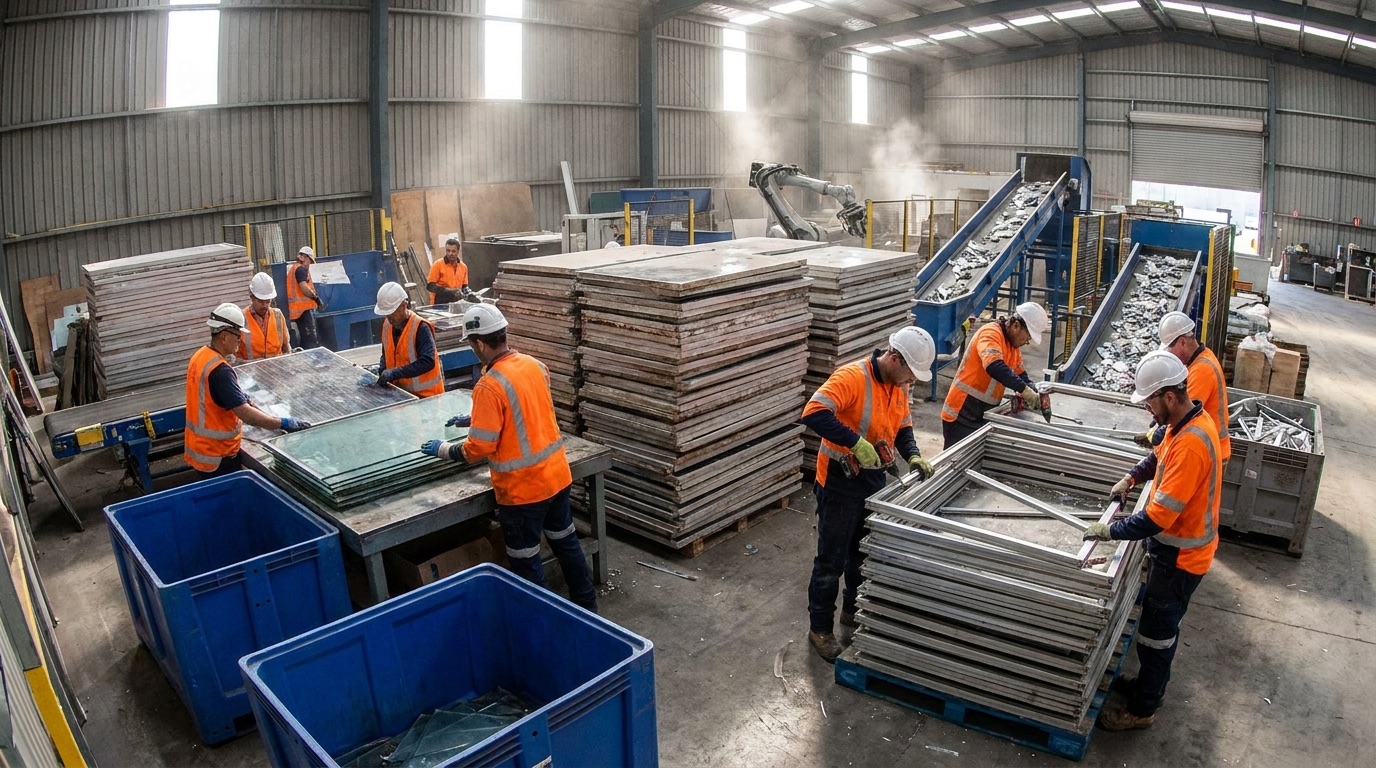
A crystalline silicon module is more than 90 per cent recoverable by mass. The aluminium frame and the glass come off first and re-enter established recycling streams. Inside the laminate sit the materials that matter most: high-purity silicon, copper, and small but valuable quantities of silver in the cell contacts. Recovering these reduces the demand for newly mined material and keeps embodied carbon in circulation rather than in the ground.
- Aluminium frames recovered and returned to metal recyclers
- Glass separated for use as cullet and construction aggregate
- Silicon, copper and silver reclaimed from the cell laminate
- Junction boxes and cabling diverted from general waste streams
The landfill ban is real
This is no longer optional. Victoria's ban on sending electronic waste to landfill, in force since 2019, covers solar panels, and other states are moving the same way. Sending decommissioned modules to landfill is increasingly unlawful as well as wasteful. We manage compliant collection, transport and processing so your decommissioning leaves a clean paper trail.
Australia is also developing product stewardship arrangements for photovoltaic systems, designed to make manufacturers and installers accountable for the full lifecycle of the equipment they put on roofs. We keep your projects ahead of those obligations rather than scrambling to meet them later.
Repowering an existing site
Where the panels have aged but the location is sound, repowering is often the strongest return in solar. The land use, grid connection, planning approval and mounting structure already exist; only the modules and sometimes the inverters need replacing. Because panel efficiency has roughly doubled since the early 2010s, a repowered array frequently produces far more energy from exactly the same footprint.
For a property owner, that is a rare combination: higher output, refreshed warranties and a longer asset life, all without acquiring new land or re-running a connection process. It protects the value already invested in the site and extends it for another twenty-five years.
A circular asset, not a stranded one
Done well, recycling and repowering turn what looks like a liability into a managed, value-preserving event. The materials re-enter the supply chain, the site keeps generating, and the property carries a modern, warrantied, fully compliant energy asset rather than a decommissioning headache. We document the whole chain so it stands up to audit and travels with the building.
Frequently asked
Yes. A growing network of accredited processors recovers glass, aluminium, silicon, copper and silver from crystalline panels. More than 90 per cent of a typical module by mass can be reclaimed rather than landfilled.
In Victoria, panels fall under the e-waste landfill ban that has applied since 2019, so they cannot lawfully go to landfill. Other states are tightening rules and a national product stewardship scheme is developing, so compliant recycling is the safe path everywhere.
Often both. If the site has good sun, an existing connection and sound mounting, we repower with modern high-efficiency panels and recycle the old ones, getting more energy from the same footprint while disposing of the originals responsibly.