Numbers don't lie
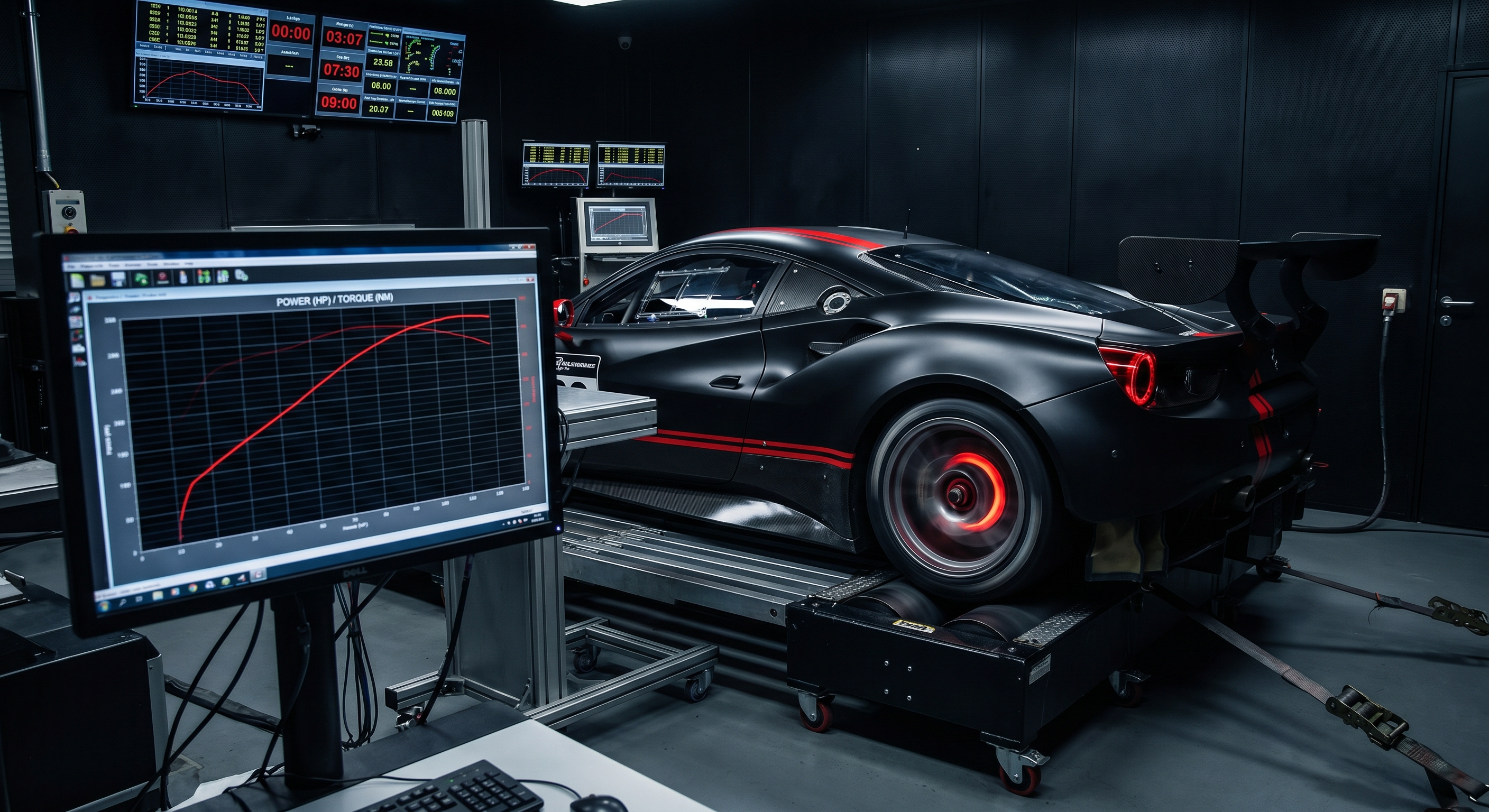
Our in-house dyno turns guesswork into data — baseline pulls, before-and-after comparisons and full air-fuel and boost logging on every run.
Seat-of-the-pants is the least reliable instrument in motorsport. Adrenaline, a fresh set of tyres and a cool morning can make a car feel transformed when nothing has actually changed. The dyno removes the opinion and leaves you with the only thing that matters on the pit wall: hard, repeatable numbers.
Whether you want to verify what your last upgrade really delivered, settle an argument about a mod, or get a proper baseline before a build, our in-house dyno gives you a controlled, repeatable environment to measure power, torque and engine health the same way every time.
A baseline you can trust
Every meaningful change starts with a known starting point. A baseline pull captures your current power and torque curves along with air-fuel ratio, boost and timing, so you know exactly where the car sits before a single bolt is turned.
We control the variables that skew results — correction factors, fan cooling, consistent ramp rates and warm-up — so a run today can be compared honestly against a run next month. Without that discipline, the numbers are just noise.
Before-and-after that proves the gain
Marketing claims a part is worth twenty kilowatts. The dyno tells you what it's worth on your car, in your climate, with your supporting mods. Back-to-back runs under identical conditions turn a sales pitch into evidence.
- Baseline power and torque runs with printed graphs
- Before-and-after comparison overlays for any modification
- Full air-fuel ratio, boost and timing logging
- Engine health read-out and fault flagging
- Repeatable, correction-factored conditions for fair comparison
- Data logs you keep for your own records
More than just a number
A power run is also a diagnostic. While the car is loaded up, we watch for the warning signs that never show on a street drive: a lean spike under boost, timing being pulled, a boost curve that falls away with heat, or air-fuel readings that drift as the run goes on.
That read-out often catches problems before they become expensive — a failing sensor, a boost leak, fuelling that's on the edge. It's a health check and a performance measurement in the same session.
Data you can act on
You leave with a printed power graph and the underlying logs, not just a headline figure. That record becomes the reference point for your next decision, whether that's a tune, a hardware change or simply confirming the car is ready for an event.
Book a baseline power run and walk away with a full health read-out, a printed graph and the hard data to back your next move.
Dyno Testing & Power Runs questions
A power run measures and logs what your car currently makes, giving you a baseline and a health read-out. A tune actively changes the ECU calibration to alter that output, and it's developed on the dyno using exactly the kind of data a power run captures.
Different dyno types, correction factors and ambient conditions all shift the headline figure, which is why cross-dyno comparisons are unreliable. What matters is consistency: measuring before and after on the same dyno under the same controlled conditions gives you an honest read of any change.
Bring the car with a healthy cooling system, decent tyres and at least a half tank of the fuel you normally run. Let us know of any known issues beforehand, because we'll flag anything that looks unsafe rather than risk a run that could hurt the engine.
Ready to book dyno testing & power runs?
Tell us your car, your goals and the circuits you run. We'll come back with a straight answer, a fixed quote and a data-backed plan.