Feed it cooler air
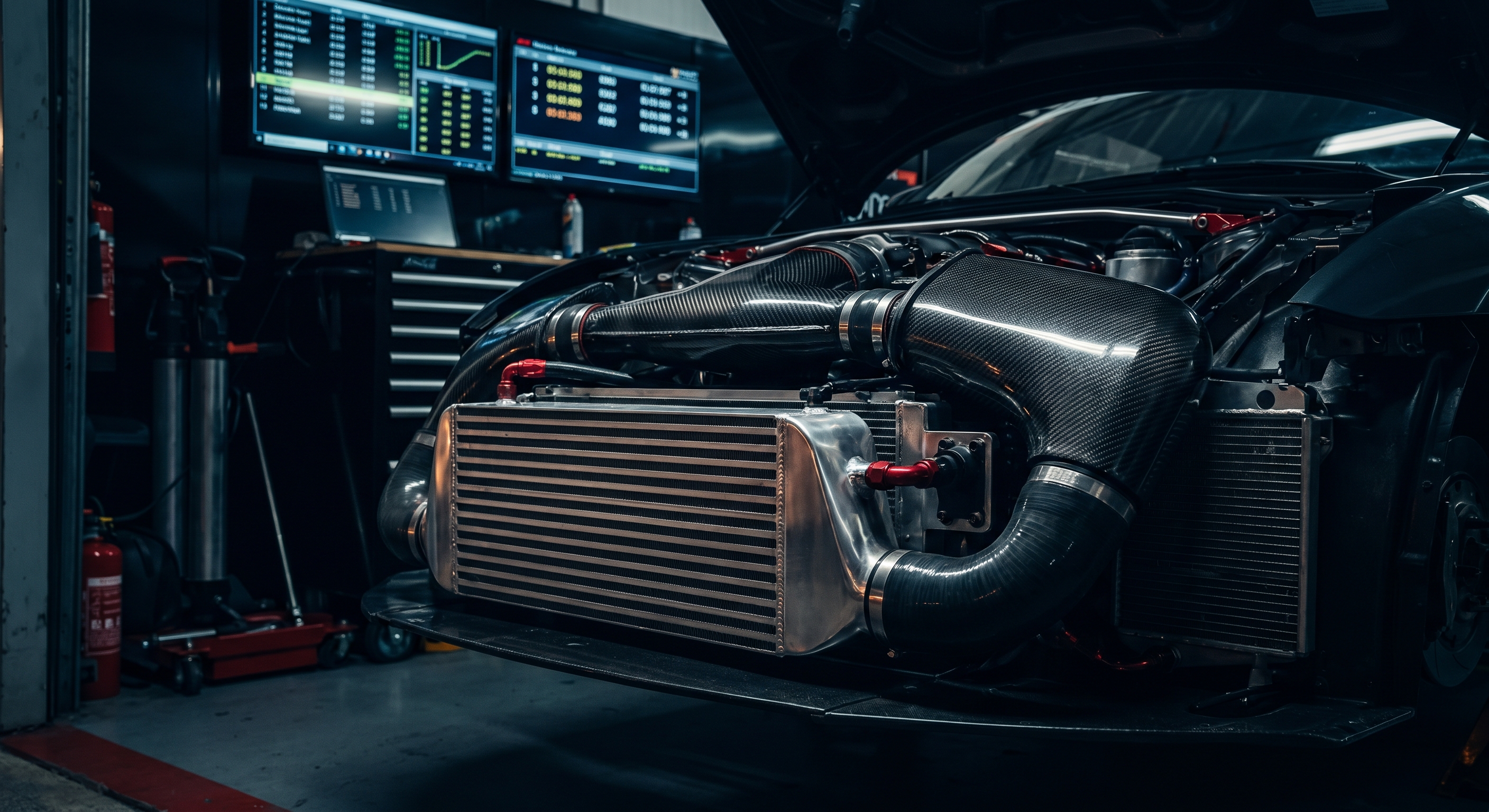
Power loves cold, dense air. We fit high-flow intakes and front-mount intercoolers that drop intake temps and hold power consistent run after run.
Engines make power by burning fuel with oxygen, and cold air carries more oxygen per litre than hot air. That's the whole story behind intake and intercooler upgrades: feed the engine cooler, denser air and there's more oxygen in every cylinder to burn, which means more power and a tune that can run harder without flirting with detonation.
At XTC Motorsport we focus on the two things that actually move the needle, getting fresh air into the engine and pulling heat out of the charge before it gets there. Done well, these upgrades don't just add a peak figure on the dyno; they hold power consistent run after run, which is exactly what you want when you're stringing laps together rather than chasing a single hero pull.
Intakes that breathe, shielded from heat
A high-flow intake reduces the restriction the engine fights to draw air in, but the bigger win is often where that air comes from. A filter sitting in the engine bay sucks up heat-soaked air, so we focus on getting the intake fed from a cool source and shielding it from radiant heat, rather than just bolting on a shiny cone that sounds good and drinks hot air.
On forced-induction cars the intake also needs to keep up with the turbo or supercharger's demand without becoming the bottleneck. We size and route the intake so it flows for your boost target and stays sealed against the engine bay's heat.
Intercoolers that hold temps under load
Compressing air heats it up, so every boosted engine needs an intercooler to pull that heat back out before the charge reaches the cylinders. The factory unit is usually sized for stock power and a quick blast, not sustained load, so it heat-soaks after a couple of hard runs and power tapers off as intake temps climb. A properly sized front-mount fixes that.
- High-flow intakes fed from a cool air source, not engine-bay heat
- Heat shielding to keep intake temperatures down under load
- Front-mount intercoolers sized to your boost and power target
- Efficient cores that resist heat soak across repeated runs
- Mandrel-bent charge piping with secure, leak-free couplers
- Fitment that retains cooling airflow to radiator and oil cooler
Consistent power, run after run
The point of all this is repeatability. A bigger core and a cooler intake mean the charge temperature stays low even on your fifth lap, so the power you saw on the first run is the power you keep. That consistency is worth more on track than a slightly higher peak number that only shows up when everything is cold.
If your car runs out of breath when the session heats up, the answer is cooler, denser air. Spec a cold-air intake and intercooler matched to your boost target and hold your power lap after lap.
Intake & Intercooler questions
On a naturally aspirated car the gains are usually modest unless the factory intake is genuinely restrictive. The bigger benefit comes on boosted cars and as part of a wider package with a tune, where freeing up airflow and cooling the charge let the engine make and hold more power.
That's typically heat soak, your intercooler and intake have absorbed heat and can no longer cool the charge effectively, so intake temps climb and power drops. A larger, more efficient front-mount intercooler resists heat soak and keeps power consistent across repeated runs.
For the best and safest results, yes. Cooler, denser air changes the air-fuel and timing picture, so a tune lets us safely capitalise on the lower intake temperatures rather than leaving power and reliability on the table.
Ready to book intake & intercooler?
Tell us your car, your goals and the circuits you run. We'll come back with a straight answer, a fixed quote and a data-backed plan.