A network built on certified copper
Structured cabling, fibre backbones, patch racks, and comms rooms — every link tested, certified, and documented to ACMA standards.
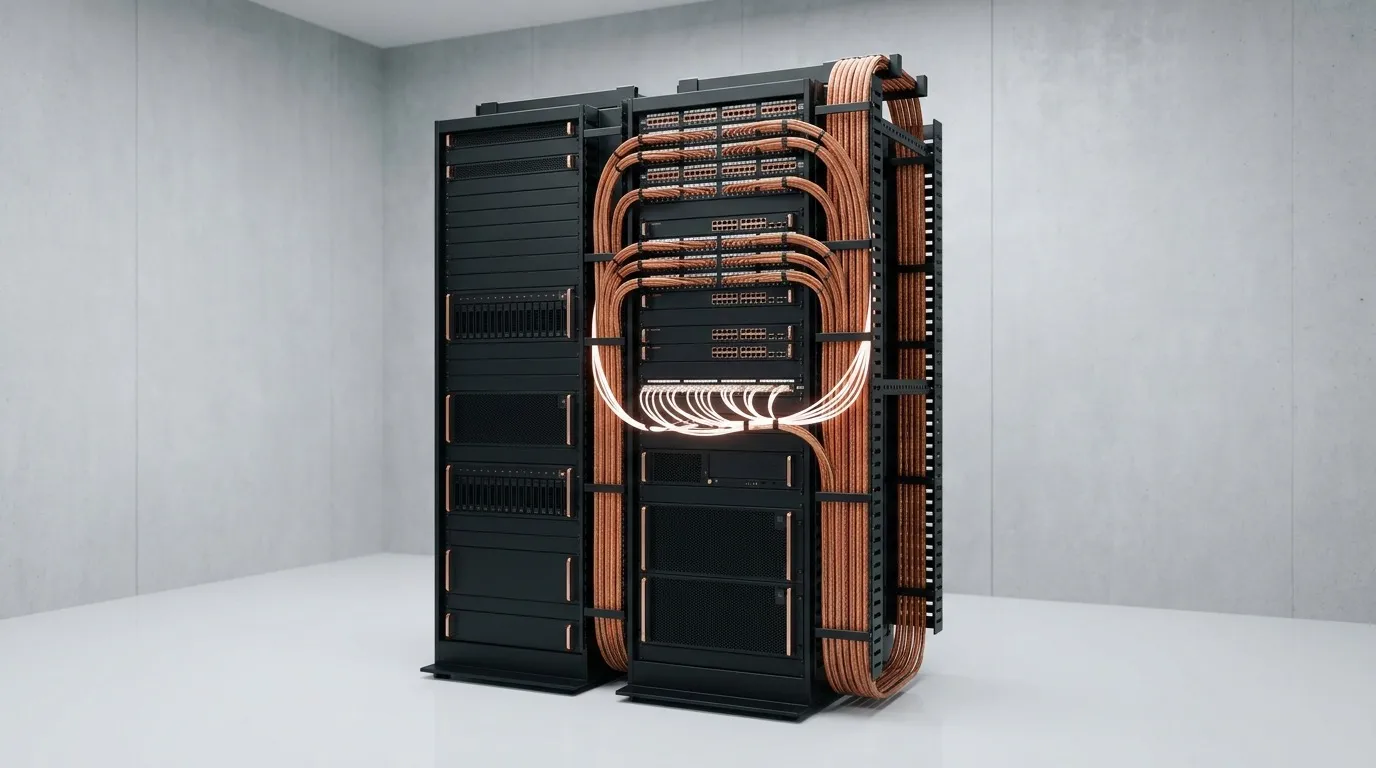
Structured cabling is the silent infrastructure that determines whether a building's digital systems perform at the standard its users expect or spend the next decade being blamed for problems that originate in compromised cable runs, inadequate rack terminations, and channels that were never tested to the performance tier they were supposed to deliver. At Lumen & Wire, our data cabling division treats every installation as a long-term infrastructure investment — designed, installed, and certified to standards that will support network evolution well beyond the technology that exists at handover.
We design and install horizontal copper cabling to Cat6A (10GBASE-T to 100 metres), multimode fibre backbones in OM4 (100GbE over appropriate distances) and singlemode OS2 for inter-building or long-haul campus runs, and we certify every installed channel and permanent link using Fluke DSX-8000 CableAnalyzer test equipment, which produces traceable, standard-compliant test reports. Our work is carried out in compliance with AS/CA S009:2013 (Installation requirements for customer cabling) and the ACMA licensing framework that governs all customer cabling work in Australia.
Cat6A Copper and Fibre Backbone Design
The decision between Cat6A shielded (F/UTP or S/FTP) and unshielded (U/UTP) for a given installation depends on the electromagnetic environment, the rack space available for cable management, and the earthing continuity achievable in the building's steel structure. In commercial buildings with significant power cable density — large open-plan offices, plant rooms, above-ceiling runs alongside mechanical services — shielded Cat6A with proper earthed patch panels and shielded outlets provides meaningful interference rejection that unshielded systems cannot match. We specify on the basis of site assessment and the client's operational profile, not on product cost alone.
Fibre backbone design requires careful attention to connector loss budgets, appropriate bend-radius management throughout the cable pathway, and splice versus connector decisions that balance upfront labour cost against long-term flexibility. OM4 laser-optimised multimode fibre supports 100GbE to 150 metres — sufficient for most intra-building backbone applications — while OS2 singlemode eliminates distance as a design constraint for campus or inter-building links. We terminate fibre to LC duplex connectors as standard, use factory-terminated breakout assemblies where practicable to minimise field splice count, and OTDR-test every link before enclosing in racks or conduit.
- Cat6A U/UTP and F/UTP horizontal cabling, designed to 100m permanent link budgets
- OM4 multimode fibre backbone for 10G and 100G intra-building applications
- OS2 singlemode fibre for inter-building, campus, and long-haul links
- Fluke DSX-8000 channel and permanent link certification — full test report package at handover
- 19-inch rack construction, patch panel termination, and cable management to BICSI TDMM standards
- AS/CA S009:2013 compliance and ACMA Open Cabling registration on all installations
Comms Rooms, Racks, and Handover Documentation
A structured cabling system is only as good as the comms room that anchors it. Lumen & Wire constructs and fits out telecommunications rooms to TIA-942 and AS/NZS 2834 guidelines: correctly sized racks with adequate front and rear access, proper cable management that prevents airflow restriction and allows individual cable movement without disturbing adjacent runs, and a containment system from the rack to the ceiling pathway that maintains bend radius and separation between copper and fibre throughout. Power circuits to comms rooms are installed on dedicated breakers with UPS provision consideration built into the rack design from the outset.
At project completion, we deliver a documentation package that is genuinely useful rather than a formality. This includes the full Fluke test report file in both XML and PDF format, a cable schedule correlating outlet labels to patch panel port designations, rack elevation drawings showing installed equipment positions, and photographs of each completed rack interior. Where ACMA registration is required for open cabling installations — which includes all commercial premises cabling work — we attend to registration requirements and provide the client with the relevant registration documentation for their premises file. Our installations are designed to be handed over, understood, and confidently expanded by whoever manages the network for the next decade.
At a glance
Data & Network Cabling — your questions answered
Cat6 supports 10GBASE-T to a maximum of 55 metres in a fully bundled installation, and reliably to around 37 metres in high-noise environments. Cat6A maintains full 10GBASE-T performance to 100 metres regardless of bundling or alien crosstalk exposure, and is the correct specification for any installation where 10-gigabit connectivity is expected at the work area outlet now or in the future. For most commercial office installations of modest to medium scale, the cable material cost difference between Cat6 and Cat6A is relatively small against the total project cost, and the lifecycle value of future-proofing the horizontal cabling infrastructure is substantial.
Fluke certification is not mandated by regulation for all installations, but it is specified by most commercial consultants and is the only defensible way to demonstrate that an installed cabling channel meets the performance requirements of the relevant cabling standard — in Australia, AS/CA S009 and the applicable ISO/IEC 11801 class. The test report records measured insertion loss, return loss, NEXT, FEXT, and propagation delay for every installed channel against the standard's pass/fail limits. If a channel fails due to poor termination or a damaged cable section, the report identifies the fault location so it can be rectified before the network is handed over. We provide all test data in full Fluke project file format so your IT team or consultant can independently review results.
Yes. Under the Telecommunications Act 1997, all customer cabling work on telecommunications networks in Australia must be carried out by a Registered Cabler holding an appropriate ACMA registration. Lumen & Wire's data cabling technicians hold current ACMA Open Cabling registrations covering both copper and fibre installation work. Following completion of an installation, we register the cabling with the ACMA's Cabling Provider Forum as required under the Cabling Provider Rules 2020, and we provide the client with registration documentation for their records.
Yes, and we do so regularly. Occupied-building data cabling typically involves above-ceiling cable routing during business hours where access does not require ceiling tile removal in occupied zones, with outlet installation and termination work scheduled for low-traffic periods or after hours. We use cable pathway systems that avoid unnecessary disruption to existing services, minimise dust and noise, and restore ceiling tiles and access panels to a tidy finish. A staging plan that coordinates with your IT team and building manager is developed before works commence, ensuring that active network services are not interrupted at critical times.
Related services
Commercial Electrical
Fit-outs, distribution, and tenancy works for offices, retail, and hospitality, delivered on programme.
Learn more
Industrial Electrical
Machine wiring, motor control, three-phase power, and PLC integration for plants and factories.
Learn more
HVAC Electrical
Power, controls, and BMS integration for heating, cooling, and ventilation across any building.
Learn moreNeed data & network cabling done properly?
Talk to a licensed Lumen & Wire electrician for honest advice and a clear, itemised quote — with no obligation.