Detection that buys precious time
Addressable fire detection, occupant warning, and emergency/exit lighting designed and certified to AS 1670 and the NCC.
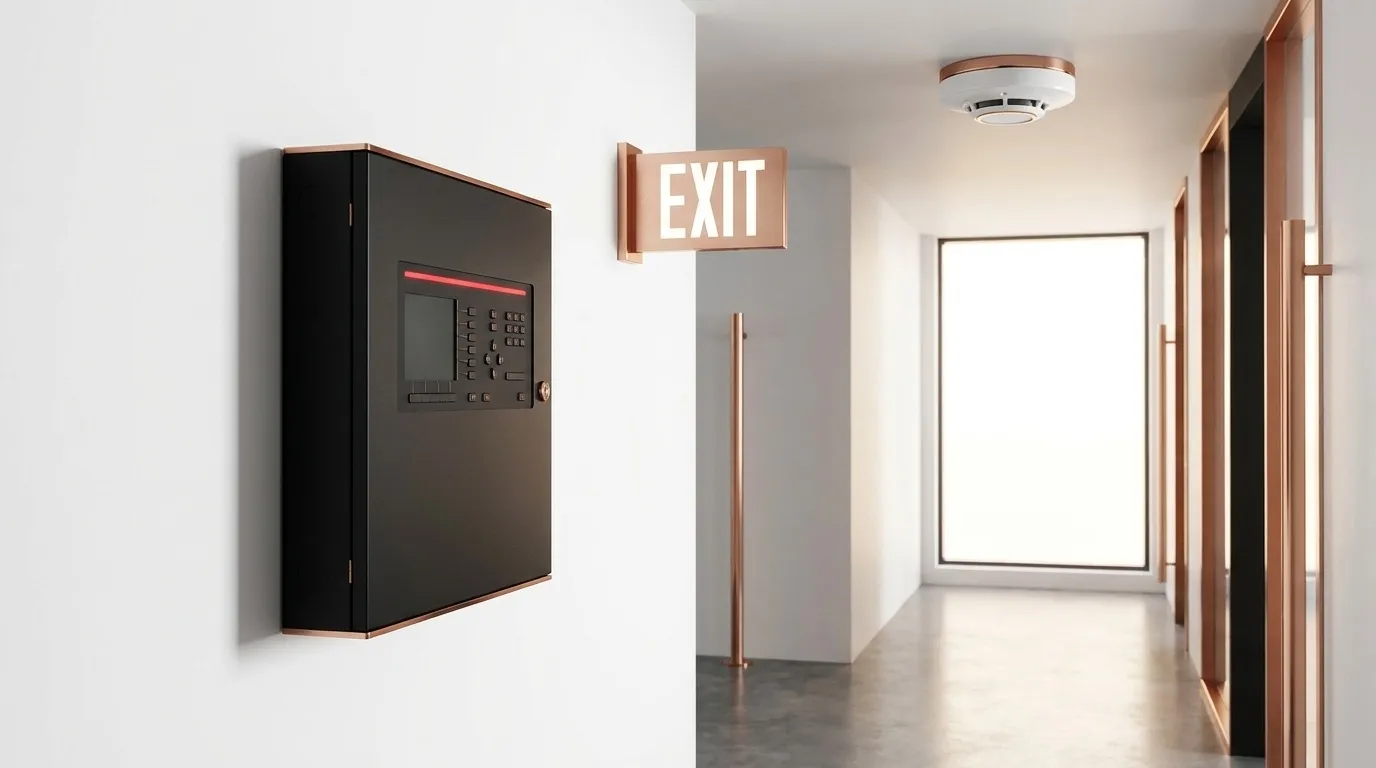
A fire alarm system is not a commodity purchase. It is a life safety system, and the consequences of an underspecified or poorly maintained installation are measured in lives, not just downtime or insurance claims. Lumen & Wire holds the licensing and technical capability to design, install, commission, and certify compliant fire detection and warning systems across commercial, industrial, and residential class buildings in Victoria. We work to AS 1670 for fire detection and alarm systems, AS 2293 for emergency and exit lighting, and the ongoing maintenance requirements of AS 1851.
Our fire systems division operates with the same methodical rigour that characterises all of our electrical work. We read the standards, we understand the intent behind them, and we apply them consistently across every project. That means no shortcuts on cable routes, no bypassed zones, and no commissioning sign-off until the system performs to specification. If a certifier or building surveyor has a question about our installation, we can answer it — in writing, with documentation.
Addressable Fire Detection: Smoke, Heat, and Multi-Criteria Devices
Addressable fire alarm systems provide the precision that conventional zone-based panels cannot match. Each device on an addressable loop reports its identity and status individually to the fire indicator panel, enabling pinpoint fault and alarm location in buildings where zone mapping alone would require personnel to search floors or wing sections before locating an activated device. We specify addressable optical smoke detectors, heat detectors, and multi-criteria devices appropriate to the environment — taking into account cooking areas, dust-generating plant rooms, atrium spaces, and other locations where device selection has a material effect on nuisance alarm rates.
Occupant warning systems are designed as an integrated component of the fire system, not an afterthought. Sounder and strobe placements are calculated to achieve the sound pressure levels and visual coverage mandated by AS 1670, ensuring that warning signals are perceivable by all building occupants across the full range of conditions, including high-ambient-noise environments.
- Addressable fire indicator panels with individual device identification
- Optical smoke detectors, rate-of-rise and fixed-temperature heat detectors, and multi-criteria devices
- Occupant warning: sounder, visual alarm device, and voice evacuation system integration
- Emergency and exit lighting to AS 2293, including maintained and non-maintained fittings
- AS 1670 system design, installation, commissioning, and certification documentation
- AS 1851 preventive maintenance programs with compliant inspection records
Emergency and Exit Lighting to AS 2293
Emergency and exit lighting is mandated for a reason: when mains power fails during an emergency, occupants must still be able to navigate safely to exits. We design and install emergency lighting systems — including maintained, non-maintained, and sustained luminaires — in accordance with AS 2293. Every fitting is selected and positioned to achieve the minimum illuminance levels required by the standard along evacuation paths, at exit signs, and at hazard locations such as stairwells, electrical switchboards, and manual call points.
Exit signs are specified with the illuminance, contrast, and symbol legibility required to remain identifiable under degraded visibility conditions. Battery autonomy is calculated to meet the 90-minute minimum discharge duration specified by AS 2293. We provide commissioning records for every luminaire, and our AS 1851 maintenance programs include the discharge testing and inspection intervals necessary to keep emergency lighting compliant throughout its service life.
AS 1851 Preventive Maintenance
Fire systems degrade silently. Dust accumulates on detector heads, batteries age, isolators remain activated after maintenance work, and by the time a fault becomes apparent, the system may have been compromised for months. AS 1851 prescribes the inspection frequencies, test procedures, and record-keeping requirements that prevent this. Our maintenance programs are structured around the standard's monthly, quarterly, six-monthly, and annual service intervals. We deliver compliant inspection reports after every visit, and we flag defects clearly with recommended rectification timelines so that building owners and managers can make informed decisions without being pressured into unnecessary works.
At a glance
Fire Alarm Systems — your questions answered
A conventional system divides a building into zones, and when a detector activates, the panel indicates the zone but not the specific device. An addressable system assigns a unique identity to every detector and call point on the loop, so the panel displays the exact device that is in alarm or fault. This significantly reduces the time required to locate the source of an alarm in larger or more complex buildings, and it provides a more detailed diagnostic record for maintenance purposes.
AS 1851 prescribes inspection and test activities at monthly, quarterly, six-monthly, and annual intervals, with the scope of each service increasing at longer intervals. The annual service is the most comprehensive and includes full discharge testing of emergency lighting batteries. We structure our maintenance agreements around these intervals and provide compliant inspection records after each visit.
We provide commissioning documentation for all systems we install, including test records and device schedules that form part of the certification package. For buildings requiring sign-off by a registered building surveyor or fire engineer, we work collaboratively with those professionals and can provide whatever technical documentation they require. We are experienced in the Melbourne regulatory environment and understand what certifiers expect to see.
It depends on the existing cabling topology and condition. In some cases, existing cable runs can be reused with new addressable panels and devices; in others, re-cabling is the more practical and reliable approach. We will assess the existing installation honestly and present the options with a clear explanation of the trade-offs — including the long-term reliability implications of each approach — so you can make an informed decision.
Related services
Emergency Electrician
24/7 rapid response for power outages, faults, and hazards — made safe, fast.
Learn more
Security & CCTV
IP cameras, access control, alarms, and intercoms — installed, networked, and remotely viewable.
Learn more
Test & Tag
Compliant electrical testing and tagging of appliances and RCDs with full digital records.
Learn moreNeed fire alarm systems done properly?
Talk to a licensed Lumen & Wire electrician for honest advice and a clear, itemised quote — with no obligation.