The fault found, not just the symptom
Instrument-led diagnosis of tripping RCDs, dead circuits, and intermittent faults — we isolate the root cause and repair it for good.
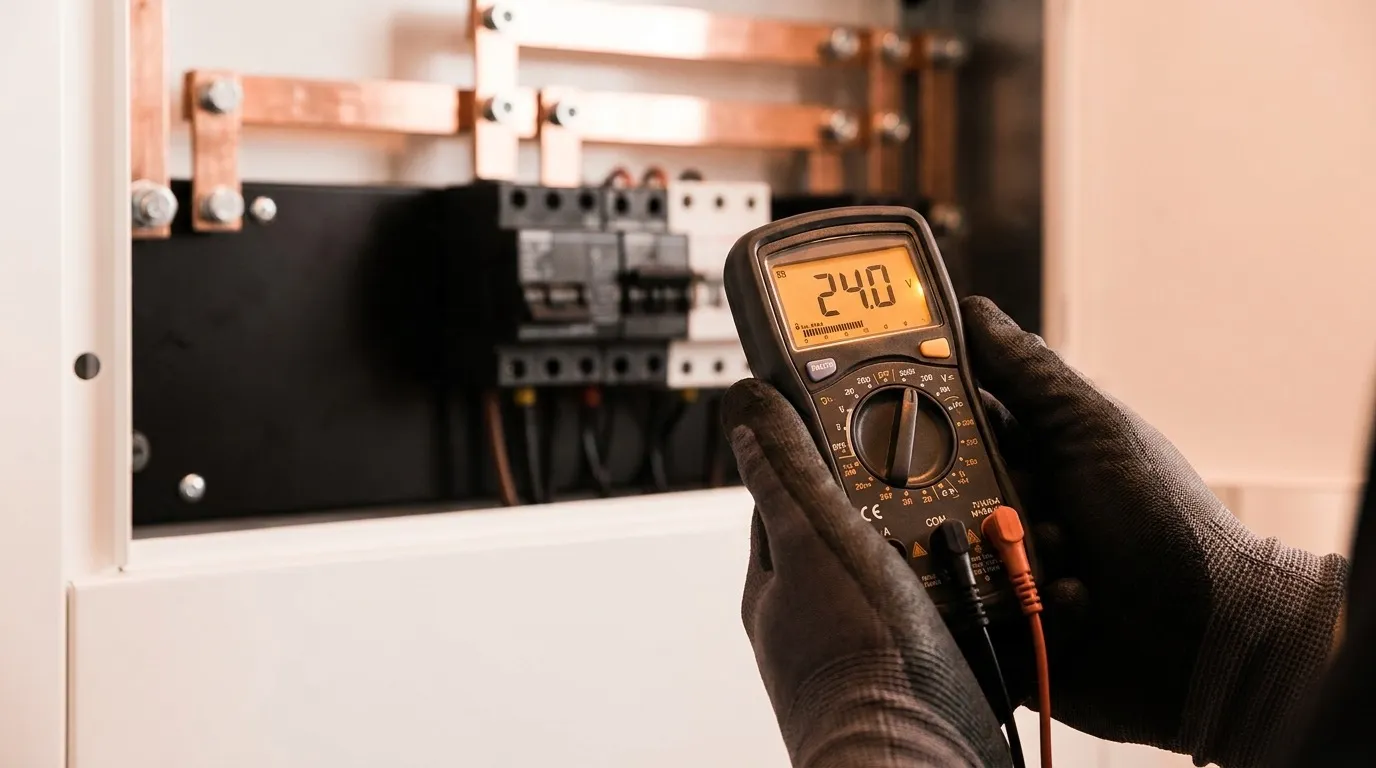
Electrical faults are rarely straightforward. A circuit breaker that trips once and resets without explanation, a power outlet that stops working intermittently, a lighting circuit that dims under load — each of these symptoms could have a dozen different causes, and guessing is not a diagnostic method. Lumen & Wire approaches fault-finding as a disciplined technical process: systematic, instrument-led, documented, and resolved at the root cause rather than the symptom.
Our fault-finding technicians carry the instrumentation needed to investigate complex faults without dismantling infrastructure unnecessarily. Insulation resistance testers, loop impedance analysers, clamp meters, thermal imaging cameras, and power quality analysers each have their place in a systematic investigation, and knowing which instrument to reach for — and how to interpret its readings in context — is what distinguishes a genuine diagnosis from a trial-and-error replacement program that generates invoices without resolving the underlying problem.
Nuisance Tripping and RCD Faults
Nuisance tripping is one of the most disruptive and difficult-to-diagnose fault categories in commercial electrical work. An RCD or circuit breaker that trips under load, at startup, at random, or only under specific environmental conditions is telling you something — but what it is telling you requires systematic investigation to determine. The fault may lie in degraded insulation on a submain or final circuit, leakage current accumulated across multiple items of equipment on a shared RCD, an appliance with failing suppression components, moisture ingress at an outlet or junction, or intermittent earth continuity.
We work methodically through the circuit — isolating sections, measuring insulation resistance at each stage, identifying which load or combination of loads produces the trip condition — until we have isolated the fault to a specific location or component. We do not replace circuit protection devices as a first response; if an RCD is tripping, there is a reason, and replacing it with one of higher threshold simply masks the fault while reducing the protection afforded to the circuit.
- Systematic circuit isolation and sectional insulation resistance testing
- Loop impedance testing to verify protective device disconnection times
- Clamp meter load analysis to identify current imbalance and overload conditions
- Thermal imaging to locate resistance hotspots in connections, switchgear, and cabling
- Power quality analysis for voltage sag, harmonics, and power factor issues
- Root-cause repair with documented before-and-after test results
Dead Circuits and Intermittent Faults
A dead circuit — one with no voltage at outlets or fixtures despite the protective device being in the closed position — can result from a failed connection, a damaged conductor, a tripped circuit breaker that does not visually indicate its tripped state, or a failed supply at the main switchboard. Intermittent faults are often worse: they are present when conditions align and absent when someone comes to investigate, which leads to wasted site visits and mounting frustration.
Our approach to intermittent faults is to gather as much information as possible before attending site: when does the fault occur, under what load conditions, at what time of day, and what changed in the period before the fault first presented. This context shapes our investigation. We use data loggers and power quality analysers where the fault pattern suggests a transient or time-dependent cause, and we take the time to recreate fault conditions rather than inspecting a circuit that is momentarily behaving correctly and concluding there is no problem.
Thermal Imaging and Root-Cause Repair
Thermal imaging is one of the most powerful diagnostic tools available for electrical fault-finding. Resistive faults — loose or corroded connections, undersized conductors carrying their rated current, failing switchgear — generate heat that is invisible to the eye but immediately apparent under a thermal camera. We use thermal imaging as part of our switchboard inspection program and as a targeted diagnostic tool when a fault presents with characteristics consistent with a resistive source.
Every fault-finding engagement concludes with a clear written summary: the fault identified, the root cause established, the repair carried out, and the post-repair test results confirming that the circuit is operating within specification. Where we identify additional defects or risks during the investigation that are outside the original fault scope, we document them separately and present them with an honest assessment of their urgency, so you can prioritise remediation work without feeling pressured into addressing everything at once.
At a glance
Fault Finding & Diagnostics — your questions answered
An RCD that trips and resets repeatedly is indicating an earth leakage fault somewhere on the circuit or group of circuits it protects. It should not be ignored or managed by simply resetting the device each time it trips — the leakage current it is responding to represents a genuine risk. We recommend having the circuit investigated promptly. If the device is tripping to the point where it cannot be reset at all, or if you notice any signs of burning, unusual smells, or warm switchboard surfaces, treat it as an emergency and contact us immediately.
In many cases, yes. Insulation resistance testing, loop impedance testing, and thermal imaging allow us to localise faults to specific circuit sections, connection points, or equipment without destructive investigation. When the fault location is confirmed by instrument, any access required is targeted rather than speculative, which minimises the remediation required to make good after the repair. There are faults — particularly those caused by physical cable damage — that do ultimately require some opening of building fabric, but we will always explain the evidence supporting that conclusion before proceeding.
Duration depends on the complexity of the fault, the size of the installation, and whether the fault is consistently reproducible or intermittent. A straightforward dead circuit in a small premises might be resolved within an hour; a complex intermittent fault across a large commercial installation might require multiple site visits with data-logging intervals between them. We are honest about this from the outset, and we communicate clearly at each stage so that you understand what has been established and what remains to be investigated.
We carry out the full scope of work: diagnosis, root-cause repair, and post-repair testing. We do not hand you a fault report and leave you to find another contractor to complete the work. Our technicians attend with the materials and equipment needed to address the most common fault types, and where specialist materials or switchgear are required, we will source them and return as quickly as possible to complete the repair.
Related services
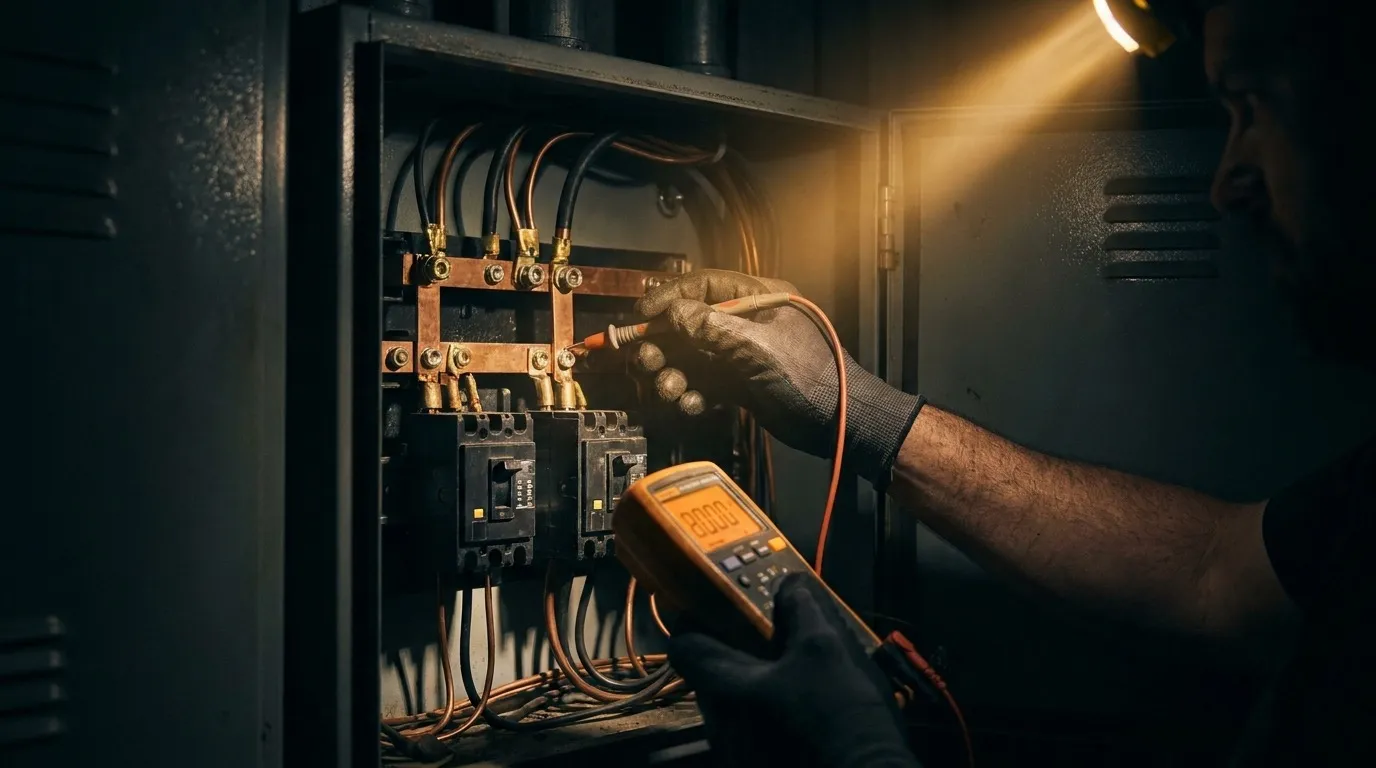
Emergency Electrician
24/7 rapid response for power outages, faults, and hazards — made safe, fast.
Learn more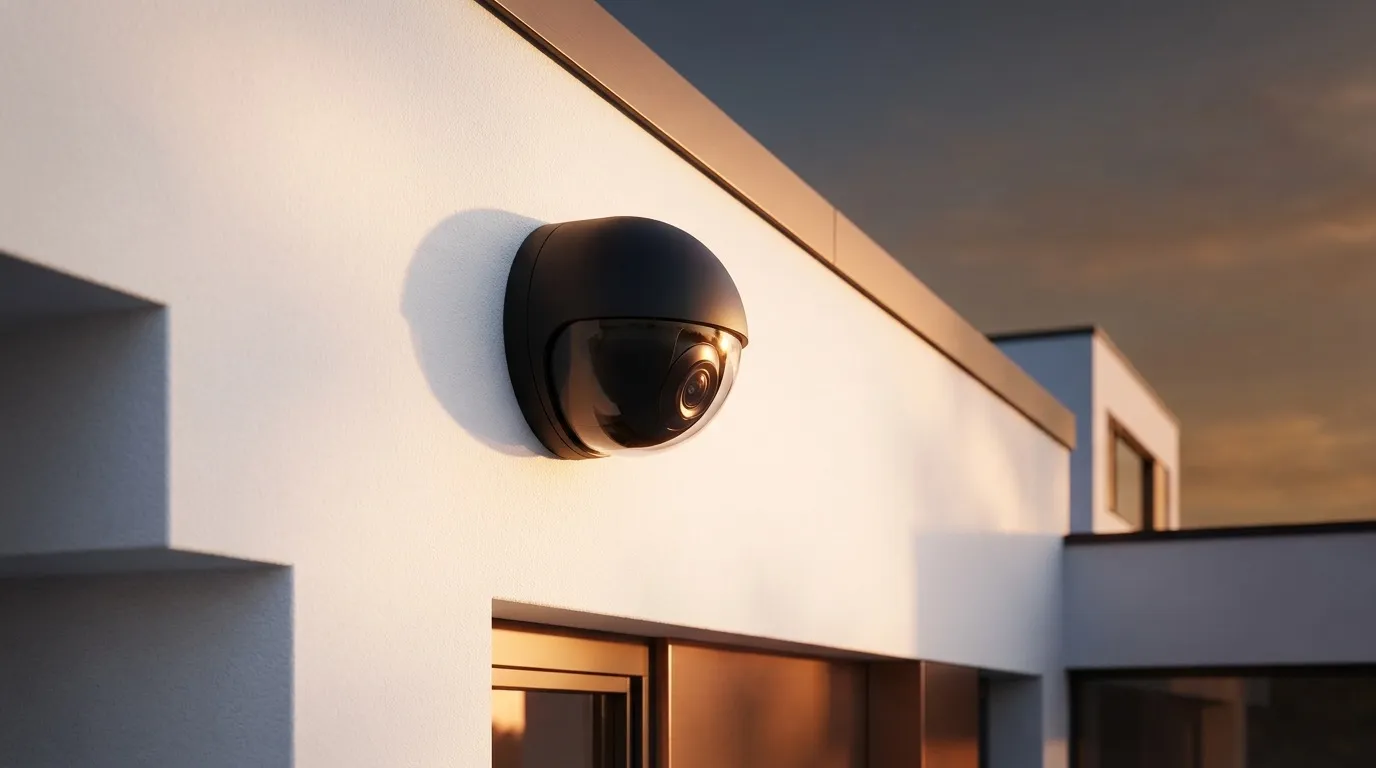
Security & CCTV
IP cameras, access control, alarms, and intercoms — installed, networked, and remotely viewable.
Learn more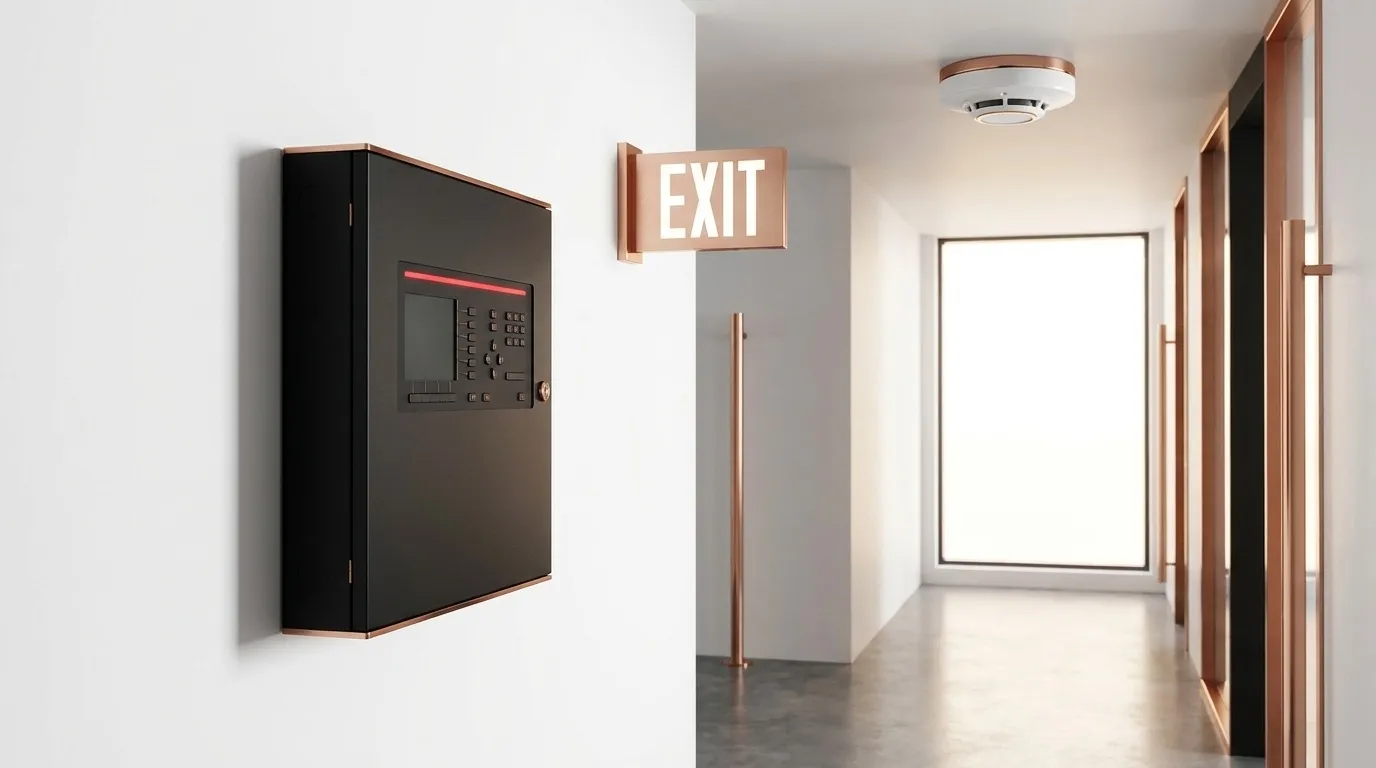
Fire Alarm Systems
Detection, alarm, and emergency lighting designed, installed, and certified to AS 1670.
Learn moreNeed fault finding & diagnostics done properly?
Talk to a licensed Lumen & Wire electrician for honest advice and a clear, itemised quote — with no obligation.