Keeping the yield where it should be
Scheduled servicing, thermal inspection, and fault rectification for solar and battery systems — so generation never quietly slips.
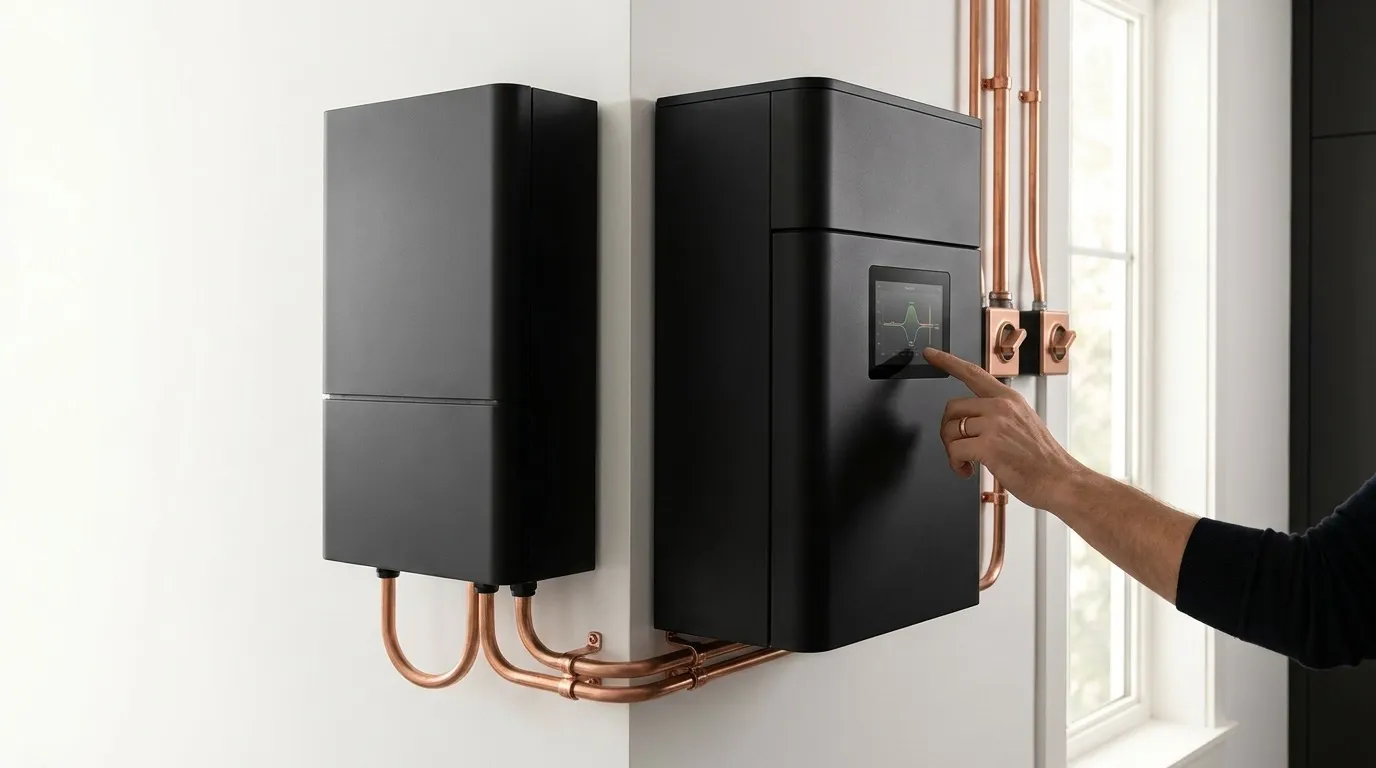
A photovoltaic system or battery energy storage installation represents a significant capital commitment, and its long-term return depends entirely on how rigorously it is maintained. Lumen & Wire provides scheduled servicing programs for commercial and industrial PV arrays, grid-tie inverters, battery storage systems, and the associated switchgear and protection relays that connect generation assets to the site distribution network. Our maintenance scope is structured around the obligations set out in AS/NZS 5033 for PV installations and AS/NZS 5139 for battery systems, giving asset owners confidence that their equipment is being managed to the standard the Australian grid connection framework requires.
Performance benchmarking sits at the heart of our maintenance approach. We do not simply inspect and sign off; we measure. String I-V curve tracing, insulation resistance testing, open-circuit voltage verification, and thermal imaging of array junction boxes, combiner boards, inverter terminals, and battery modules give us a quantitative picture of system health that can be tracked across successive service intervals. When performance has degraded, we can isolate whether the cause lies in soiling, shading changes, cell degradation, wiring resistance, inverter derating, or battery state-of-health decline.
Thermal Imaging and Electrical Testing
Thermal imaging under live operating conditions is one of the most effective diagnostic tools available for PV and storage systems. Hotspots on panels indicate cell mismatch, bypass diode failure, or internal delamination that is invisible to a visual inspection. At the inverter and battery cabinet level, thermal imaging identifies loose terminations, undersized conductors, and overloaded busbars before they produce a fault or a fire risk. All thermal surveys are conducted by Level 1 thermographers and reported against IEC 62446 benchmarks, with images catalogued by location for trend comparison at the next service interval.
- String I-V curve tracing to identify underperforming strings and individual panel degradation
- Insulation resistance testing on DC string cables, array earth continuity, and AC output circuits
- Thermal imaging of panels, combiner boxes, inverter terminals, battery modules, and switchgear
- Inverter firmware review, fault log extraction, and performance ratio calculation against design yield
- Battery state-of-health assessment including capacity test, cell voltage balance, and BMS data review
- AS/NZS 5033 and AS/NZS 5139 compliance verification with written service report and defect register
Scheduled Service Programs and Performance Reporting
We offer annual and biannual service programs tailored to system scale and criticality. Each program includes a pre-visit data pull from the monitoring platform so that our technicians arrive on site already aware of any performance anomalies flagged over the preceding period. The service report we provide is written to be useful to facility managers, finance teams, and technical advisors alike: it distinguishes between safety defects requiring immediate rectification, maintenance items scheduled for the next visit, and performance observations that inform future capital planning decisions.
For sites with grid export agreements or large-scale generation certificates under the Renewable Energy (Electricity) Act, accurate metering and documentation of system output is a compliance obligation as well as a commercial one. Our maintenance records are structured to support regulatory reporting and due diligence requirements, including those arising from property transactions, insurance assessments, or refinancing of assets with embedded generation.
At a glance
Solar & Battery Maintenance — your questions answered
AS/NZS 5033 recommends a minimum of one inspection per year for commercial PV systems, with additional visits warranted by system age, exposure conditions, or insurer requirements. Battery storage systems under AS/NZS 5139 have their own maintenance obligations that depend on chemistry and installation class. We will recommend a program specific to your system configuration and duty cycle.
Monitoring platforms report energy yield at the string or inverter level, which can mask degradation in individual panels that is offset by others in the same string. String I-V curve tracing produces a current-voltage characteristic for each string that reveals cell mismatch, partial shading losses, bypass diode faults, and wiring resistance losses that aggregate data alone cannot isolate.
Yes. We provide independent third-party maintenance and condition assessments for PV and battery systems regardless of who performed the original installation. This service is commonly requested by new building owners, asset managers taking on an inherited system, or operators whose original installer is no longer operating.
Our service reports include system identification data, test results with reference values, thermal images with location references, a graded defect register, and a compliance statement against the relevant AS/NZS standards. This format is accepted by most commercial insurers and finance providers for asset condition reporting purposes.
Related services

Commercial Electrical
Fit-outs, distribution, and tenancy works for offices, retail, and hospitality, delivered on programme.
Learn more
Industrial Electrical
Machine wiring, motor control, three-phase power, and PLC integration for plants and factories.
Learn more
Data & Network Cabling
Structured Cat6A and fibre backbones, racks, and certified comms rooms for reliable connectivity.
Learn moreNeed solar & battery maintenance done properly?
Talk to a licensed Lumen & Wire electrician for honest advice and a clear, itemised quote — with no obligation.