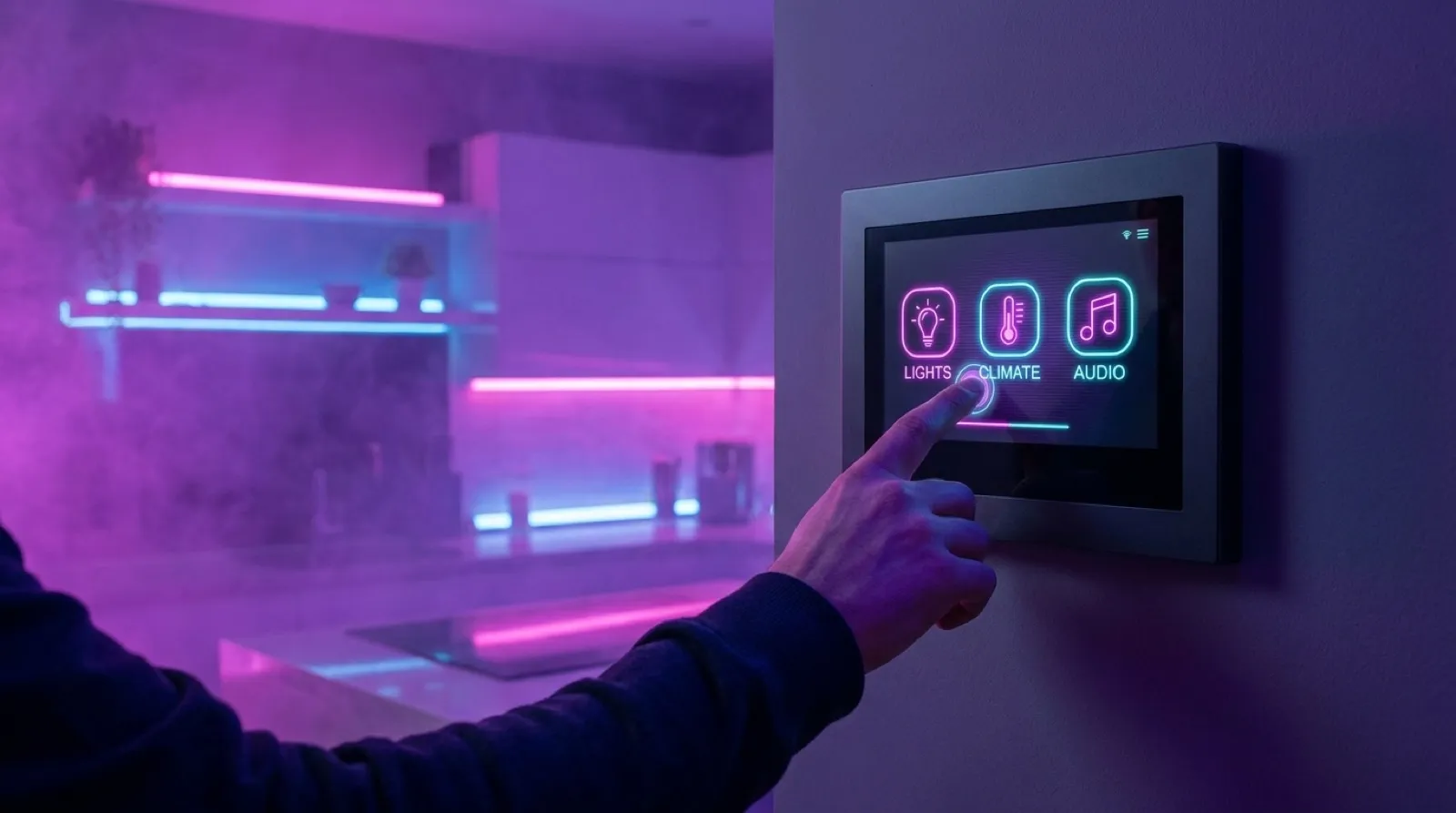
Plenty of people have tried 'smart home' as a box of plug-in gadgets, and plenty have quietly given up when the Wi-Fi dropped, the app updated, or the partner couldn't work the lights. A smart home that lasts is built on solid wiring and a sensible plan — the technology is the easy bit.
Wired beats wireless where it counts
Wireless devices are great for renters and quick wins, but the backbone of a reliable smart home is wired. Lighting control, blinds, climate and the main hub should run on hard wiring or robust protocols like KNX or C-Bus, with wireless reserved for the edges. Wired control keeps working when the internet doesn't — and it doesn't slow down as you add devices.
Plan around scenes, not switches
The magic of a good system isn't controlling one light from your phone — it's 'Movie', 'Morning' and 'Away' doing ten things at once, reliably, the same way every time. We design around how you actually live: which rooms, which routines, what should happen automatically and what you always want a physical button for.
- Keep a real, labelled wall switch in every room — guests and grandparents shouldn't need an app.
- Choose open standards (KNX, C-Bus, Matter) so you're not trapped with one brand.
- Run more cable than you need now; pulling it later costs ten times as much.
- Make sure core functions work with the internet down.
One system, one app, one remote
The goal is integration: lights, climate, blinds, audio, cameras and access all talking to each other and controlled from one place. That takes a hub and a designer who understands how the pieces fit — not five separate ecosystems that ignore each other. When it's done right, the technology disappears and you're just left with a home that anticipates you.
We build smart homes the way we build everything else: wired properly, future-proofed, and finished so the tech serves you rather than the other way around. Start with the wiring and the plan, and the gadgets look after themselves.