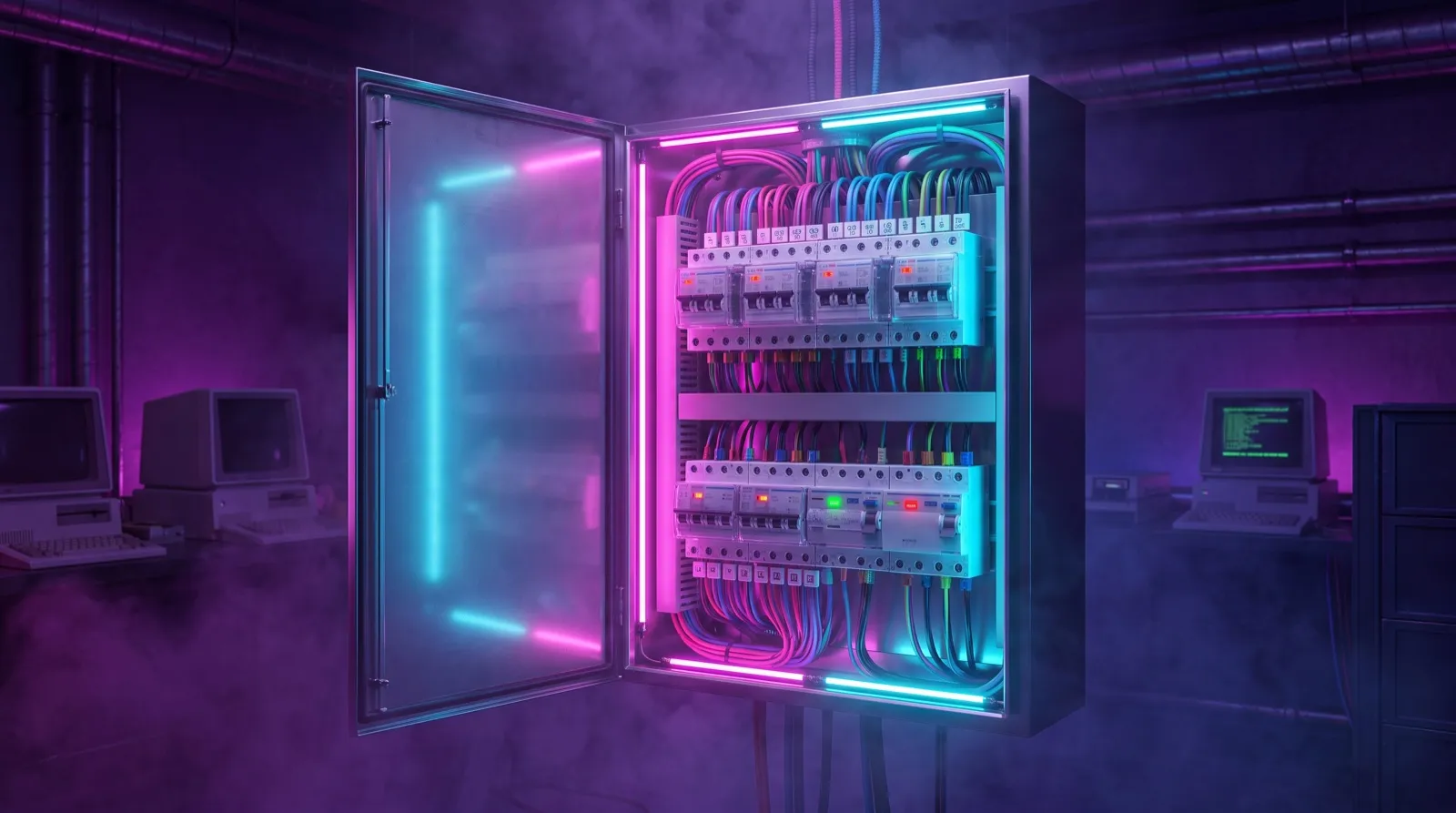
The switchboard is where your home's power is divided, protected and switched. A modern board with safety switches will cut power in milliseconds when something goes wrong. An old one — ceramic fuses, no RCDs, decades of heat cycling — can let a fault smoulder. Here's what to watch for.
1. Ceramic fuses or rewireable fuses
If your board still has porcelain fuse holders you pull out and rewire with fuse wire, it predates modern safety standards. These offer no protection against electric shock, and a wrongly-sized fuse wire can let a dangerous current flow. It's the clearest sign a board is overdue for replacement.
2. No safety switches (RCDs)
A safety switch monitors the current flowing out and back, and trips if it detects leakage to earth — the kind that flows through a person. If your board has only circuit breakers or fuses and no RCDs, you're missing the single most important piece of life-safety equipment in the house.
3. Warmth, buzzing or a burning smell
- A board or switch that feels warm to the touch under normal load.
- Buzzing, crackling or sizzling sounds from inside the enclosure.
- Any scorching, discolouration or an acrid 'hot plastic' smell.
- Breakers that trip repeatedly, or that won't stay reset.
Any of these means heat is building where it shouldn't — usually a loose connection. Loose terminations are the leading cause of switchboard fires, and they get worse with every load cycle. This one is a 'call today' sign, not a 'next service' one.
4. A jumbled, unlabelled board
If nobody can tell which switch controls what, that's not just inconvenient — in an emergency it costs precious seconds, and it usually means the board has been added to piecemeal over the years without anyone stepping back to check the whole picture. A tidy, labelled board is a sign the system has been looked after.
5. It's simply full
Every spare way taken, double-adapters of circuit breakers, or new circuits 'borrowed' off existing ones — a full board can't safely take the EV charger, the new kitchen or the air conditioning you're planning. Upgrading creates the capacity and the protection to add what's next.
A switchboard upgrade isn't glamorous, but it's the single highest-value safety improvement you can make to an older home. If yours ticks any of these boxes, get it looked at — the board is trying to tell you something.