EV Charging at Scale: Powering the Electric Future
15 May 2026 · 6 min read
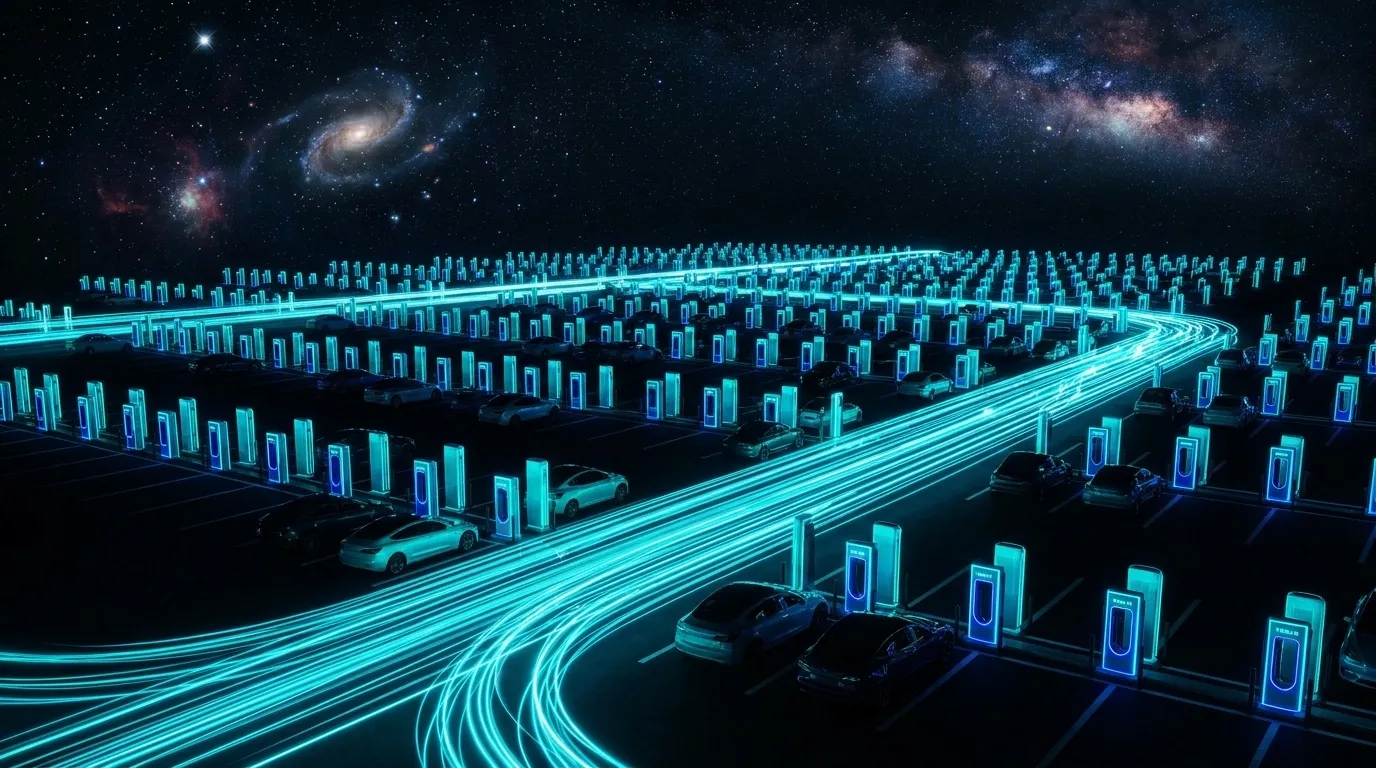
Australia passed one million registered electric vehicles earlier this year. The charging infrastructure supporting that fleet — and the many millions of vehicles to come — is not simply a matter of installing a power point in a garage. At scale, EV charging represents one of the largest new electrical loads the grid has ever absorbed, and managing it intelligently is as much an electrical engineering challenge as it is a technology one.
Home charging: getting the foundation right
For most EV owners, the majority of charging happens at home overnight. A standard single-phase 7.4 kW wall box will fully charge most modern EVs from empty in eight to twelve hours — sufficient for the vast majority of daily use cases. However, installing that wall box correctly matters enormously. The circuit needs a dedicated 32A breaker, appropriately rated cabling back to the switchboard, and — critically — an RCD for safety. Many existing residential switchboards were never designed to accommodate a sustained 7.4 kW load running for eight hours, and a proper load assessment before installation is not optional.
For households with solar and battery storage, the opportunity goes further. Smart chargers with load-following capability can throttle charging current dynamically — drawing more when the solar array is producing strongly, backing off when the home is approaching its maximum demand. The result is a vehicle charged almost entirely on sunshine, with minimal grid import.
Commercial and destination charging: three-phase becomes essential
At commercial scale — workplaces, retail centres, apartment complexes and public charging hubs — three-phase power is the baseline requirement, not a premium option. Three-phase supply allows DC fast chargers operating at 50 kW, 150 kW or higher to be installed without the single-phase current limitations that create both safety concerns and unacceptably slow charge rates. A 150 kW DC charger delivering an 80% charge in under twenty minutes is simply not achievable on single-phase infrastructure.
For a commercial site deploying multiple chargers simultaneously, load management becomes the central engineering challenge. Without active management, ten simultaneous 22 kW AC chargers present a 220 kW connected load — a figure that would overwhelm most commercial switchboards and potentially trigger expensive network augmentation. Dynamic load management systems allocate available capacity across the charger fleet in real time, ensuring the site never exceeds its agreed network capacity while maximising throughput for every vehicle connected.
Grid impact and the role of smart infrastructure
Network planners across Australia are working through the implications of widespread EV adoption coinciding with peak evening demand — the so-called 'double peak' that emerges when commuters arrive home and plug in simultaneously. The electrical infrastructure response involves two complementary strategies: reinforcing the network where concentrated EV uptake demands it, and deploying smart charging to shift load away from peak windows.
Time-of-use tariffs are already reshaping home charging behaviour, incentivising overnight charging in the small hours when the grid has surplus capacity. Vehicle-to-grid (V2G) technology, now entering commercial deployment in Australia, inverts the relationship entirely — the EV battery discharges back into the home or grid during peak events, turning a fleet of parked vehicles into a substantial distributed storage asset.
What this means for electrical contractors
EV charging infrastructure is one of the fastest-growing segments in the electrical trade, and it demands contractors who understand both the installation requirements and the broader system implications. Starwatt Systems designs and installs EV charging infrastructure from single residential wall boxes through to multi-charger commercial hubs with full load management integration. We size the switchboard, specify the cabling, commission the chargers and — where the project calls for it — integrate charging load into a broader solar and battery management system.
The electric future is not coming. It is here, and the electrical infrastructure it runs on needs to be built to a standard that will carry that load for the next thirty years.
More insight
 Future Tech
How Smart Buildings Think: Automation, Sensors and the Connected Grid
KNX, C-Bus, IoT sensors and building management systems are turning commercial buildings into intelligent, self-optimising energy nodes on the grid.
Read Future Tech
The Electrician's Guide to Future-Proofing Your Home Wiring
Smart cabling, spare switchboard capacity, continuous conduit runs and EV or battery readiness — how to wire a home that is ready for the next thirty years.
Read Compliance
Switchboard Safety: When Your Home Is Running on Borrowed Time
Ceramic fuses, absent RCDs and overloaded circuits are not nostalgic quirks — they are genuine electrical hazards that AS/NZS 3000 exists to prevent.
ReadReady to unlock infinite power potential?
Tell us about your home, site or portfolio. Our engineers will scope the work, size the load and map your path to power without limits.