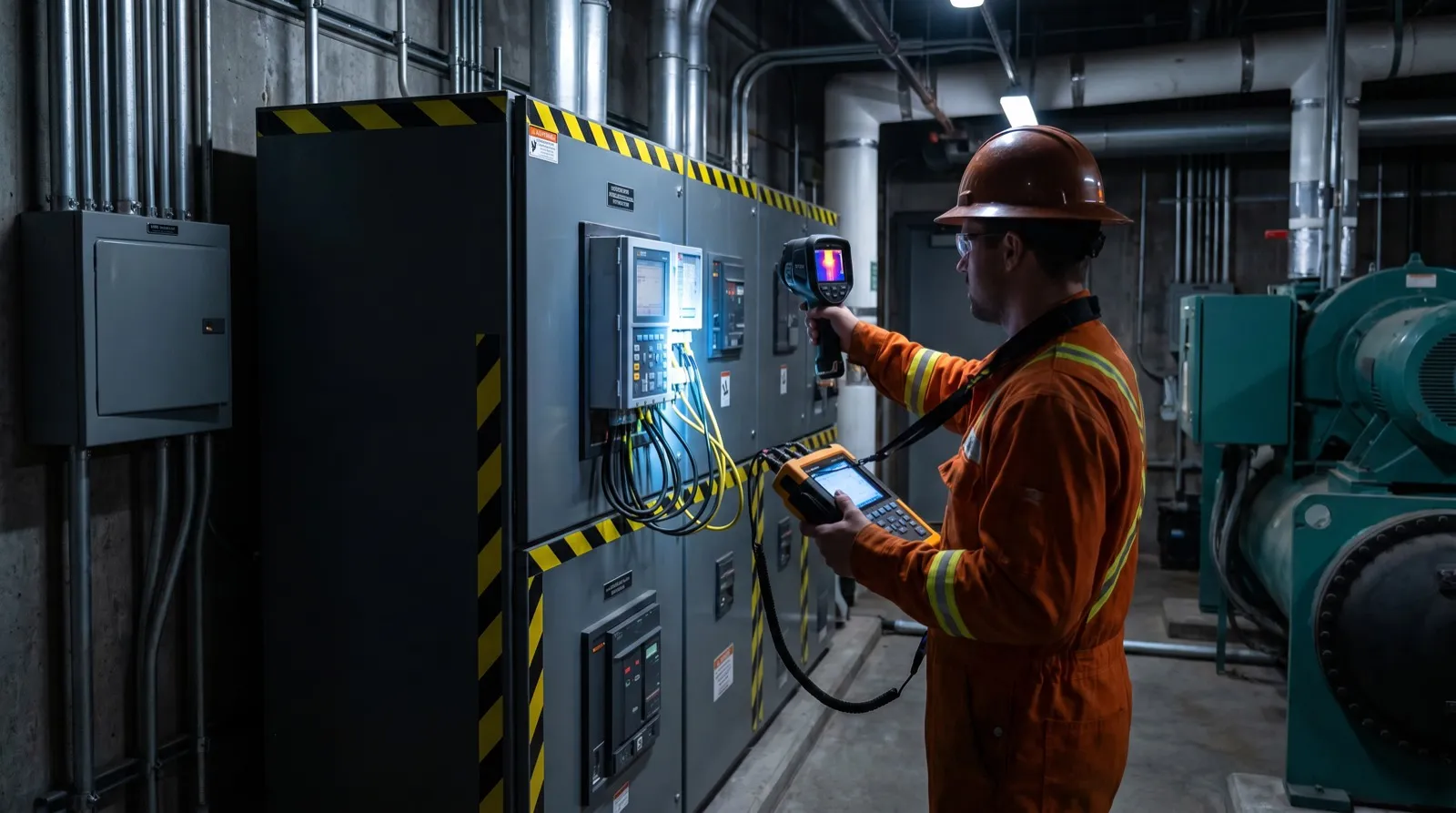
Energy is one of the largest controllable operating costs for any industrial or commercial facility. Yet most operators have little visibility beyond their monthly utility bill, which aggregates every kilowatt-hour consumed into a single number with no breakdown by system, shift or production run. Ironclad Electrical changes that. Our energy efficiency audits install temporary sub-metering at every significant load centre, capture data across a full representative operating cycle, and produce a prioritised improvement report that tells you exactly where your energy dollars are going and how to stop wasting them. Our recommendations are grounded in measured data and costed against real equipment prices, not back-of-envelope estimates.
Audit Methodology and Measurement
Our audit methodology aligns with the ISO 50001 energy management framework and the Australian Institute of Energy audit guidelines. Phase one involves a site walkthrough to identify major energy consumers, review existing electricity accounts and demand profiles, and install temporary power quality and energy loggers at the main switchboard and key sub-distribution points. We monitor across a minimum of two full production cycles to capture base load, peak demand, shift variation and shutdown behaviour. Phase two involves data analysis, including demand profile review, power factor measurement, harmonic spectrum analysis, motor loading assessment and compressed air system audit where applicable. Phase three delivers the written audit report with findings ranked by annual energy saving, implementation cost and simple payback period.
Common Energy Waste Sources in Industrial Facilities
Ironclad Electrical consistently identifies the same categories of energy waste in industrial and commercial sites. Poor power factor is the single most common finding on manufacturing sites with large motor loads: a site operating at 0.80 power factor is drawing 25% more current from the grid than necessary for the real work being done, increasing cable losses and incurring reactive energy charges from the DNSP. Uncontrolled motor speed is the second most common waste source: pumps, fans and compressors running at full speed when process demand requires only 60% of full flow consume roughly the same power as they would at 100% flow, whereas a correctly sized VSD reduces power consumption to approximately 22% of full-load demand at 60% speed, following the affinity laws. Compressed air leaks, poorly maintained luminaire systems with aged control gear, electric heating operating on inadequate timers, and oversized transformer no-load losses are also frequently identified.
- Power factor measurement and correction sizing with DNSP tariff impact analysis
- VSD retrofitting assessment for pumps, fans, compressors and conveyor drives
- LED lighting upgrade analysis with lux level measurement and redesign options
- Compressed air system audit including leak detection and pressure optimisation
- Transformer no-load and load loss assessment with upgrade recommendations
- Sub-metering design and permanent installation for ongoing energy management
Regulatory Compliance and NCC Energy Provisions
New commercial and industrial buildings must comply with the energy efficiency provisions in Section J of the National Construction Code (NCC). Ironclad Electrical assists design teams and building owners with NCC Section J compliance documentation, carrying out lighting power density calculations, verifying metering and sub-metering provisions, checking HVAC and lighting control system specifications, and liaising with the certifying authority where compliance pathway questions arise. For existing buildings undergoing refurbishment, we assess whether the works trigger NCC Section J compliance requirements for the affected parts of the building and advise on the most cost-effective path to meeting them.
Implementation Support and Ongoing Monitoring
An audit report is only valuable if the recommendations get implemented. Ironclad Electrical can act as the principal contractor for implementing audit findings, carrying out power factor correction installation, VSD retrofits, LED lighting upgrades and sub-metering installations under a single contract with a single point of accountability. We install permanent sub-metering with cloud-connected energy management software that gives site management real-time visibility of consumption by circuit, shift and production line. Monthly energy reports are generated automatically, and exception alerts flag anomalies such as base load increases that might indicate equipment faults or leaking processes. Contact us at build@ironcladelectrical.com.au to arrange an initial site discussion and audit scoping meeting.