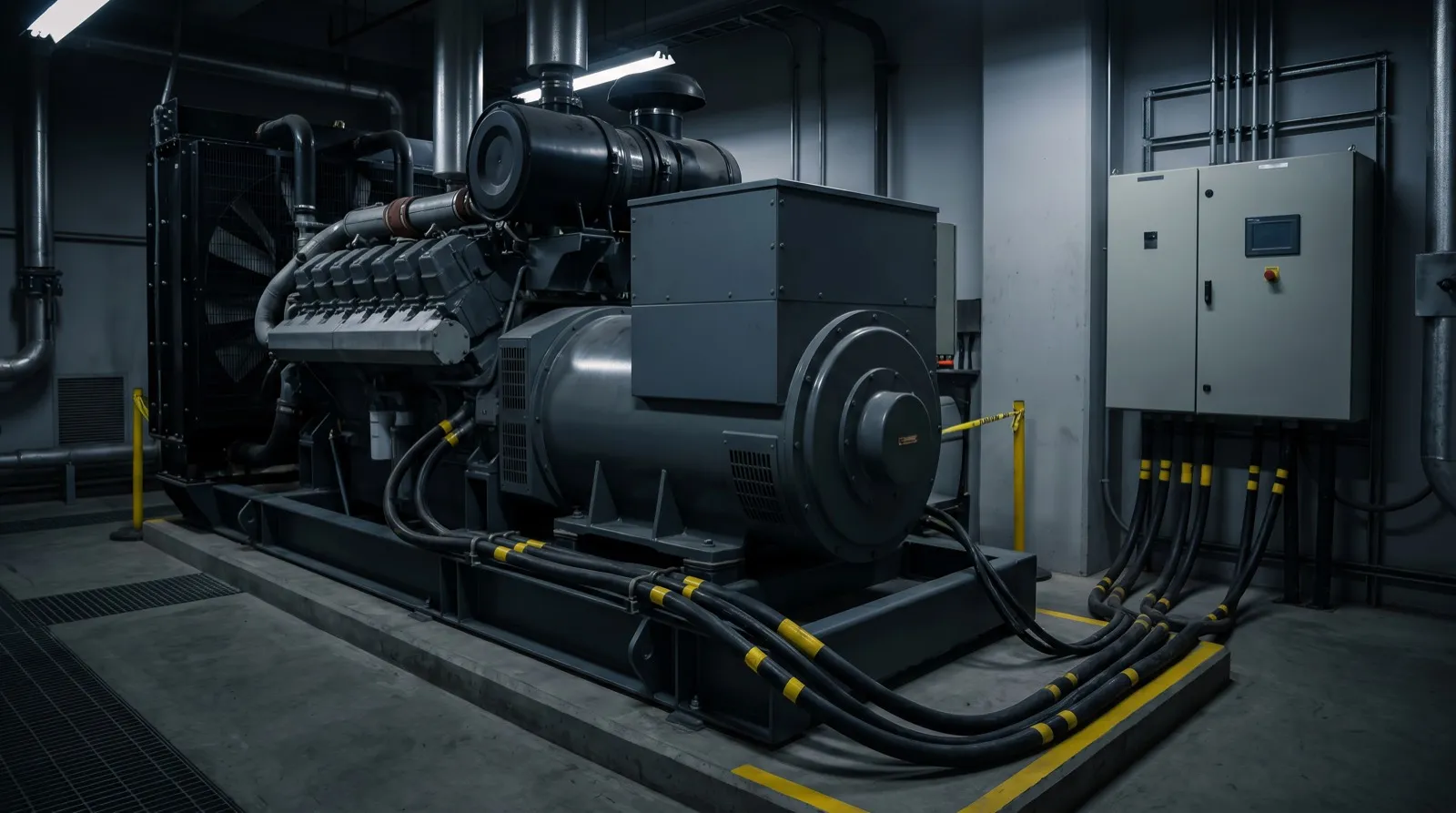
Power outages cost money. For a manufacturing facility, a data centre or a hospital, even a 15-minute outage can mean product loss, data corruption, patient safety events or contractual penalties running into six figures. Ironclad Electrical designs standby power systems that eliminate that exposure. We have been installing and commissioning diesel and gas generator sets, automatic transfer switching systems and uninterruptible power supply (UPS) infrastructure for critical facilities across Queensland and northern New South Wales since 2004. Our systems do not just start the generator, they manage the load transfer, monitor fuel and battery state, and integrate with building management and SCADA systems for remote visibility.
Generator Sizing and Load Analysis
Generator sizing begins with a critical load analysis. Not every load on a site needs standby power, and trying to supply the full site demand from a standby generator is expensive and often unnecessary. Ironclad Electrical works with the client to identify essential loads, typically covering life safety systems, critical production equipment, refrigeration, IT and communications infrastructure, and staff amenities. We calculate the running kVA demand of these loads, add starting current allowances for induction motors and soft-start equipment (which impose transient reactive current demand on the generator well above their running load), and select a generator set with sufficient continuous kVA rating and transient response capability. The generator is sized to AS/NZS 3010:2005 Electrical Installations, where applicable, and manufacturer sizing guidance for the specific load mix.
Automatic Transfer Switching and Protection
The automatic transfer switch (ATS) or automatic mains failure (AMF) panel is the intelligence at the heart of a standby power system. When mains supply fails or drops outside voltage and frequency tolerances, the AMF panel starts the generator, waits for it to stabilise at rated voltage and frequency, then transfers the load from mains to generator via a break-before-make switching sequence that prevents the generator and grid from ever being paralleled without appropriate synchronising equipment. Ironclad Electrical designs ATS and AMF systems to prevent anti-islanding (inadvertent energisation of the mains network from the generator) in compliance with AS/NZS 4777.1 and DNSP requirements. Transfer switching gear is specified with fault ratings matching the prospective fault current at the point of connection, and tested under load prior to commissioning sign-off.
- Critical load analysis and generator sizing calculations per AS/NZS 3010
- Diesel and gas generator set supply, concrete base and acoustic enclosure installation
- Automatic transfer switch and AMF panel design, supply and commissioning
- Anti-islanding protection and DNSP network protection compliance
- Fuel system installation including bulk fuel tanks, day tanks and leak detection
- Load bank testing at 100% rated capacity before handover
Fuel Systems and Long-Run Endurance
A standby generator is only as reliable as its fuel supply. Ironclad Electrical designs and installs complete fuel systems including bulk storage tanks with secondary containment compliant with AS 1940, day tanks sized for 8 or more hours of operation without manual intervention, automatic fuel transfer pumps, fuel polishing systems for long-term storage, and leak detection equipment. For extended outage scenarios, we specify fuel delivery arrangements and document the procedure for manual refuelling under operating conditions. All fuel systems are designed to meet local council development requirements, Queensland Fire and Emergency Services (QFES) guidelines and WorkSafe material storage regulations.
Commissioning, Load Testing and Handover
A generator that has never been tested under real load is not a reliable standby system, it is a liability. Ironclad Electrical load tests every standby installation at 100% rated capacity using resistive and reactive load banks before the system is handed over. Load testing confirms that the generator, alternator, cooling system, transfer switch and protection relays all perform correctly under worst-case demand conditions. Following load testing we carry out a final functional test of the AMF sequence, confirm all alarms and monitoring points are operational, and train the client maintenance team on manual starting, fuel management and monthly exercise run procedures. Handover documentation includes as-built single-line diagrams, control schematics, ATS setting schedules and generator manufacturer commissioning records.