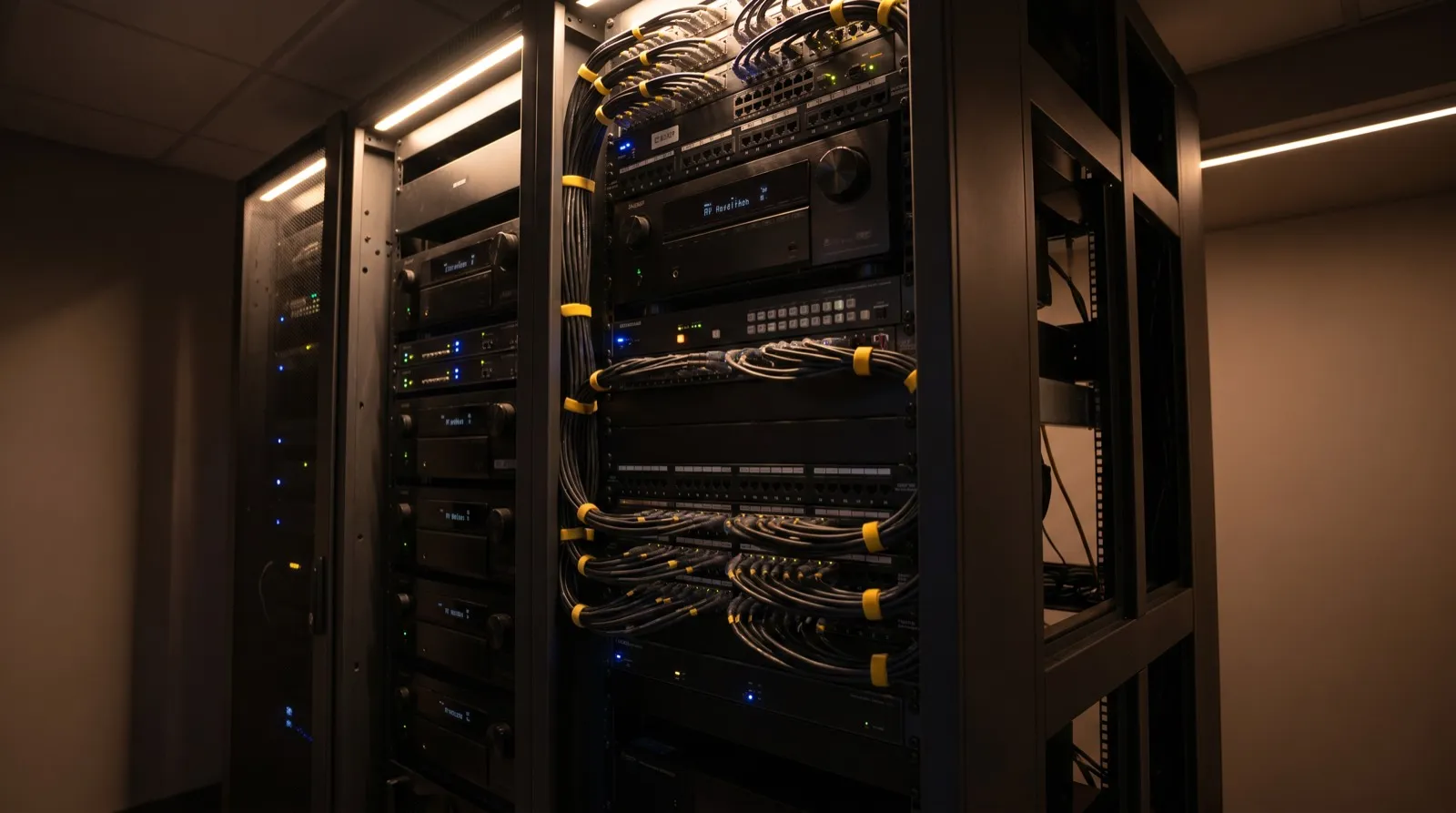
A home theatre is a power and signal infrastructure project before it is a technology project. Amplifiers draw surge currents that trip standard circuits. High-quality audio is destroyed by shared neutral noise and earth loops. Display equipment demands clean, stable voltage. Getting these fundamentals right requires a licensed A-Grade electrician who understands both power quality and AV signal chain requirements. Ironclad Electrical has delivered theatre rooms and whole-home AV installations since 2004, working alongside AV designers to ensure the electrical backbone supports the performance of the equipment sitting on top of it.
Dedicated Circuits and Clean Power
Every Ironclad home theatre installation starts at the switchboard. We install dedicated double-pole circuit breakers for the equipment rack, projector, and subwoofer amplifiers. A typical 7.2.4-channel reference theatre will receive a minimum of three dedicated 20 A circuits run in separate conduit from the switchboard. Where power quality is critical, we install a dedicated earth electrode for the AV room and specify isolation transformers or power conditioners appropriate to the equipment load. Shared neutrals and shared earths are sources of audible hum in high-gain amplifier circuits and we eliminate them at the design stage, not after commissioning.
- Dedicated 20 A circuits per rack zone, sub amplifier, and projector
- In-wall conduit for HDMI 2.1, DisplayPort, and 12 V trigger cable pulls
- In-wall speaker cable runs in correctly rated conduit with draw strings left for future upgrades
- 19-inch equipment rack rough-in: power distribution unit wiring, ventilation circuit, rack lighting
- Projector ceiling-box rough-in with conduit to rack position and correct cable support
- Whole-home audio multi-zone wiring to ceiling speakers, wall volumes, and amplifier location
Conduit Infrastructure for AV Cabling
Modern home theatre runs 48 Gbps HDMI 2.1 cables that are stiff, heavy, and intolerant of tight bends. Ironclad installs 32 mm or 50 mm corrugated ENT conduit between all AV positions during the build stage, with minimum 150 mm radius bends and draw strings throughout. This conduit is separate from mains wiring conduit as required by AS/NZS 3000 when signal cable runs adjacent to 230 V conductors. Every conduit path is documented on an as-built plan. The payoff is that the installer can pull any current or future cable type without opening walls, and you can upgrade from HDMI 2.0 to HDMI 2.1 active optical cable years later in an afternoon.
Rack Building and Final Commissioning
Ironclad builds and wires 19-inch AV equipment racks as a licensed electrical contractor, not a grey-market handyman. We install correctly rated PDUs, manage heat load with ventilation circuits and temperature monitoring, and label every cable on both ends with a Brady label matching the as-built documentation. Signal cable terminations are tested: HDMI runs with a 4K test pattern at full bandwidth, speaker cable runs are continuity and polarity tested before drywall close-in. We coordinate final commissioning with the AV designer or programmer so that the rack is fully verified before the client takes handover.