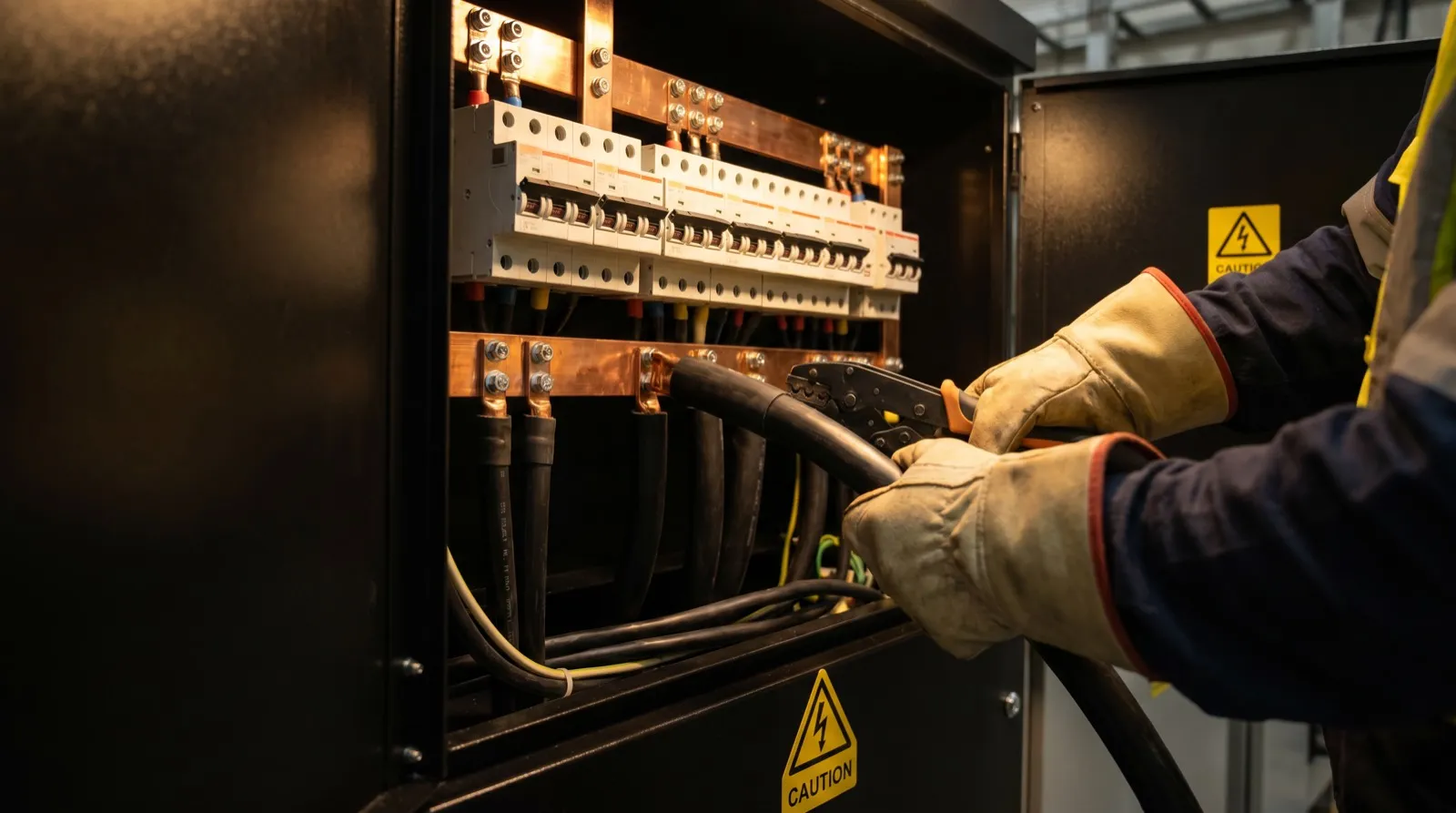
Switchboards are the central nervous system of any electrical installation. When a switchboard is undersized for the fault current at the point of supply, components can fail catastrophically under fault conditions, creating fire, explosion and electrocution hazards. When protective devices are not correctly coordinated, a fault in one part of the system can black out the entire facility instead of tripping only the affected circuit. Ironclad Electrical specialises in switchboard assessment, redesign and replacement for industrial and commercial sites where the stakes are too high for a rushed job.
Fault Current Assessment and Switchgear Rating
The starting point for any switchboard upgrade is a fault current calculation at the point of supply. The distribution network service provider can supply a prospective short-circuit current (PSCC) figure for the incoming supply, and this value must be compared against the fault rating, also called the short-circuit withstand rating expressed in kiloamperes (kA), of every component inside the switchboard. Under AS/NZS 3000 clause 2.2.3, all switchgear must be rated for the maximum prospective fault current at its location. Many older switchboards, particularly those installed prior to the introduction of the 2000 Wiring Rules, contain components rated at 10kA or 25kA in locations where the fault level has since risen to 35kA, 50kA or higher following DNSP network augmentation. Ironclad identifies these risks through formal fault current calculations and replaces non-compliant equipment with correctly rated alternatives.
Protection Coordination and Discrimination
A switchboard is only as good as its protection coordination. Discrimination, also called selectivity, means that only the protective device immediately upstream of a fault should operate, leaving all other circuits energised. Poor coordination is extremely common in older installations where boards have been added to or modified over decades without a formal study. Ironclad Electrical carries out protection coordination studies using time-current characteristic curves for every device in the distribution hierarchy, from the main circuit breaker down to the final sub-circuit fuses and MCBs. We set overload and short-circuit trip thresholds, time-delay bands and instantaneous trip levels to achieve correct discrimination. Where the existing equipment cannot be correctly coordinated, we specify replacement devices and document the updated coordination scheme for the client and their maintenance team.
- Prospective short-circuit current (PSCC) calculation and switchgear fault rating verification
- Main switchboard and sub-board replacement with correctly rated components
- Protection coordination studies and relay/breaker setting recommendations
- RCD retrofit and upgrade to meet current mandatory protection requirements
- Power factor correction (PFC) capacitor bank installation and integration
- Metering and sub-metering upgrades for energy management and NCC compliance
Power Factor Correction Integration
Switchboard upgrade projects are often the right time to address poor power factor, which incurs reactive energy charges from the DNSP and increases thermal loading on cables and switchgear. Where a site has a measured power factor below 0.90 lagging, Ironclad Electrical can integrate a power factor correction (PFC) capacitor bank into the new switchboard or as a standalone unit connected to the main bus. We size the bank using measured demand data, specify capacitors with detuning reactors to avoid harmonic resonance in the presence of VSD loads, and include automatic switching stages to follow the site load profile. The result is a measurable reduction in monthly energy charges that typically pays back the capital cost within 18 to 36 months.
Shutdown Planning and Staged Energisation
Replacing a main switchboard means taking the entire facility off supply for a period. Ironclad Electrical plans every main switchboard replacement with a detailed shutdown programme that identifies the minimum outage window, sequences the decommissioning of existing equipment, stages the installation of the new board, and restores supply circuit by circuit in a controlled order. For facilities where any outage is critical, we design temporary supply arrangements using hire generators or temporary distribution boards to keep essential systems energised throughout the works. Every switchboard replacement project is delivered with a full test and inspection record, protection settings schedule, board directory and Certificate of Test issued under the relevant state electrical safety act.