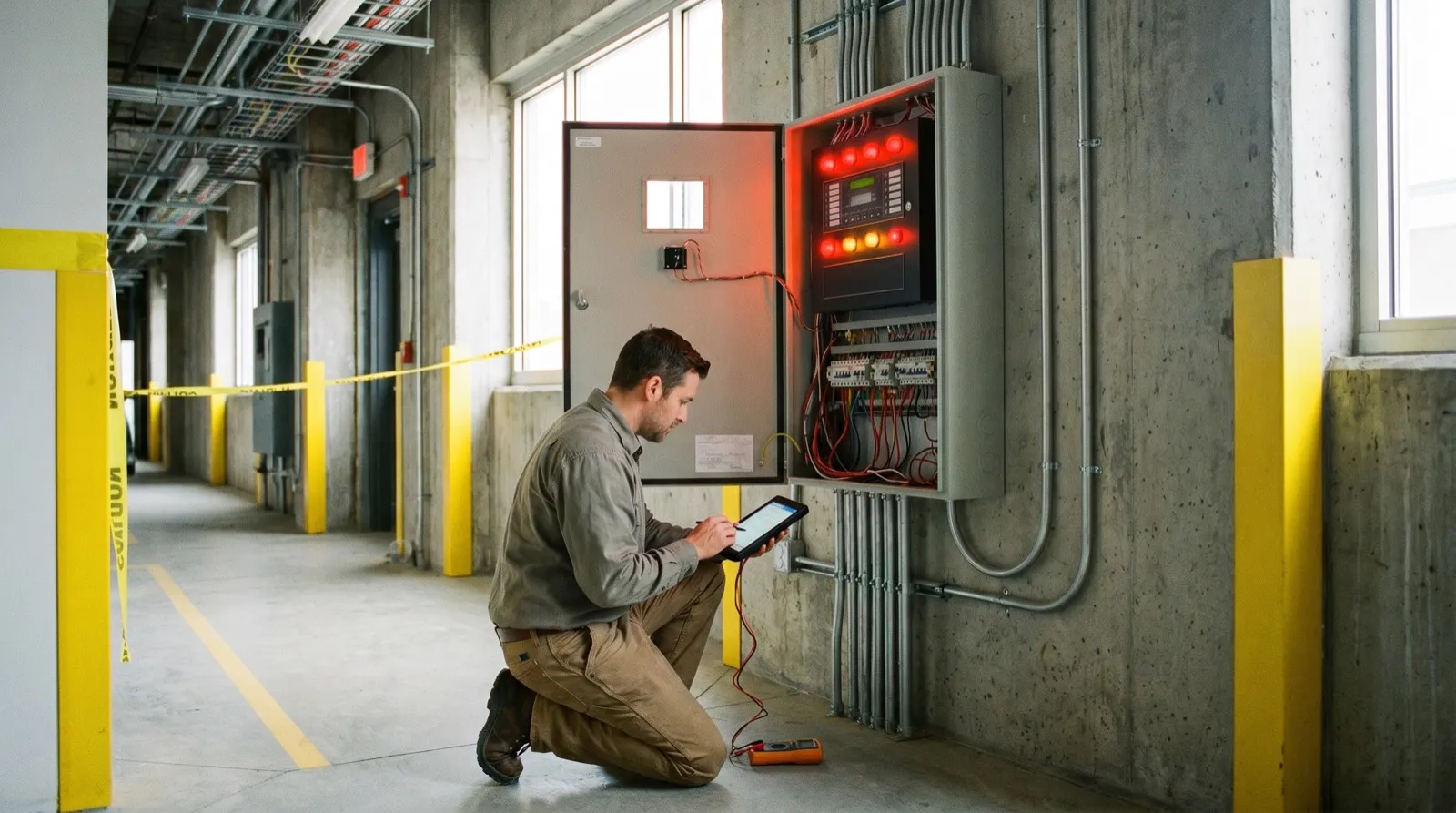
A fire alarm system that does not detect and annunciate correctly is not a safety system — it is a liability. Ironclad Electrical treats fire detection and alarm work with the same precision and documentation discipline we apply to high-voltage switchboard work. Every system we design is engineered to AS 1670 Fire detection, warning, control and intercom systems, every installation is tested to the commissioning requirements of the relevant Australian standard, and every maintenance visit is performed and documented to AS 1851 Maintenance of fire protection systems and equipment.
Design and Installation to AS 1670
AS 1670.1 Fire detection, warning, control and intercom systems — System design, installation, and commissioning sets the engineering requirements for fire detection system design in Australia. These include detector type selection and placement based on the hazard classification of the space, spacing calculations for smoke and heat detectors, cable specification and pathway independence requirements, control and indicating equipment (CIE) location and annunciation, integration with building management systems, sprinkler flow switches and suppression systems, and commissioning test procedures. Ironclad designs are drawn to scale and documented in a fire system design certificate submitted to the relevant authority having jurisdiction (AHJ) prior to installation. We work with your fire engineer, builder and certifier to coordinate the design with the building's overall fire safety system.
- Zone design and detector placement calculations to AS 1670.1 for smoke, heat and multi-criteria detectors
- Addressable and conventional fire alarm panel supply and installation to CIE requirements
- Sprinkler flow switch and isolating valve tamper switch integration
- Direct brigade alarm (DBA) connection to the Queensland Fire Department monitoring network
- Emergency warning and intercom system (EWIS) installation to AS 1670.4
- Full commissioning documentation and fire system design certificate for building certifier submission
AS 1851 Preventive Maintenance
AS 1851:2012 Maintenance of fire protection systems and equipment is the Australian standard that defines the frequency and scope of maintenance activities required for fire detection systems over their service life. For a typical addressable fire alarm system in a commercial or industrial building, AS 1851 requires monthly visual inspections, quarterly functional testing of a rotating sample of detectors and manual call points, six-monthly testing of alarm circuits and power supplies, and annual comprehensive system testing including all detectors, all manual call points, all sounders and strobes, battery capacity verification and a full fault and alarm simulation. Ironclad maintains a scheduled maintenance calendar for all systems under our service agreements, issues advance booking reminders and provides the required maintenance record entries in the format specified by AS 1851 for inclusion in your fire safety register.
Industrial and High-Hazard Environments
Standard smoke detectors are not suitable for all industrial environments. In areas with high airborne particulate — welding bays, grinding areas, bakeries, chemical stores, refrigerated cool rooms — standard optical or ionisation smoke detectors will generate false alarms or fail to perform. Ironclad specifies aspirating smoke detection (ASD) systems for high-sensitivity applications, linear beam smoke detectors for large open-span industrial spaces, rate-of-rise heat detectors for environments where smoke is present under normal operating conditions, and flame detectors for rapid-ignition hazards such as fuel storage and spray-paint booths. We understand the operating environment of your facility and we specify detection technology that performs in it — not the cheapest detector that gets through the specification.