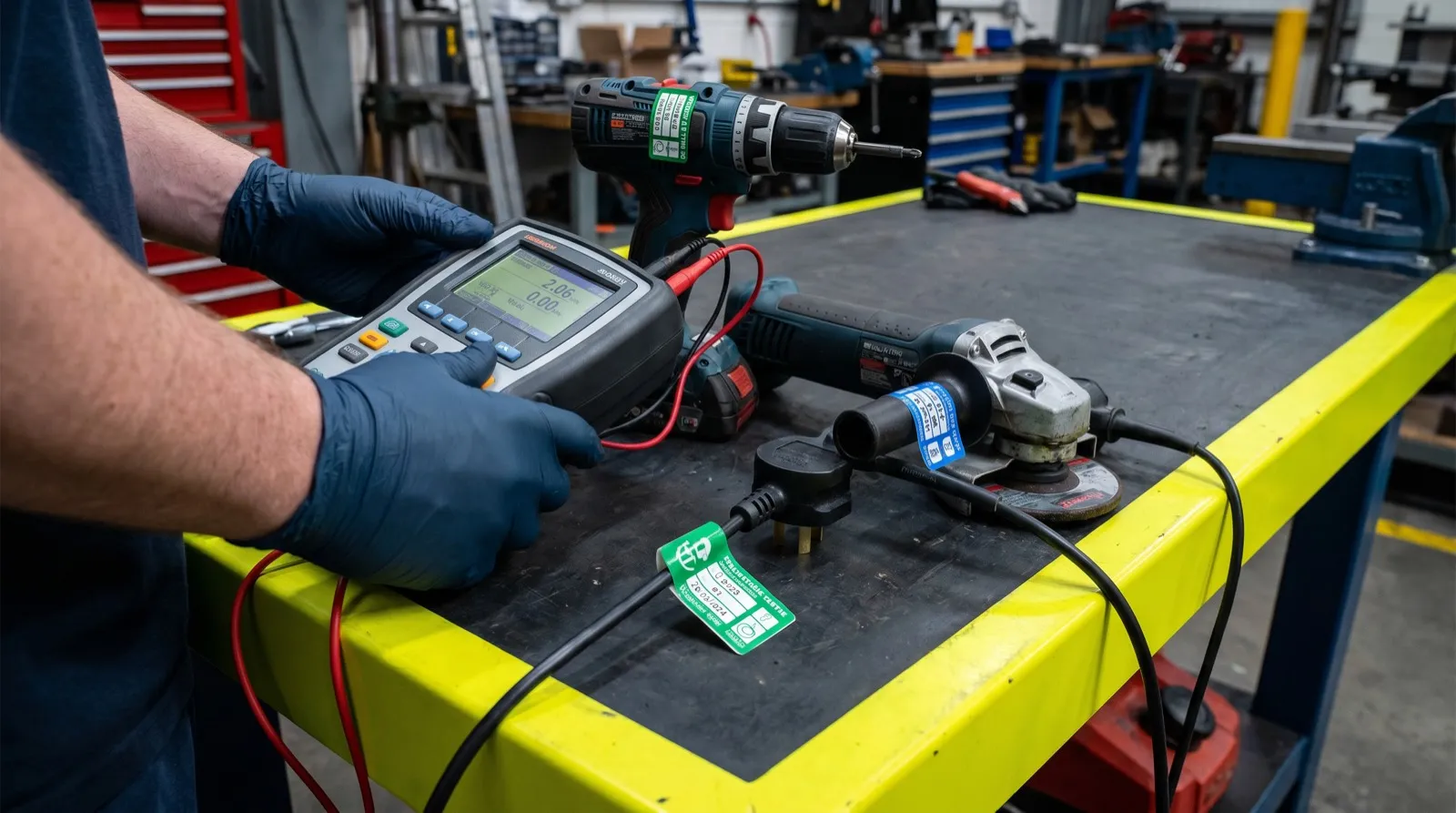
Test and tag is not an administrative box-tick — it is the primary mechanism by which electrical equipment faults are detected before they cause electric shock injuries or fires. Under AS/NZS 3760:2022 In-service safety inspection and testing of electrical equipment, every item of in-service electrical equipment connected via a plug must be visually inspected and electrically tested at intervals appropriate to its environment and use classification. For construction sites and manufacturing environments the required intervals are significantly shorter than for office environments, and the consequences of non-compliance extend from WorkCover prosecution to voided insurance.
What AS/NZS 3760 Requires
AS/NZS 3760 prescribes both the visual inspection criteria and the electrical test parameters for each class of equipment. Visual inspection checks for damaged plugs, cut or abraded cable insulation, evidence of overheating, incorrect plug or socket configurations and missing strain relief. Electrical testing requires an earth continuity test at 10 A to verify that the protective earth conductor resistance is within the class limits defined in the standard, and an insulation resistance test at 500 V DC with a minimum acceptance threshold of 1 MOhm for Class I equipment. Equipment used in hostile environments — construction sites, workshops, outdoor, wet areas — requires more frequent inspection and testing intervals. Ironclad technicians are trained to classify equipment correctly and apply the right test parameters and intervals for every item.
- Visual inspection to AS/NZS 3760 criteria including cable, plug, socket and body integrity checks
- Earth continuity testing at 10 A with acceptance limit verification to equipment class
- Insulation resistance testing at 500 V DC to a minimum 1 MOhm threshold
- Leakage current testing for Class II double-insulated equipment where required
- PASS/FAIL tagging with test date, retest due date and technician identification
- Digital asset register export in Excel and PDF formats with same-day delivery
Industrial and Construction Site Specialisation
General test and tag providers are comfortable in office environments. Ironclad operates in environments where that experience is insufficient — manufacturing floors with hundreds of power tools running three shifts, construction sites where equipment is used in rain and mud, chemical processing plants where cable insulation is exposed to solvents, and outdoor utility worksites where extension leads run hundreds of metres from temporary distribution boards. In these environments equipment failure rates are higher, the consequences of a missed fault are more severe, and the access logistics for testing require industrial site experience. We schedule around your production shifts, bring our own test station carts for high-volume runs and work with your maintenance coordinator to ensure the testing program does not interrupt output.
Records, Registers and Compliance Evidence
Same-day digital delivery of test records is standard on every Ironclad test and tag engagement. You receive a complete equipment register in both Excel and PDF format listing every item tested, its asset number or description, the test results, the PASS/FAIL outcome, the test date and the next due date. Failed items are flagged separately with a recommendation for repair or disposal. Where items are repaired on the spot by our technicians — a plug replacement, a cord repair — the repair is logged against the asset record with the post-repair test result. The complete record set satisfies the documentation requirements of AS/NZS 3760, the Safe Work Australia model Work Health and Safety regulations, and most enterprise WHS audit frameworks.