Commercial electrical compliance in Australia is not a one-time event. It is an ongoing obligation that sits with the building owner, the occupier, or both, depending on the nature of the tenancy and the relevant lease arrangements. Failing to maintain compliant electrical systems is not merely a regulatory risk — it is a safety risk, an insurance risk, and in the event of an incident, a legal liability. This checklist reflects the obligations that apply to most commercial properties in Australia as of 2026, and should be treated as a starting point for understanding your specific requirements, not as exhaustive legal advice.
The regulatory framework draws on the National Construction Code, Australian Standards including AS 2293 (emergency lighting), AS 1851 (fire protection maintenance), AS/NZS 3760 (test and tag), and relevant state electrical safety legislation. In Victoria, compliance obligations are enforced by Energy Safe Victoria and the Metropolitan Fire Brigade. Other states have equivalent bodies. The consequence of non-compliance can include prohibition notices, fines, and — where a deficiency contributes to injury or death — criminal liability.
Emergency and Exit Lighting: AS 2293 and AS 1851
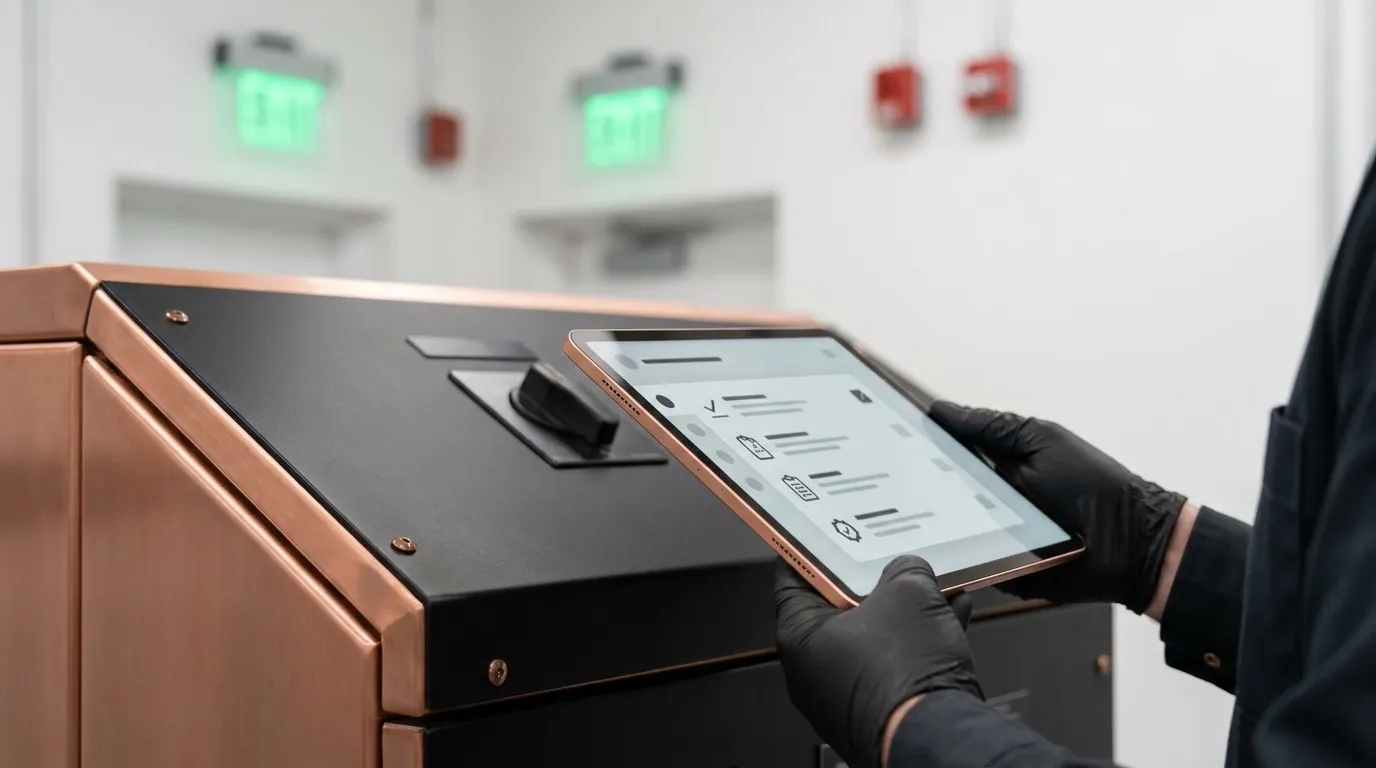
Emergency lighting and exit signs are among the most frequently deficient systems we find during commercial electrical assessments. AS 2293 requires that emergency lighting systems be tested monthly (a short functional test of 90 seconds), six-monthly (a 90-minute discharge test to verify battery capacity), and annually (with full documentation). AS 1851 — the standard for routine maintenance of fire protection systems — specifies the frequencies and methods for these tests in detail.
A compliant emergency lighting system must maintain adequate illumination on the means of escape for 90 minutes following a mains power failure. Batteries degrade over time, and fittings that pass a visual check may still fail to meet the 90-minute requirement when tested under load. We regularly find systems where individual fittings have failed, where battery replacements are overdue, or where the test record book — which must be maintained on site — has not been updated in years. The test record is a legal document; its absence is itself a compliance failure.
RCD Testing and Switchboard Maintenance
Commercial properties are required to have RCD protection on socket outlet circuits as a minimum, and the RCDs themselves require regular testing. The push-button test built into every RCD tests the tripping mechanism but not the trip time. A calibrated RCD tester is required for a proper test to verify that the device trips within the 300-millisecond (or 30-millisecond for 10mA devices) requirement of AS/NZS 3000. The frequency of RCD testing in a commercial context depends on the environment — in construction and demolition environments it may be monthly; in a typical office environment three-monthly is standard.
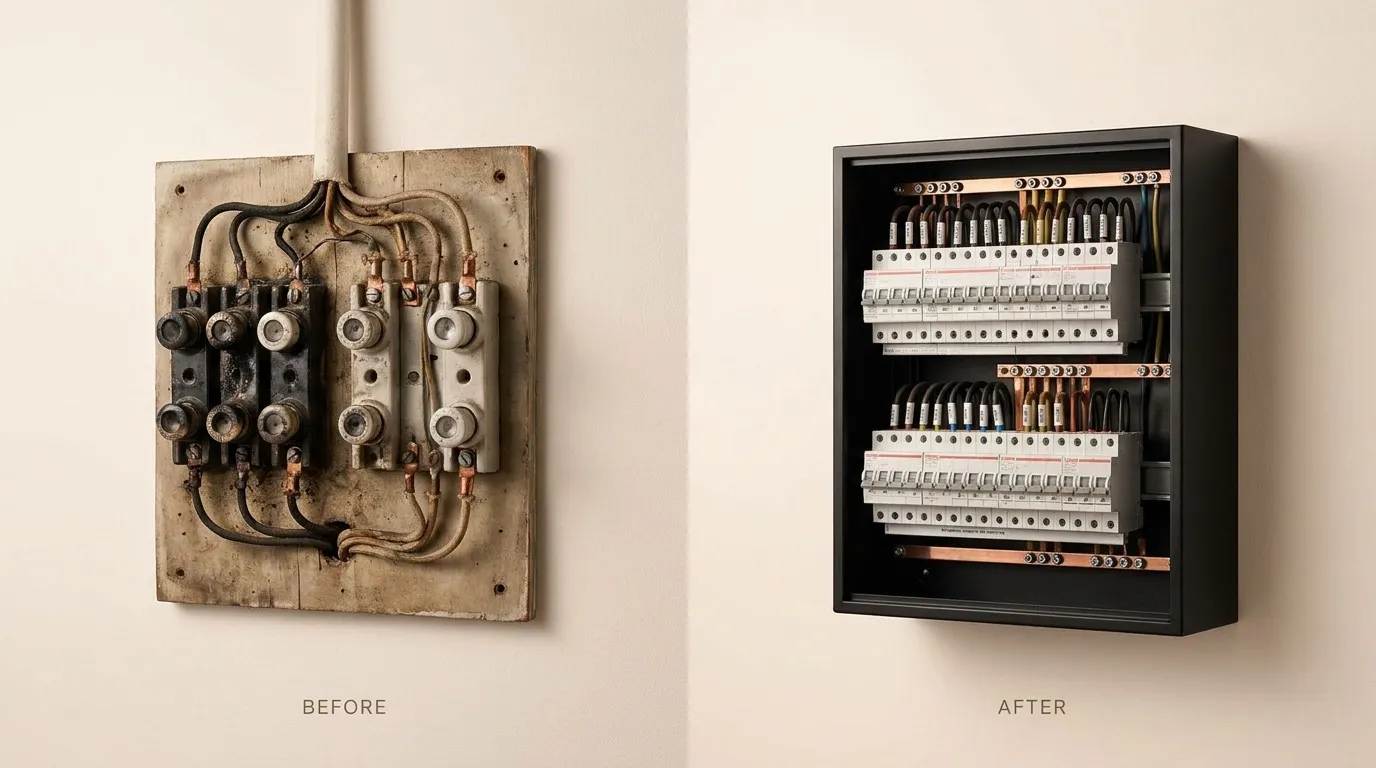
Switchboard maintenance in commercial properties should include a visual inspection by a licensed electrician at least annually, with thermographic scanning recommended on a two-to-three-year cycle. Thermographic surveys use infrared cameras to identify hot connections and components under load — a technique that can identify failing breakers, loose busbars, and deteriorating wiring before they cause a fault or fire. The cost of a thermographic survey is modest relative to the cost of an unplanned switchboard failure in a commercial building.
Test and Tag: AS/NZS 3760
Test and tag of portable electrical appliances under AS/NZS 3760 is a requirement in most commercial environments. The standard specifies visual inspection, insulation resistance testing, earth continuity testing, and the application of a dated pass tag. Testing frequencies depend on the environment: construction sites require three-monthly testing of tools; office environments require annual or two-yearly testing depending on appliance type and the assessment of the responsible person.
A common misconception is that test and tag is only relevant to construction sites. In fact, it applies to any workplace where portable electrical equipment is used, including offices, hospitality venues, retail premises, schools, and medical facilities. The obligation sits with the person conducting a business or undertaking (PCBU) under state work health and safety legislation, and the failure to maintain test and tag records is a breach of that duty. Records must identify each item, the test date, the result, the tester, and the next scheduled test date.
- Emergency lighting: monthly 90-second test, six-monthly 90-minute discharge test, annual documentation — AS 2293
- RCD functional test quarterly as minimum; calibrated trip-time test annually or per environment risk
- Switchboard visual inspection annually; thermographic survey every two to three years
- Test and tag of all portable appliances: frequency by environment per AS/NZS 3760
- Maintain a test and tag register identifying each item, test date, result, and next due date
- Exit sign luminance and legibility check included in monthly emergency lighting inspection
- All compliance records retained on site and available for inspection by regulatory authorities
Record-Keeping and Documentation
Documentation is where many otherwise diligent building managers fall short. Australian Standards and state legislation require that records of testing and maintenance be kept and made available to inspectors. For emergency lighting, the AS 2293 log book must be maintained on site. For RCD testing, records should show the date, the device tested, the test method, and the result. For test and tag, the register described above. For switchboard work, the Certificate of Electrical Safety issued by the licensed contractor is the primary document and should be retained for the life of the installation.
The practical recommendation is to appoint a single point of contact within the business or building management function who owns the compliance calendar, maintains the records, and coordinates the licensed contractors who perform the technical work. A master electrical contractor with commercial maintenance experience can prepare a compliance schedule tailored to your specific premises, covering all the Standards referenced above, and deliver the testing and documentation on a planned basis rather than reactively. Reactive compliance is almost always more expensive and always more stressful.