Your switchboard is the nerve centre of your home's electrical system. When it works properly, you never think about it. But when it starts showing signs of age or inadequacy, ignoring those signs can mean anything from nuisance outages to a house fire. As master electricians, we see the same warning signs over and over again — and the homeowners who act early save themselves significant expense and stress down the track.
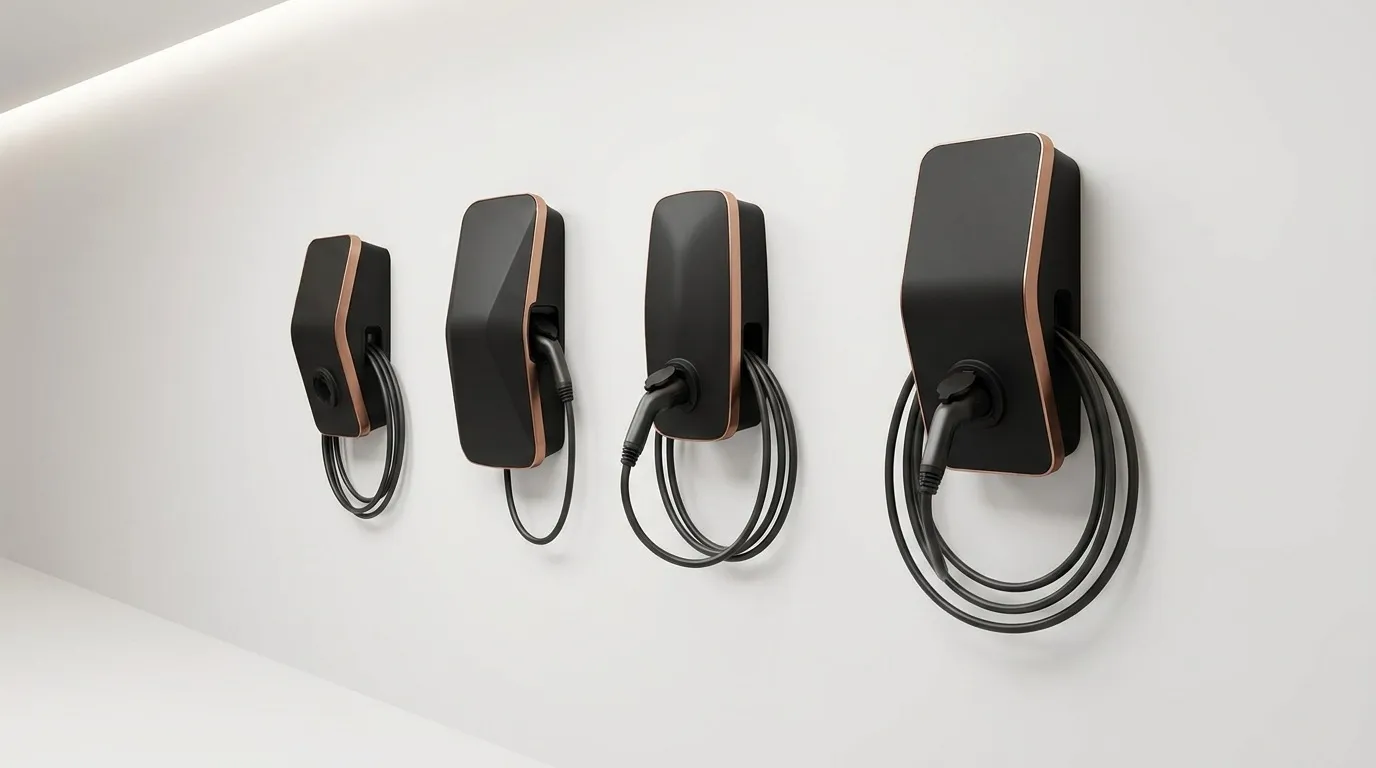
Australian switchboards from the 1970s and earlier were built for a world where the average home ran a kettle, a few light fittings, and maybe a television. Today's homes run multiple air conditioning units, induction cooktops, EV chargers, heat pump hot water systems, and a dozen or more circuits of general power. The mismatch between old infrastructure and modern demand is where danger lives.
Signs One Through Three: Old Technology That Should Already Be Gone
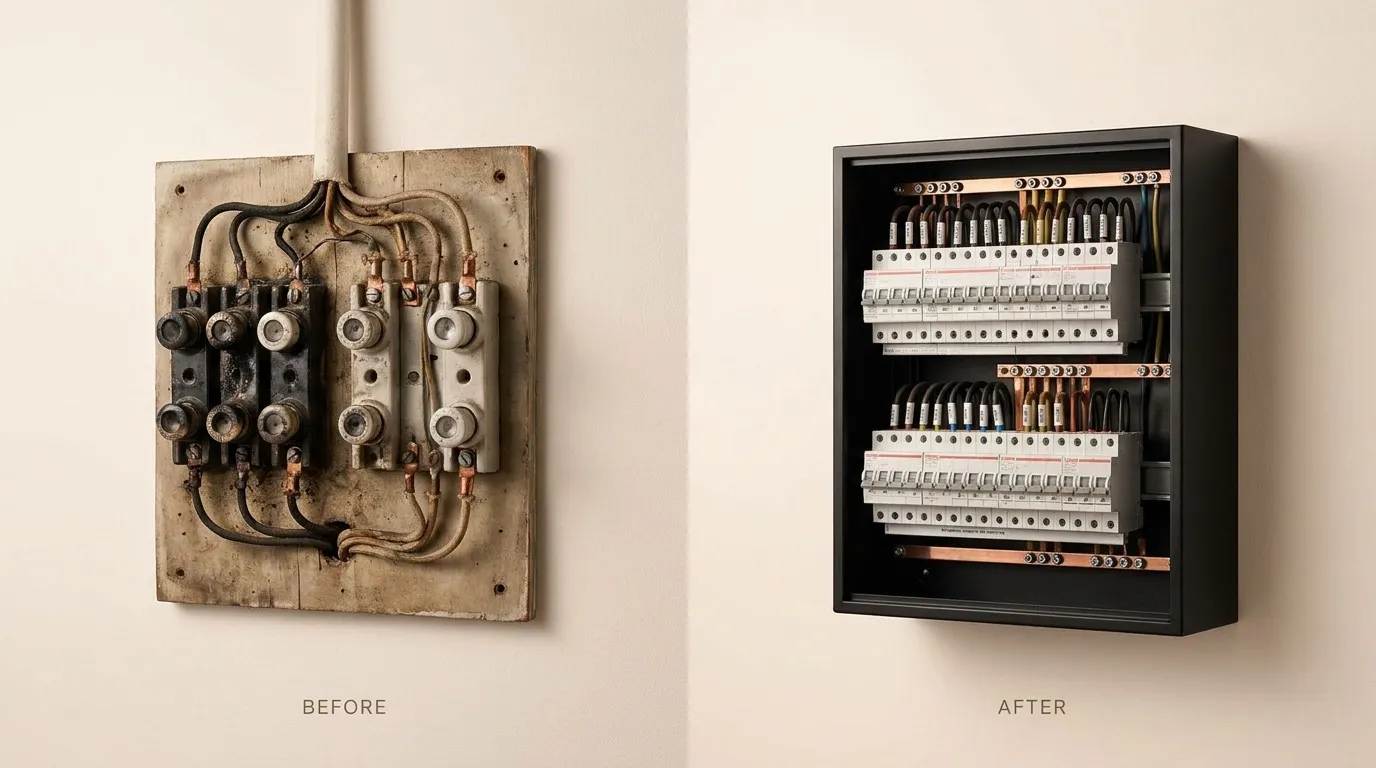
The most clear-cut warning sign is the presence of ceramic or rewireable fuses. These are the small porcelain cartridges or fuse holders where a length of fuse wire acts as the protective element. When a circuit overloads, the wire melts — eventually. Unlike a modern circuit breaker, a rewireable fuse gives no indication of its condition, and it is trivially easy for a previous occupant to replace the fuse wire with something far too thick, effectively removing the protection altogether. If your switchboard has these, upgrading is not a question of if but when.
The second sign is the absence of RCD (residual current device) protection. Under AS/NZS 3000:2018 — the Wiring Rules — all new domestic installations require RCD protection on power and lighting circuits. An RCD monitors the live and neutral currents and trips within 30 milliseconds if it detects current leaking to earth, which is exactly what happens when current passes through a human body. If your home has no RCDs, or only one covering a single circuit, you are without the most important line of defence against electrocution. Many older boards have MCBs (miniature circuit breakers) but no RCDs — these protect wiring from overloads but offer no personal protection whatsoever. The current best practice is the RCBO (residual current breaker with overload protection), which combines both functions in a single device per circuit.
Third on the list: discolouration, warmth, or burn marks around the switchboard cover or individual fuse holders. Electrical components should not run hot to the touch. Discolouration — yellowing, browning, or black residue — is evidence of sustained heat, arcing, or a fault. A switchboard that is warm on the outside is one where heat is being generated inside, and that heat has to go somewhere.
Signs Four Through Six: Performance Issues You Should Not Dismiss
Nuisance tripping — where a circuit breaker trips without an obvious overload — is a sign worth investigating, not tolerating. A breaker that regularly trips under normal load may have degraded, or the circuit may genuinely be overloaded and the breaker is doing its job correctly. Either way, the answer is not to reset it and carry on. An electrician can determine whether the protective device itself needs replacing, or whether the circuits need reconfiguring to better distribute load.
Buzzing, clicking, or crackling sounds from a switchboard are never normal. These sounds can indicate loose connections — which create resistance, generate heat, and can lead to arcing. Arcing faults are a leading cause of electrical fires, and they often occur in hidden locations inside the switchboard enclosure where they are not immediately visible. A switchboard that makes noise is one that deserves urgent attention.
Insufficient circuits for modern load is subtler but equally important. A 1980s home might have been wired with a single general-purpose outlet circuit for an entire floor. Running a home office, gaming setup, multiple appliances, and a home entertainment system from that circuit is asking too much. The symptom is constant overloading, but the solution is more circuits — and more circuits means a larger switchboard.
Sign Seven: Age Alone Is Reason Enough
If your switchboard is more than 25 years old, it warrants a professional inspection regardless of whether you have noticed any of the above symptoms. The internal components — breakers, busbars, neutral links, and wiring — degrade over time. Breaker mechanisms can stiffen and fail to trip at the correct current. Insulation on internal wiring becomes brittle. Connections loosen through thermal cycling. None of these failures are visible without opening the board and conducting a proper inspection, which may include thermographic scanning to identify hot spots that no visual check can detect.
- Ceramic or rewireable fuses still in service — replace immediately
- No RCD protection on power and lighting circuits
- Warmth, discolouration, or burn marks on the board or cover
- Circuit breakers that trip regularly without obvious cause
- Buzzing, clicking, or crackling noises from inside the enclosure
- Too few circuits for the actual electrical load in the home
- A switchboard older than 25 years with no recent professional inspection
What a Switchboard Upgrade Actually Involves
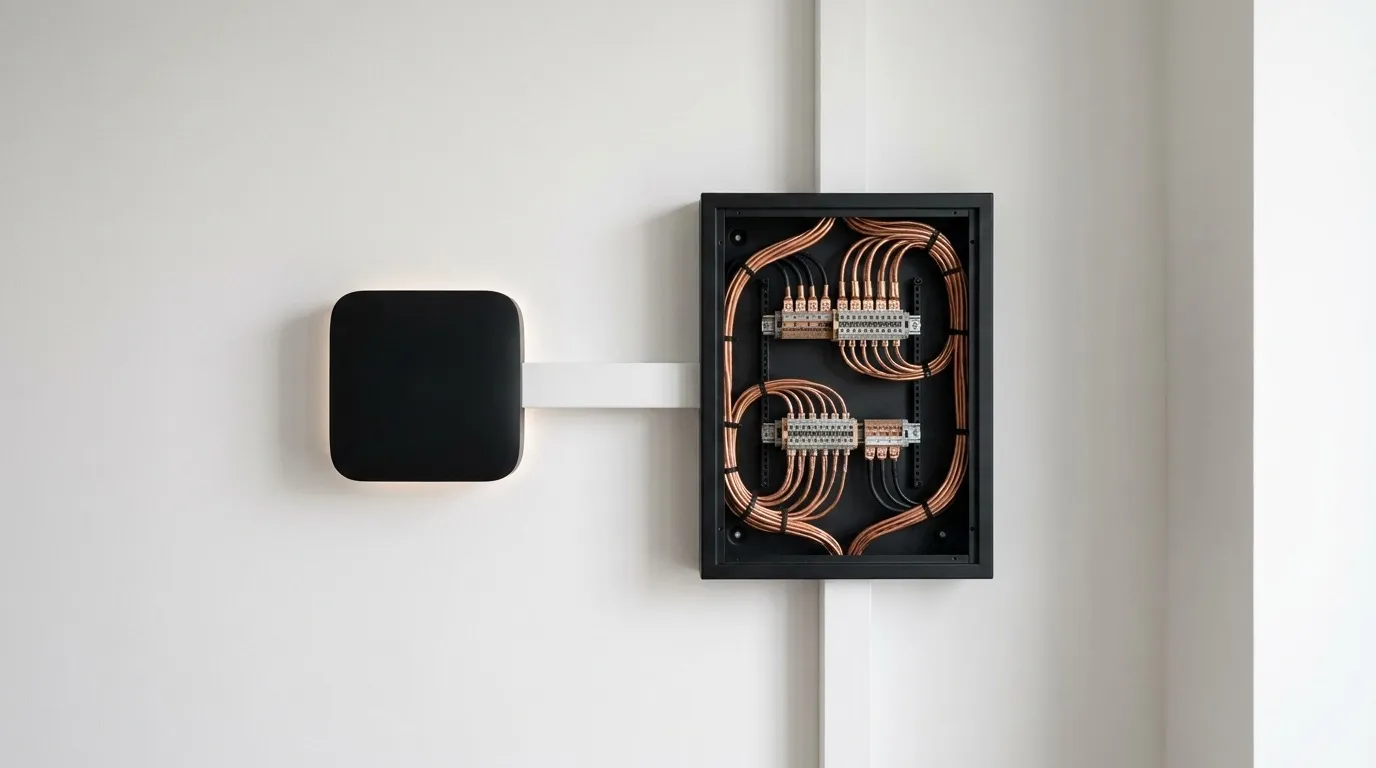
A full switchboard upgrade by a licensed electrical contractor involves replacing the entire enclosure and its contents: new DIN rail, new RCBOs on every circuit, correct labelling, a main switch, and surge protection if specified. The work must be inspected and approved under the relevant state electrical safety legislation. In Victoria, for example, all electrical installation work above a threshold requires a Certificate of Electrical Safety to be issued and lodged with Energy Safe Victoria. This is not optional, and a switchboard upgraded without this certificate is not legally compliant — which matters significantly at the point of sale or when making an insurance claim.
A properly upgraded switchboard gives you a documented, compliant installation; protection on every circuit; capacity for future loads including EV chargers and solar inverters; and the peace of mind of knowing the most critical safety component in your home has been brought fully up to current standards. It is one of the highest-value electrical investments you can make in a property.