Australia's EV uptake has accelerated sharply, and the question of home charging has moved from specialist territory to mainstream concern. For most EV drivers, home charging is where 80 to 90 percent of energy is added — which makes getting the installation right one of the most consequential electrical decisions you will make in the life of your vehicle. The range of charger hardware, installation approaches, and smart features available in 2026 is genuinely broad, and not all of it is equally suited to every home.
This guide explains the key decisions — supply type, charging speed, hardware format, and smart capability — and describes what a compliant, professional installation actually involves. It is written for intelligent homeowners who want to understand their options rather than simply be sold a product.
Single-Phase vs Three-Phase Supply: The Starting Point
Before discussing charger hardware, you need to know what electrical supply your property has. Most Australian homes are connected to a single-phase 230V supply. Some older homes in particular areas and most properties in peri-urban and rural zones may have three-phase 400V supply, and this is increasingly being requested as an upgrade specifically to support EV charging and solar systems.
A single-phase supply limits AC home charging to a maximum of approximately 7.4 kW (32 amperes at 230V). This is the Level 2 charging rate that suits the vast majority of Australian EV drivers. On a 7 kW charger, a 70 kWh battery — typical of a mid-range electric SUV — charges from near-empty in roughly ten hours: fine if you plug in overnight. Three-phase supply opens up 11 kW and 22 kW charging, which reduces that same charge to six or three hours respectively. Whether you actually need that speed depends on your daily driving, how often you arrive home with a genuinely depleted battery, and whether your vehicle's onboard AC charger can even accept 11 or 22 kW — many popular EVs cap their AC acceptance at 7.4 or 11 kW regardless of the charger installed.
Tethered vs Socketed: Hardware Format
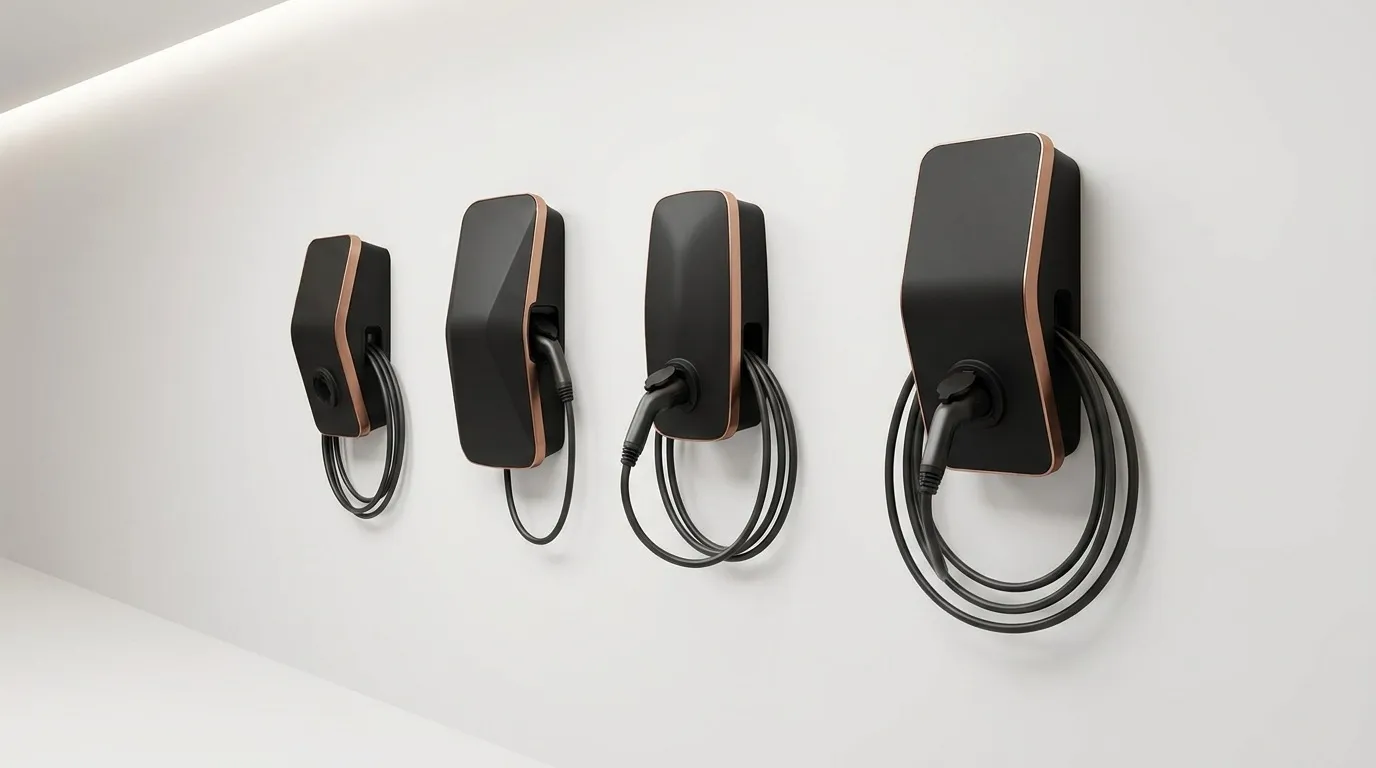
Home EV chargers come in two physical formats. A tethered unit has the charging cable permanently attached — you plug the vehicle end in and you are done. A socketed unit has a Type 2 socket outlet on the wall, and you use a separate Mode 3 cable that you supply and store. Tethered units are marginally more convenient day-to-day and slightly cheaper overall. Socketed units are more flexible if you expect to change vehicles — Type 2 is now the universal AC charging standard across all current-generation EVs sold in Australia — and they allow you to use cables of different lengths.
Both formats require a dedicated circuit from the switchboard and must comply with AS/NZS 3000. Mode 3 charging — which is what these wall units provide — incorporates communication between the vehicle and the charger, enabling charge rate negotiation and safe interruption. This is categorically different from plugging an EV into a standard GPO via a granny cable, which is a Mode 2 workaround that puts sustained high-current demand on wiring and socket outlets not designed for it.
Smart Features, Load Management, and Solar Diversion
In 2026, the feature gap between basic and smart EV chargers is significant. A basic unit charges at the maximum rate whenever plugged in. A smart unit can be scheduled to charge at off-peak tariff times, can modulate charge rate based on available household capacity (load management), and can divert excess solar generation into the vehicle battery rather than exporting it to the grid at a low feed-in rate.
Load management matters in homes where the total electrical load — EV charger plus appliances plus air conditioning — could otherwise exceed the capacity of the supply fuse. A smart charger connected to a current transformer on the main supply cable can sense total household draw and reduce the charging rate in real time to keep within safe limits. This avoids the need to upgrade the network supply fuse, which is a Distribution Network Service Provider process that can be expensive and slow.
Solar diversion is compelling for homeowners with a PV system. Rather than exporting surplus generation at whatever the feed-in tariff currently is, the charger detects available solar excess and ramps charging up or down to absorb it. The economics depend on the spread between your import rate and feed-in rate, but given that import rates now commonly exceed 30 cents per kWh in Victoria while feed-in tariffs have compressed, diverting solar into your vehicle is a genuinely attractive proposition. OCPP (Open Charge Point Protocol) support in a charger allows integration with home energy management systems and third-party platforms — worth specifying if you want future flexibility.
- Confirm your supply phase and available capacity before selecting charger power level
- Match charger kW output to what your vehicle's onboard AC charger can actually accept
- Specify a smart charger with load management if your home has high electrical demand
- Solar diversion is a high-value feature if you have rooftop PV and high import tariffs
- Tethered units suit most households; socketed units offer cable flexibility
- OCPP support future-proofs the charger for energy management integration
- Installation must be by a licensed electrician; Clean Energy Council accreditation is relevant for solar-integrated systems
What a Professional Installation Involves
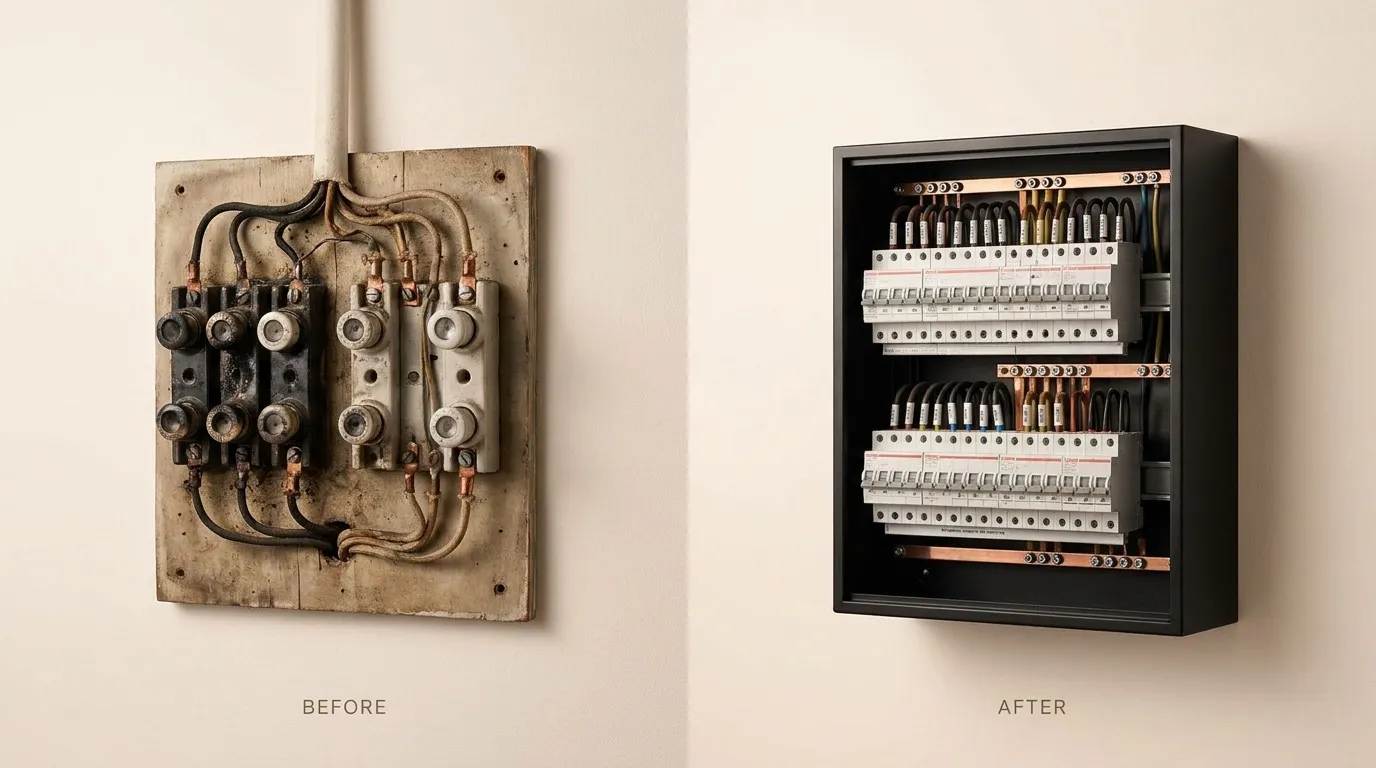
A compliant EV charger installation is not simply mounting a unit on a wall and running a cable. The electrical contractor must assess the existing switchboard capacity, confirm or upgrade the earthing system, run a dedicated circuit of appropriate size from the switchboard to the charger location, install the charger to manufacturer specifications, and commission any smart features including CT clamp placement and network connectivity. A Certificate of Electrical Safety is required in all Australian states. In Victoria, the installation must comply with AS/NZS 3000, the relevant supply authority requirements, and any network operator rules regarding supply capacity. If you are combining EV charging with a new or existing solar and battery system, accreditation under the Clean Energy Council installer scheme is the relevant credential to look for.