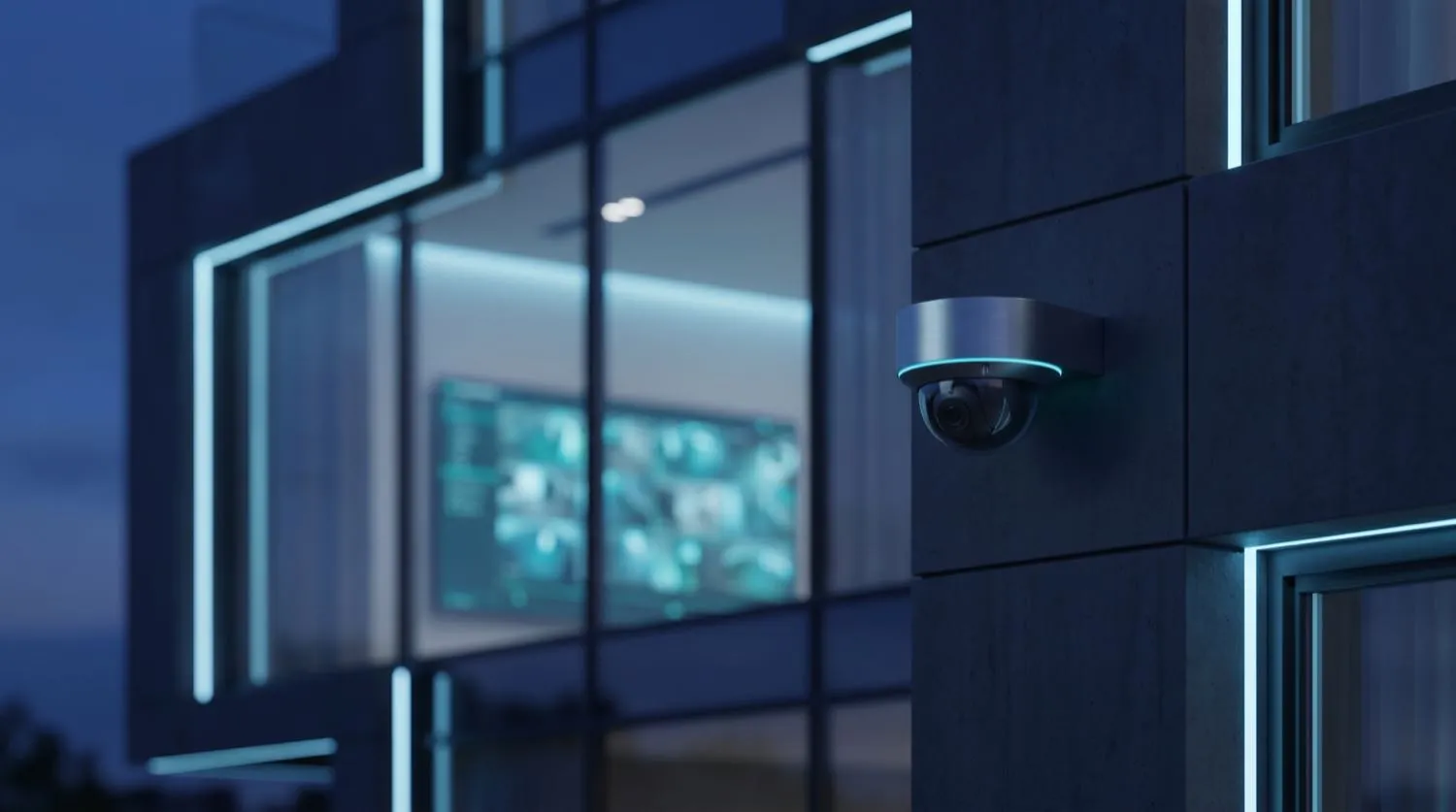
Physical security systems — IP surveillance cameras, electronic access control, intruder alarm panels, and intercom infrastructure — share a fundamental dependency on quality electrical and low-voltage cabling infrastructure. A CCTV system installed with undersized cable runs, incorrectly terminated connectors, or insufficient PoE (Power-over-Ethernet) switch capacity will underperform regardless of the quality of the cameras themselves. Nexus Grid Electrical approaches every security installation as an electrical engineering project first, designing structured cabling infrastructure that meets the performance requirements of the installed systems and complies with the relevant Australian Standards for security and electrical work.
IP CCTV Surveillance Systems
Modern IP surveillance cameras transmit compressed video over standard network infrastructure, placing demands on cabling, switching, and storage systems that must be assessed at the design stage. Nexus Grid Electrical performs a site survey and camera placement design for each installation, identifying mounting locations that maximise coverage while minimising blind spots, selecting lens focal lengths appropriate for the identification, recognition, or detection task at each location, and specifying the cable route, conduit, and termination requirements. Network video recorders (NVRs) are sized based on the number of cameras, recording resolution, frame rate, compression format, and the required retention period — typically 30 days for most commercial and insurance requirements.
- Camera placement design: field-of-view calculations based on sensor size, focal length, and required pixel density for identification (250 pixels/metre for facial recognition) vs detection tasks
- Cat6A structured cabling for PoE camera runs up to 90 m without signal degradation — critical for 4K streams at 30 fps
- PoE switch specification: 802.3bt (PoE++) for cameras requiring up to 90 W per port (PTZ cameras with heaters in outdoor enclosures)
- NVR storage calculation: 4K H.265+ camera at 15 fps produces approximately 50–80 GB per day; 10-camera system requires 500–800 GB/day before compression savings
- ONVIF Profile S and G compliance required for all cameras to ensure NVR interoperability and future replacement flexibility
- Cyber-hardening: VLAN isolation of camera network, default credential replacement, firmware update policy, and encrypted video streams
Intruder Alarm Systems: AS/NZS 2201
AS/NZS 2201 (Intruder Alarm Systems) is the governing standard for the design, installation, commissioning, and maintenance of intruder detection systems in Australia. It classifies systems into grades based on the level of risk and value of the protected asset, prescribing the type of detection devices, tamper protection, communication paths, and power supply backup duration required for each grade. Grade 2 systems (residential and small commercial) require a minimum 12-hour backup power supply and dual-path communication. Grade 3 systems (commercial with higher risk) require 24-hour backup, anti-substitution monitoring on the communication path, and certified panel equipment. Nexus Grid Electrical designs intruder alarm systems to the appropriate AS/NZS 2201 grade, specifying passive infra-red (PIR) detectors, dual-technology sensors (PIR + microwave) for false-alarm-sensitive applications, glass-break detectors, door/window reed switches, and shock sensors appropriate to the threat profile and protected asset value.
- AS/NZS 2201.1 system grade selection: Grade 1 (basic) through Grade 4 (high-risk commercial/government) based on asset value and threat assessment
- PIR detector placement: coverage zones calculated to avoid false triggers from HVAC vents, direct sunlight paths, and animal movement below 500 mm height
- Dual-technology sensors: independent PIR and microwave detection required to confirm alarm — reduces false activation rate by up to 95% vs single-technology
- Tamper protection: all control panels, junction boxes, and detector housings monitored for cover removal and wall separation
- Backup power: sealed lead-acid or lithium battery sized for minimum 12-hour standby (Grade 2) or 24-hour standby (Grade 3) at full alarm current draw
- Monitoring communication: dual-path (IP primary + 4G secondary) alarm transmission to AS 2201.1-compliant monitoring centre
Electronic Access Control
Electronic access control systems — whether card-reader-based, PIN, biometric, or mobile credential — are increasingly integrated with IP networks and video management software (VMS), creating a converged security platform where access events and video footage are automatically correlated. Nexus Grid Electrical installs access control infrastructure from door controller to network head-end, including the electric door strikes, electromagnetic locks, REX (request to exit) sensors, door position switches, and the power supplies with battery backup required by AS 1603.9 (Access Control Systems) and fire authority requirements for emergency door release. All electric locking hardware is specified to fail-safe (unlocked on power loss) or fail-secure (locked on power loss) operation appropriate to the door's classification under the National Construction Code fire egress requirements.
Low-Voltage Cabling and Electrical Integration
Security system cabling in Australia is classified as extra-low voltage (ELV) work and is subject to state-based licensing requirements that vary by jurisdiction. In Queensland, ELV cabling work requires a Registered Cabler licence or an Electrical Contractor licence with ELV endorsement. Nexus Grid Electrical holds the appropriate licences and installs all security cabling in accordance with the AS/CA S009:2013 installation requirements for customer cabling and the relevant parts of AS/NZS 3000:2018 that apply to ELV systems within electrical installations. Cable types are selected based on the application — shielded Cat6A for IP cameras, 2-core screened cable for alarm loops, fire-rated cable for access control circuits on fire doors — with cable management in dedicated security conduit or cable tray to maintain separation from mains-voltage wiring.
- Cabling licence compliance: Queensland Security Industry Regulation 2008 and the Electrical Safety Act 2002 both applicable to security system installation
- Conduit and cable management: security cabling in separate conduit from 230 V mains wiring, with minimum 50 mm separation or metallic barrier
- Earth bonding: all metallic enclosures, camera housings, and access control hardware bonded to the main earthing system
- Surge protection: transient voltage suppression (TVS) devices fitted to all external camera connections and communications ports exposed to lightning risk
- Documentation: as-installed cable schedule, camera layout drawing, access control door schedule, and alarm zone map provided at practical completion
- Commissioning test: full functional test of every device, verified against the documented cause-and-effect matrix, with written commissioning report signed by the responsible person