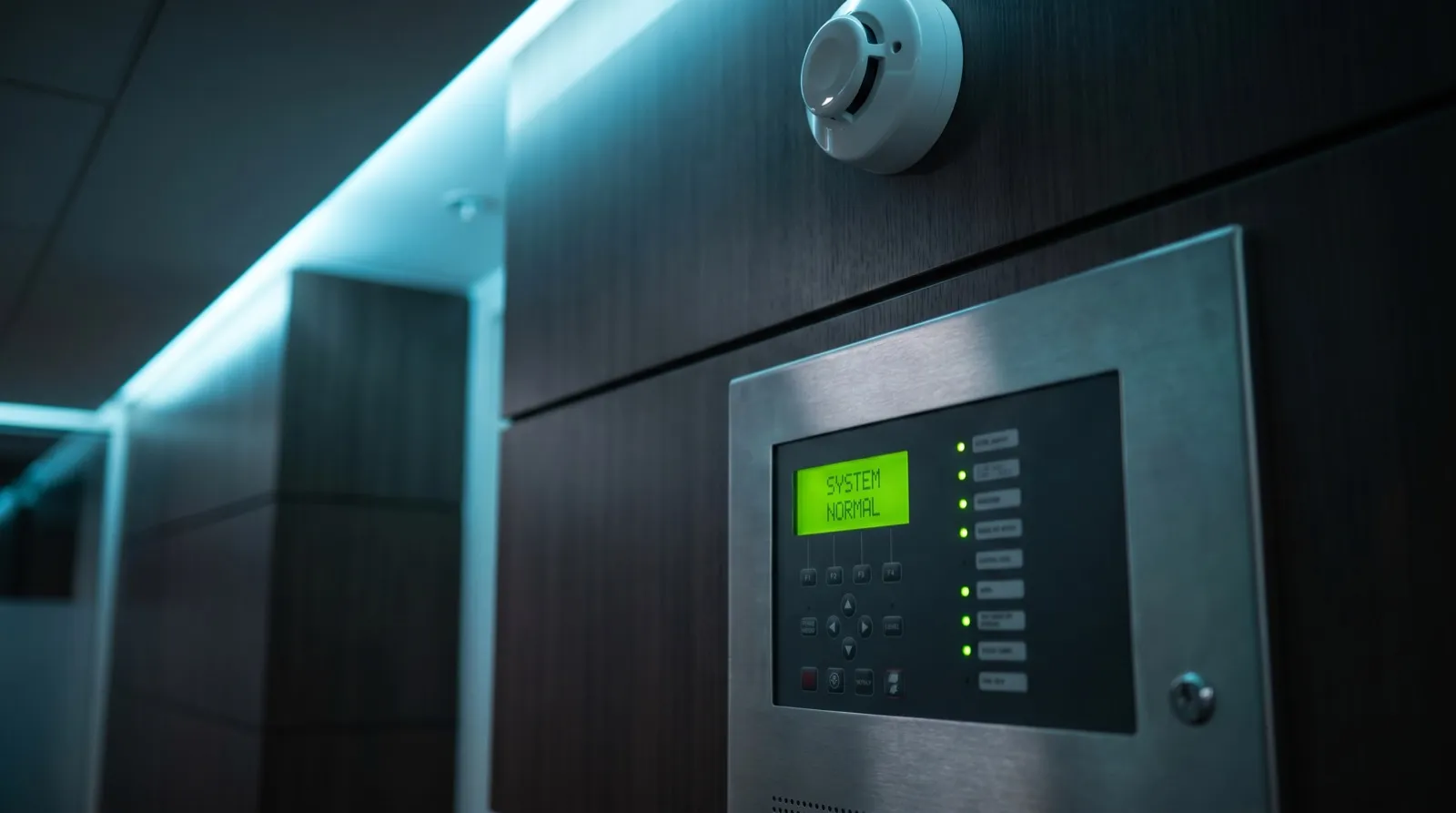
Fire detection is not optional and it is not a commodity. Australian law prescribes specific standards for fire alarm systems based on building class, occupancy type, and construction date, and the consequences of non-compliance extend well beyond a council notice — they include voided insurance policies, personal liability for property owners and building managers, and potentially fatal outcomes for occupants. PrismTech Electrical treats fire alarm installation as the life safety discipline it is, applying the same engineering rigour we bring to high-voltage switchboard work.
Australian Standards: AS 1670 and AS 3786
Two standards govern the majority of fire detection installations in Australia. AS 1670 — Fire Detection, Warning, Control and Intercom Systems — covers system design, installation, commissioning, and maintenance for commercial, industrial, and multi-residential buildings (Class 2 through Class 9 under the NCC). It prescribes detector spacing, cable types, panel requirements, zone configuration, and documentation. AS 3786 — Smoke Alarms — applies to residential dwellings and specifies that alarms must use photoelectric sensing technology, be hard-wired to 240V with battery backup in new and substantially renovated buildings, and be interconnected so that any alarm in the home triggers all alarms simultaneously.
PrismTech electricians are trained in both standards and work alongside fire engineers and building certifiers where required. We produce the system record documentation that building approvals and annual compliance audits demand — detector placement drawings, cable schedules, commissioning test records, and maintenance logbooks — so your property is audit-ready at any point.
Residential Smoke Alarms: Photoelectric, Hard-Wired, and Interconnected
Queensland and South Australian legislation now mandates photoelectric interconnected smoke alarms in all dwellings, with national adoption of similar requirements progressing. Photoelectric detectors respond more reliably than ionisation types to the slow, smouldering fires common in residential settings — the fires most likely to start while occupants are asleep. Hard-wired alarms draw primary power from the 240V circuit, with a rechargeable lithium battery backup that maintains operation for at least 10 years without battery replacement under normal use.
Interconnection is achieved via a dedicated low-voltage interconnect wire run between all alarms in the dwelling. When any alarm detects smoke, it sends a signal along the interconnect wire that triggers every other alarm in the home within seconds. PrismTech installs, tests, and certifies interconnected alarm networks in compliance with AS 3786 and state-specific legislation, providing a compliance certificate and alarm placement diagram for your records.
Commercial Fire Alarm Panels and Monitored Systems
Commercial and multi-residential buildings require addressable or conventional fire alarm control panels (FACPs) that zone the building, identify the specific detector that has activated, and transmit signals to a monitored fire station or a Fire Indicator Panel (FIP) in the building's main entry. PrismTech installs panels from manufacturers including Hochiki, Notifier, and Bosch, selected for their track record in Australian commercial environments and the availability of local technical support.
- AS 3786 photoelectric smoke alarm supply, installation, and interconnection in residential dwellings
- Hard-wired 240V alarms with 10-year lithium battery backup and tamper-resistant bases
- AS 1670 compliant addressable and conventional fire alarm panel installation
- Heat detector installation for kitchens, garages, and environments unsuitable for smoke detection
- Fire indicator panel (FIP) installation and commissioning in commercial lobbies
- Annual inspection, testing, and logbook maintenance for commercial fire systems
System Maintenance and Annual Compliance Inspections
AS 1670.3 requires that fire detection systems in commercial buildings are inspected and tested at intervals prescribed in the standard — typically every six months for general inspection and annually for full system testing. PrismTech offers service agreements that schedule these visits automatically, complete all required functional tests using calibrated test equipment, update the site logbook, and issue a written inspection report confirming system status.
For residential landlords and property managers, we also conduct pre-tenancy smoke alarm inspections that verify compliance with state tenancy legislation, replace any non-compliant alarms, and issue a compliance certificate that protects both the landlord and the insurer in the event of a claim. We carry common photoelectric alarm models in our vehicles for same-day replacement.
Frequently asked questions
What type of smoke alarm is required in Queensland and other Australian states?
Queensland requires photoelectric smoke alarms in all dwellings — not ionisation type. New dwellings and those undergoing substantial renovation must have hard-wired, interconnected photoelectric alarms in bedrooms, hallways serving bedrooms, and on each storey. Queensland's legislation is among the strictest in Australia, and full compliance for existing rental properties was required from 1 January 2022. Other states are progressively adopting similar requirements. PrismTech advises on the specific obligations for your state and building class as part of every consultation.
Do commercial buildings require monitored fire alarm systems?
Most Class 2 through Class 9 buildings above a prescribed size threshold must have fire alarm systems connected to a monitoring service. The specific requirement depends on the NCC building class, occupancy, and state fire authority guidelines. Monitored systems transmit activation signals to a permanent monitoring centre that notifies the fire brigade automatically. PrismTech installs the monitoring interface hardware and manages the account setup with the monitoring provider during commissioning.
How often should a commercial fire alarm system be inspected?
AS 1670.3 specifies inspection intervals based on system type and building class. As a general guide, a six-monthly inspection covers detector sensitivity testing, panel event log review, battery condition, and zone testing; an annual inspection adds full functional testing of all detectors and notification appliances. We maintain a service schedule for every system we commission and send reminder notices before each due date to ensure building managers remain compliant without having to track the intervals themselves.
Can PrismTech integrate fire alarms with a building automation system?
Yes. Fire alarm control panels can be integrated with building management systems (BMS) and smart building platforms via dry-contact relay outputs or Modbus/BACnet interfaces, depending on the panel manufacturer. Typical integrations include triggering HVAC shutdown to prevent smoke spread, releasing magnetic door hold-open devices, activating emergency lighting, and sending alert notifications to a facilities management platform. All integrations are designed to maintain AS 1670 compliance, ensuring the fire system's primary function is never compromised by automation logic.