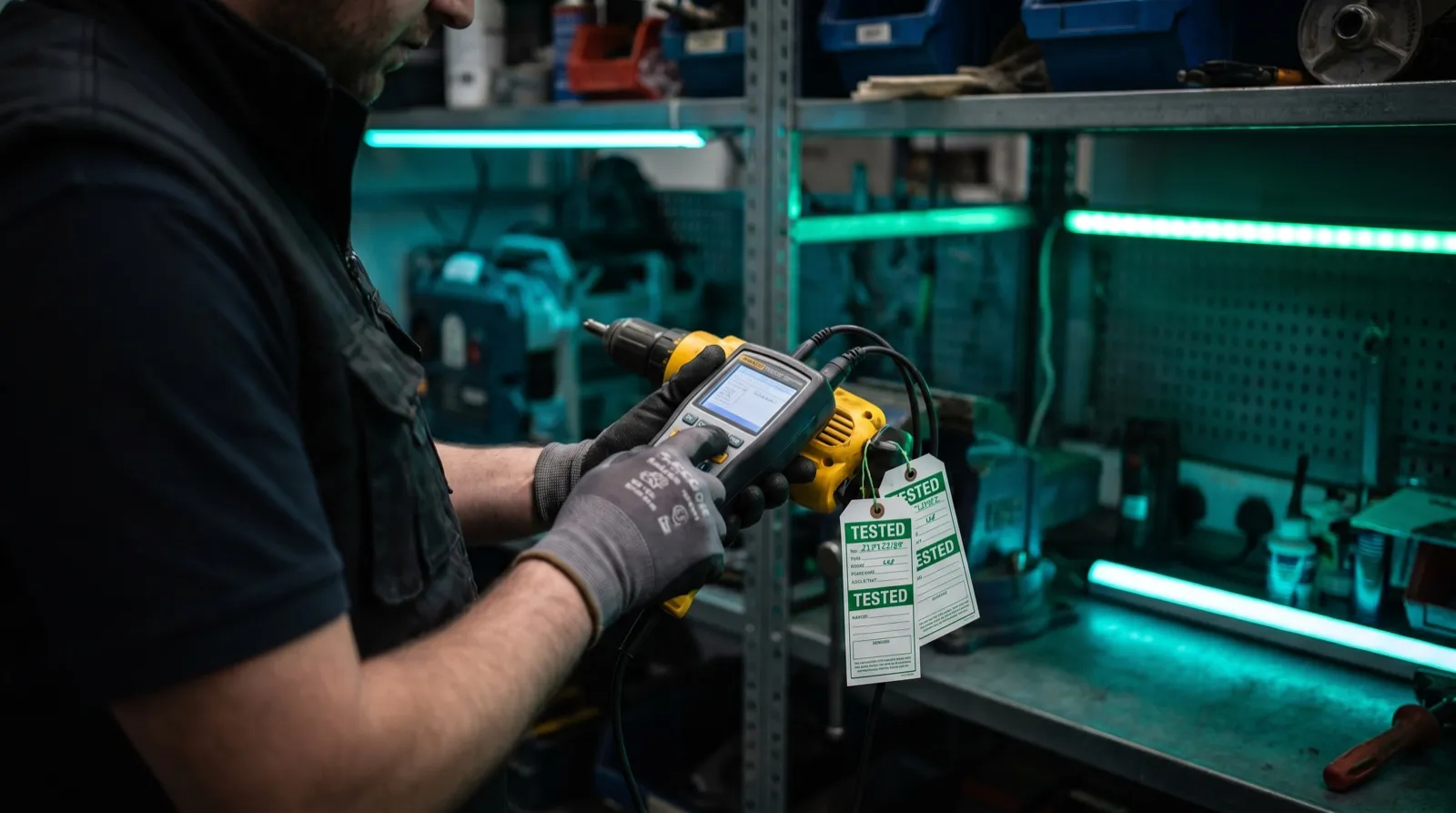
AS/NZS 3760 — In-service Safety Inspection and Testing of Electrical Equipment — establishes the mandatory framework for the inspection and testing of electrical equipment used in Australian workplaces. The standard defines the visual inspection requirements, the electrical tests to be performed, the pass and fail criteria for each test, the frequency of testing based on equipment type and environment, and the records that must be kept. Non-compliance exposes employers to significant penalties under work health and safety legislation, invalidates many commercial insurance policies in the event of an electrical fire, and — most importantly — leaves workers and occupants exposed to preventable electrocution and fire risk. PrismTech Electrical's test and tag technicians are qualified to AS/NZS 3760 and equipped with calibrated PAT testers traceable to NATA-accredited standards.
What the AS/NZS 3760 Process Involves
Each item of tested equipment goes through a defined inspection and test sequence. The process begins with a visual inspection: the supply cord is checked for cuts, abrasion, and kinking; the plug is inspected for cracks, burn marks, and pin damage; the equipment housing is checked for damage that could expose live conductors; and strain relief at both the plug and the equipment end is verified. Any item that fails the visual inspection is quarantined from service immediately — a badly damaged cord is as dangerous as a failed electrical test, and the standard correctly treats visual failure as grounds for withdrawal from service without the need for further testing.
Items that pass visual inspection proceed to electrical testing. The core tests under AS/NZS 3760 are earth continuity (verifying the earth conductor is intact and presents a resistance below the applicable threshold), insulation resistance (verifying the insulation between live conductors and earth is sufficient to prevent leakage), and where the equipment is double-insulated, a substitute leakage current test. All test results are recorded against the asset's unique tag number, which is physically affixed to the equipment along with the test date and the due date for the next test — calculated from the re-test frequency applicable to the equipment class and operating environment.
RCD Testing Under AS/NZS 3760
AS/NZS 3760 also mandates the testing of residual current devices (RCDs) — commonly called safety switches — that form part of the portable electrical equipment chain. This includes portable RCDs (plug-in safety adaptors) used on construction sites and in environments where the fixed installation does not provide RCD protection, as well as RCDs built into extension leads. The test verifies that the RCD trips within the 300-millisecond window at the rated trip current of 30 milliamps — the threshold below which electrocution risk is significantly reduced. A trip time exceeding 300 ms constitutes a failure, and the device is immediately removed from service. PrismTech Electrical's PAT testers perform automated trip-time measurement and record the result against the RCD asset in the compliance register.
- Visual inspection to AS/NZS 3760 Section 5 requirements
- Earth continuity resistance measurement to applicable thresholds
- Insulation resistance and substitute leakage current testing
- RCD trip-time verification at 30 mA to AS/NZS 3760
- Unique asset tagging with test date and re-test due date
- Digital asset register delivered same day, formatted for WHS audit
Testing Frequencies and Environment Classification
One of the most commonly misunderstood aspects of AS/NZS 3760 is that re-test frequency is not a single fixed interval applied to all equipment. The standard classifies equipment by the environment in which it is used. Equipment used in construction, demolition, mining, and quarrying environments requires testing every three months. Equipment used in commercial kitchens, vehicle workshops, and other hostile environments requires testing every six months. General office equipment — computers, phone chargers, desk fans — used in a controlled indoor environment requires testing every five years, though many insurers and WHS advisors recommend a shorter cycle. PrismTech Electrical's technicians will classify your equipment correctly during the testing visit and set re-test dates accordingly.
Asset Registers, Records, and Insurance Requirements
The asset register we provide after each test and tag engagement is a complete record of every item tested, including the asset description, serial number where present, location, test results for each parameter, pass or fail outcome, tag number, and next due date. This register is formatted for direct use in WHS audits, safe work method statements, and insurance compliance documentation. Where an item fails testing, the register records the failure mode, the reason the item was withdrawn from service, and the recommended action — repair or replace. We retain copies of all test records for the legally required period and can reissue registers on request. For organisations with large equipment fleets, we can integrate our asset data with your existing maintenance management or CAFM systems.
Frequently asked questions
Does all electrical equipment in our workplace need to be tested and tagged?
AS/NZS 3760 applies to in-service electrical equipment — primarily portable and transportable equipment connected via a flexible cord and plug. Fixed wiring and switchboards are covered by different standards. In practice, this means computers, monitors, extension leads, power boards, portable heaters, kitchen appliances, power tools, and any plug-in test equipment all require testing and tagging. Built-in appliances and stationary equipment that is not moved in service may be excluded depending on their connection method.
How often does our equipment need to be tested?
Re-test frequency under AS/NZS 3760 depends on the environment in which the equipment is used, not the type of equipment. Construction and hostile environments require quarterly testing. Commercial kitchens and vehicle workshops require six-monthly testing. Office environments typically require five-yearly testing, though many businesses opt for two or three-yearly cycles as a prudent middle ground. Our technicians will classify your environment and set appropriate re-test dates during the initial visit.
Can we continue operating while the testing is being carried out?
Yes, in most cases. We sequence the testing to minimise disruption — for example, testing equipment section by section so that only a small number of items are off the network at any one time. For large sites, we typically schedule testing in shifts, covering different areas or floors across multiple visits. For 24-hour operations, we can arrange after-hours or weekend testing visits.
What happens if equipment fails the test?
Any item that fails visual inspection or electrical testing is immediately tagged with a red quarantine tag and removed from service. The failure is recorded in the asset register with the failure mode and recommended action. We do not leave failed equipment in service under any circumstances. Where the failure is a damaged cord or faulty plug, we can often repair the item on the spot and re-test it. Where the failure indicates internal component degradation, the item should be assessed for repair or disposal by the equipment supplier.