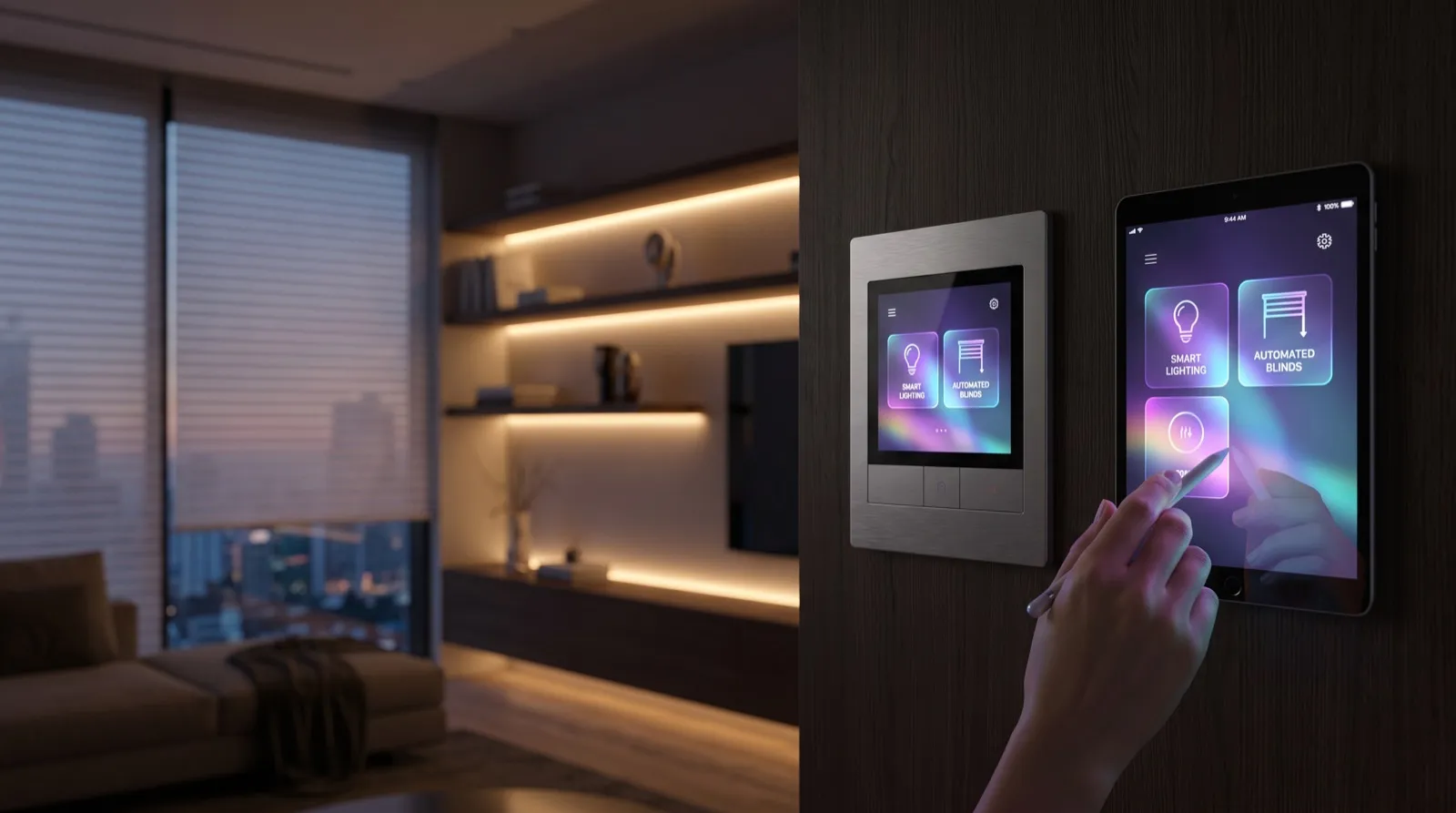
Smart home technology has moved well beyond novelty. Today, a properly engineered automation system reduces energy consumption, improves security, and delivers a level of comfort that manual switching simply cannot match. PrismTech Electrical approaches every smart home project as a structured electrical engineering exercise — not a plug-and-play afterthought — so your investment performs reliably for decades rather than seasons.
KNX and C-Bus: Enterprise-Grade Control for Residential Environments
We specialise in two of the world's most proven building automation protocols: KNX and Clipsal C-Bus. Both are wired bus systems that communicate independently of your home Wi-Fi, meaning automation commands are executed in milliseconds and remain operational during internet outages. KNX is an open international standard (ISO/IEC 14543-3) supported by more than 500 manufacturers, giving you genuine long-term flexibility. C-Bus, engineered by Schneider Electric, dominates Australian commercial and high-end residential projects and is particularly well suited to large floor plans with multiple lighting zones.
Our licensed electricians handle the full scope: structured cabling, bus cable termination, DIN-rail mounted processors, keypad commissioning, and ETS5/ETS6 software programming for KNX projects. Every system is documented with an as-built wiring diagram and a programming backup stored securely off-site, so future modifications or service calls are straightforward rather than time-consuming guesswork.
Lighting, Blinds, Climate, and Multi-Room Audio
A well-integrated system goes beyond switching lights on and off. PrismTech programmes dynamic lighting scenes that adjust colour temperature and intensity throughout the day, supporting circadian rhythms in living spaces and focused task lighting in home offices. Motorised roller blinds and curtain tracks are wired and integrated so that a single "Good Morning" scene can raise the blinds, turn on the kitchen lights, set the thermostat to 22 degrees, and start your preferred playlist — all triggered by a single tap on a Clipsal Saturn keypad, an app, or a voice command to Google Home, Amazon Alexa, or Apple Home.
Multi-room audio amplifiers are wired with dedicated low-voltage cabling to in-ceiling or in-wall speakers, with volume control integrated directly into the automation keypads. HVAC integration uses dry-contact relays or DALI-2 interfaces, depending on your system brand, allowing the automation controller to respond to occupancy sensors and adjust climate zones without you touching a thermostat.
Voice Control, App Access, and Scene Programming
Modern smart home platforms bridge your wired automation backbone with cloud-based voice assistants and smartphone apps. We configure secure API bridges between KNX or C-Bus and platforms such as Home Assistant, Control4, or Crestron, depending on your preference and budget tier. Scenes are programmed to your lifestyle: a "Movie" scene dims the living room to 15%, closes the blinds, lowers the projector screen, and mutes the doorbell — activated from your phone before you even settle into the couch.
- KNX and Clipsal C-Bus wired system design, installation, and programming
- DALI-2 and DMX LED lighting control with scene memory
- Motorised blind and curtain track integration with sun-tracking schedules
- HVAC zoning and thermostat integration across multiple climate systems
- Multi-room audio wiring and amplifier commissioning
- Google Home, Amazon Alexa, and Apple HomeKit bridge configuration
Why Choose PrismTech for Smart Home Automation
Smart home installations fail for two reasons: poor electrical planning during the rough-in stage, and commissioning performed by technicians who are not licensed electricians. Every PrismTech project is designed at the electrical level first — cable routes, load calculations, switchboard modifications — before a single automation component is specified. This means your system complies fully with AS/NZS 3000 Wiring Rules and is covered by our contractor's insurance, not voided by it.
We also offer ongoing service agreements that include annual system health checks, firmware updates for all networked devices, and remote diagnostics via encrypted cloud access. When something unusual happens at 2 am, our monitoring tools log the event so the next morning's service call arrives with a diagnosis already in hand.
Frequently asked questions
Do I need to rebuild my home's wiring to install a smart home system?
Not necessarily. We assess your existing wiring and advise on the most cost-effective path. Wired KNX or C-Bus systems require dedicated bus cable, which is easiest to install during construction or renovation. For established homes, we can often run new cable through roof cavities and wall plates with minimal disruption, or recommend hybrid solutions that combine wired backbone circuits with compatible wireless devices where retrofitting is impractical.
Can I control my smart home if the internet goes down?
Yes. KNX and C-Bus are wired bus protocols that operate entirely on their own local network. Keypads, sensors, and scenes function normally without internet access. Cloud connectivity enables remote app control and voice assistants when you are away from home, but all local control remains unaffected by internet outages — a key advantage over purely Wi-Fi-dependent consumer smart home devices.
Will my smart home system work with Google Home or Apple HomeKit?
We configure certified integration bridges that connect your KNX or C-Bus system to Google Home, Amazon Alexa, and Apple HomeKit. You can use voice commands and the native apps for these platforms while retaining the reliability of the wired backbone. During consultation we match the integration stack to your preferred ecosystem so day-to-day use feels natural rather than technical.
How long does a whole-home automation installation take?
Timeline depends on the scope and stage of construction. A new-build smart home with full KNX installation — including rough-in wiring, switchboard fit-out, device commissioning, and scene programming — typically spans two to three weeks across multiple site visits. A partial retrofit focusing on lighting control and blind automation in an existing home can often be completed in three to five days. We provide a detailed project schedule with your quote so there are no surprises.