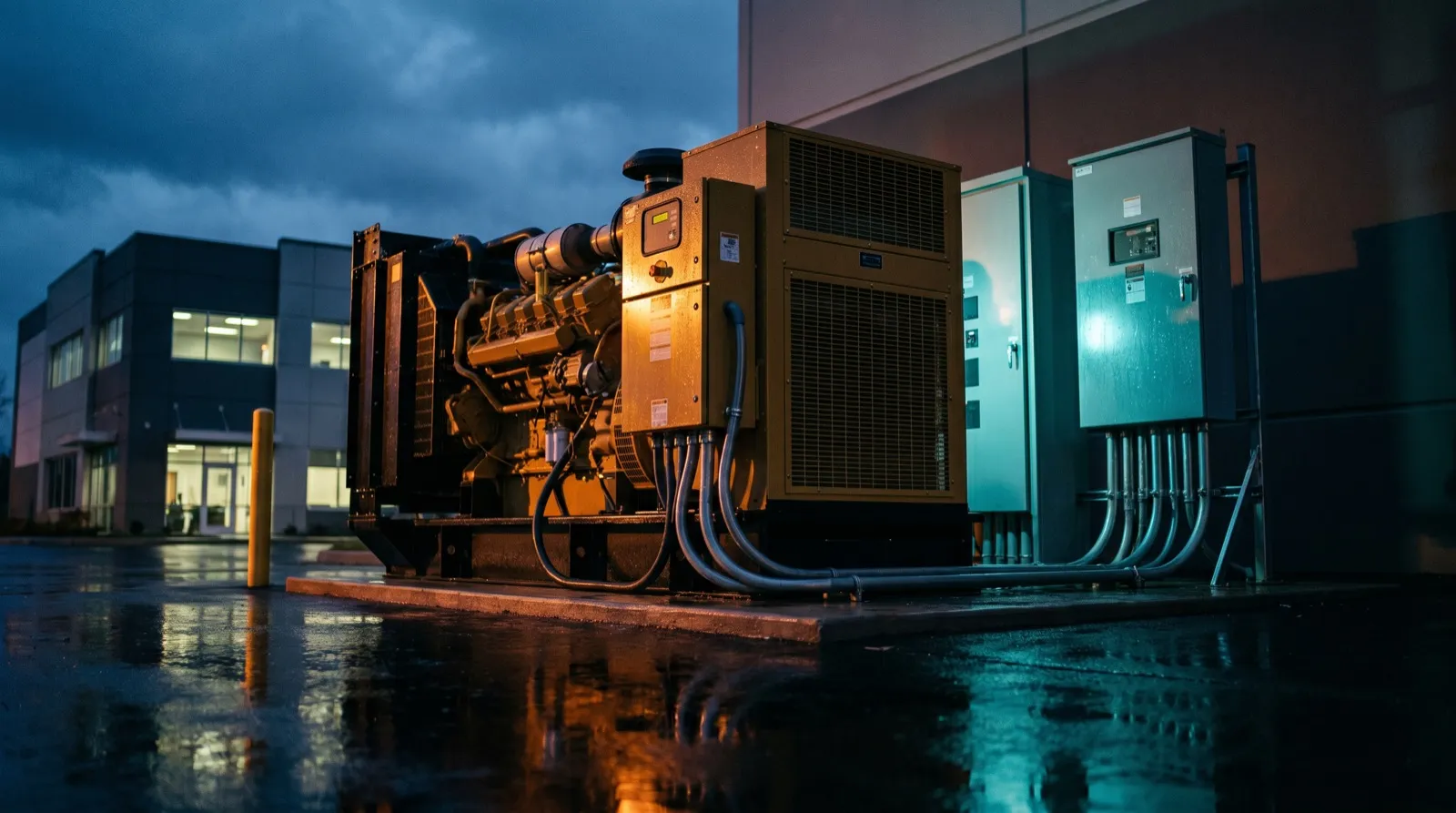
Power outages caused by storm damage, bushfire events, and ageing grid infrastructure are becoming more frequent across Australia. For a residential household, an extended outage means spoiled food, lost heating or cooling, and communication disruption. For a commercial operation, it means lost trading hours, spoiled inventory, and potential data loss. For a medical facility, aged care residence, or water treatment plant, an outage can be life-threatening. A correctly installed standby generator system eliminates this risk — but only if it is sized, installed, and maintained to the standard that ensures it starts when needed.
Generator Sizing and Selection
Undersized generators are the most common failure mode in backup power installations. A generator that is too small for the connected load will either fail to start the largest motor on site (typically the air conditioning compressor or a pump), drop frequency under load causing sensitive electronics to fault, or run continuously above its rated capacity — degrading the engine within months. PrismTech conducts a formal load analysis before specifying any generator: we list every critical load, apply appropriate demand factors, account for motor inrush current (typically 6–8 times the running current for a direct-on-line motor start), and add a minimum 20% headroom for thermal derating in the Australian climate.
Generator fuel type is equally important. Diesel standby generators offer the highest energy density and longest shelf life of stored fuel, and they are the dominant choice for commercial and industrial applications. LPG generators are appropriate where diesel storage is not permitted (basements, enclosed car parks) or where the installation requires a piped fuel supply from an existing LPG reticulation system. Natural gas generators suit premises with firm gas supply and where emission control is a regulatory requirement. PrismTech is experienced with all three fuel types and will recommend the most appropriate option for your site constraints, run-time requirements, and regulatory environment.
Automatic Transfer Switches
An automatic transfer switch (ATS) is the control intelligence that monitors the utility supply, detects a loss-of-supply condition, signals the generator to start, and transfers the electrical load from the grid to the generator — all without human intervention. Transfer time from loss of supply to generator on-load is typically 10 to 30 seconds depending on the engine start configuration and the ATS time delays. For loads that cannot tolerate even a 30-second interruption (server rooms, medical equipment, refrigerated storage), an uninterruptible power supply (UPS) bridges the gap during generator start-up.
PrismTech installs open-transition ATSs for most residential and commercial applications, and closed-transition (make-before-break) ATSs where paralleling the generator with the grid for a brief period is acceptable and where load transfer transients must be minimised. Every ATS installation includes a clearly labelled manual bypass facility so the generator can be connected or disconnected safely during ATS maintenance without dropping the load.
Installation, Commissioning, and Ongoing Maintenance
Generator installations must comply with AS/NZS 3010 (electrical installations: generating sets), the generator manufacturer's installation manual, and any local council requirements regarding noise levels and fuel storage. PrismTech manages the full installation: concrete plinth or anti-vibration mounting, fuel supply pipework coordination with a licensed plumber, exhaust routing, weatherproof enclosure or acoustic housing where required, earthing system to AS/NZS 3000, and ATS wiring. All work is documented and a Certificate of Compliance is issued on completion.
- Formal load analysis and generator sizing to AS/NZS 3010
- Diesel, LPG, and natural gas generator installations
- Automatic transfer switch (ATS) installation and programming
- Manual bypass and maintenance isolator provision
- Anti-vibration mounting, exhaust routing, and acoustic enclosure coordination
- Full load testing and commissioning with recorded test data before handover
Testing and Commissioning
A generator that has never run under full load before a real outage is an untested system. PrismTech commissions every generator installation with a resistive load bank test at 100% rated capacity for a minimum of two hours, recording voltage, frequency, fuel consumption, coolant temperature, and oil pressure throughout the test. This load test identifies any engine, alternator, or control system deficiencies before the installation is handed over. We also verify ATS operation under simulated supply failure conditions, confirming transfer time and return-to-mains transfer behaviour.
Backup power is only valuable if it works when called upon. PrismTech offers annual maintenance contracts that include engine oil and filter service, load bank testing, ATS contact inspection, fuel quality check, and battery replacement on the engine starter battery — the single most common cause of generator start failure in an actual emergency. A well-maintained generator system is an asset; a neglected one is a liability.
Frequently asked questions
How do I know what size generator I need for my home or business?
Generator sizing starts with a load analysis: listing every electrical load you need to run during an outage, applying demand factors, and accounting for motor starting inrush current. PrismTech conducts this assessment before specifying any generator — undersizing is the most common and most damaging mistake in backup power planning.
What is an automatic transfer switch and do I need one?
An ATS monitors your utility supply and automatically starts the generator and transfers your critical loads when grid power is lost — no manual switching required. For homes with medical equipment, businesses with cold storage, or any facility that cannot tolerate unattended outages, an ATS is essential rather than optional.
Can a standby generator power my entire home or just selected circuits?
Both configurations are possible. A whole-of-home generator connects to the main switchboard via the ATS and powers everything. A critical-loads installation runs only selected circuits — refrigeration, lighting, communications, and medical equipment — through a sub-panel, allowing a smaller, less expensive generator to meet actual needs during an outage.
What maintenance does a standby generator require?
At minimum: annual engine oil and filter service, load bank testing at rated capacity, starter battery condition check and replacement every three to four years, ATS contact and control inspection, and fuel quality verification for diesel systems. PrismTech offers annual maintenance contracts covering all of these items with a single visit.