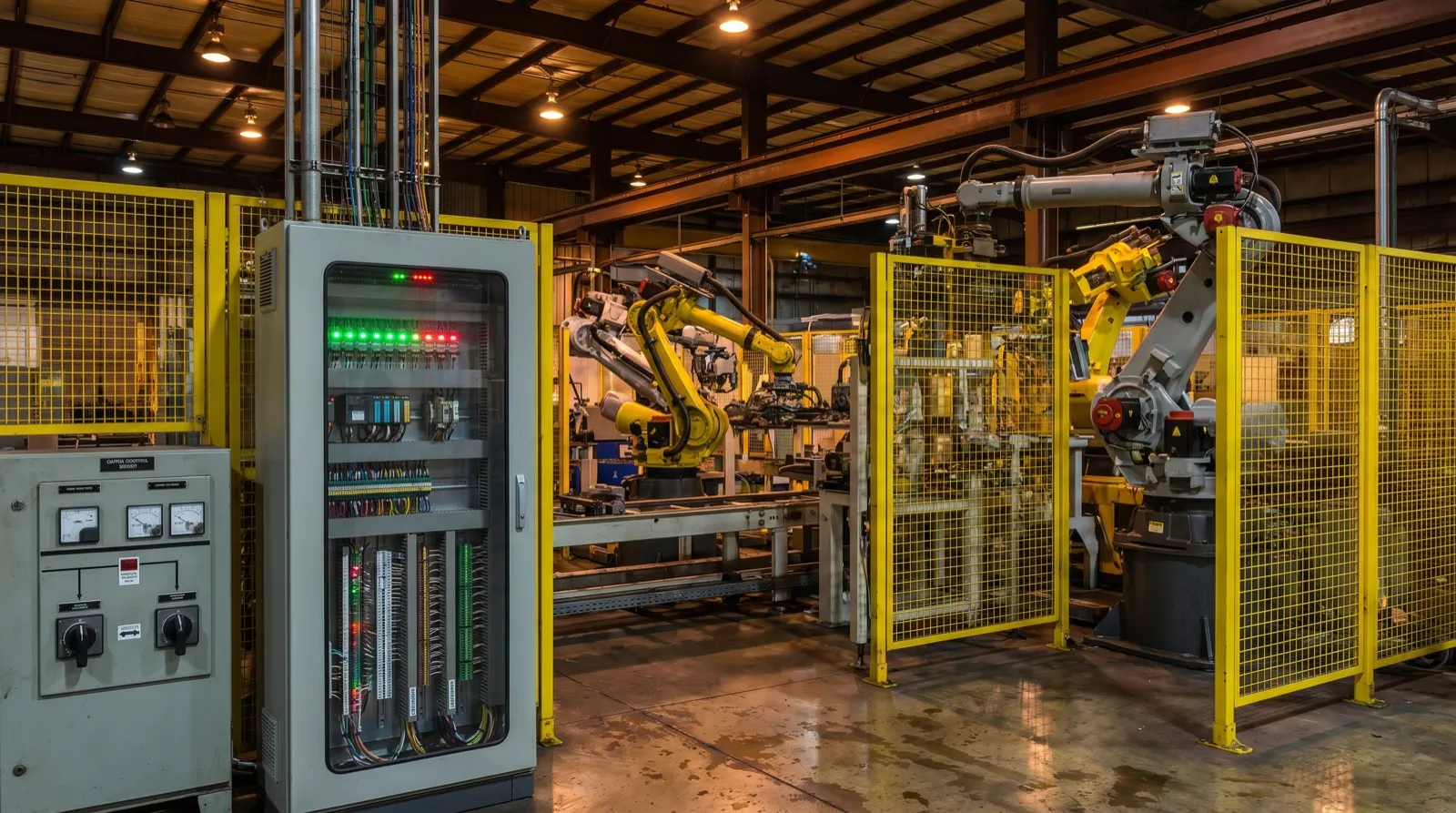
Walk an automated production line and the eye goes to the obvious things — the robot arms, the conveyors, the HMIs glowing on the wall. What you do not see is the reason any of it works: a power and control backbone engineered to feed dozens of motors, drives and controllers without a flicker, a brownout or a harmonic that scrambles a sensor. Automation is only as reliable as the electrical infrastructure beneath it, and that infrastructure is where Ironclad does its heaviest work.
The motor control centre is the heart
At the core of an automated facility sits the motor control centre — a line-up of switchboard cubicles housing the starters, contactors, overloads and variable speed drives that control every motor on the floor. The MCC is where three-phase power is distributed, protected and switched, and where the control system reaches into the physical world. A well-built MCC is modular, clearly labelled, generously rated and laid out so a fault on one drive never takes down the bay beside it. A bad one is a fire risk and a maintenance nightmare.
Clean power or nothing works
Variable speed drives are the engine of modern automation — they let a motor run at exactly the speed the process needs. They also inject harmonic distortion back into the supply, and harmonics are poison to sensitive control electronics. Left unmanaged they overheat neutrals, trip breakers for no obvious reason and corrupt the very signals the automation depends on. We design for it: line reactors, harmonic filters, properly sized neutrals and segregation of clean and dirty power so the controllers get a stable feed while the drives do their work.
- PLC and SCADA integration — the control logic that orchestrates the line, wired and commissioned to talk to every drive and sensor.
- Variable speed drives — precise motor control with harmonic mitigation engineered in, not bolted on.
- Motor control centres — switchgear, starters and protection built as one accountable line-up.
- Control and instrumentation wiring — segregated, shielded and labelled so a fault is found in minutes, not shifts.
- Safety circuits — E-stops, guarding interlocks and safety relays rated to the standard the site has to meet.
A robot is only as smart as its power is clean. We build the half nobody photographs.
Safety is wired in, not added on
An automated line is a collection of machines that can move fast enough to kill. The electrical safety system — emergency stops, guard interlocks, light curtains and the safety relays that tie them together — is not an accessory. It is engineered to a functional safety standard, wired so that a single fault drops the line to a safe state, and tested so that when someone hits the big red button, everything that can hurt them stops. We treat the safety circuit with the same rigour as the power circuit, because the consequences of getting it wrong are not measured in downtime.
Uptime is an electrical decision
When an automated line goes down, the cost is measured in product per minute, and the cause is electrical far more often than mechanical. That is why we build for diagnosis: clear labelling, accessible terminations, monitored circuits and documentation that means the fault is isolated quickly instead of hunted blind. The line that runs reliably for a decade is not the one with the newest robots — it is the one whose power and control backbone was built by people who expected it to be flogged. If you are automating, talk to us before the controls are specified, not after the first unexplained trip.