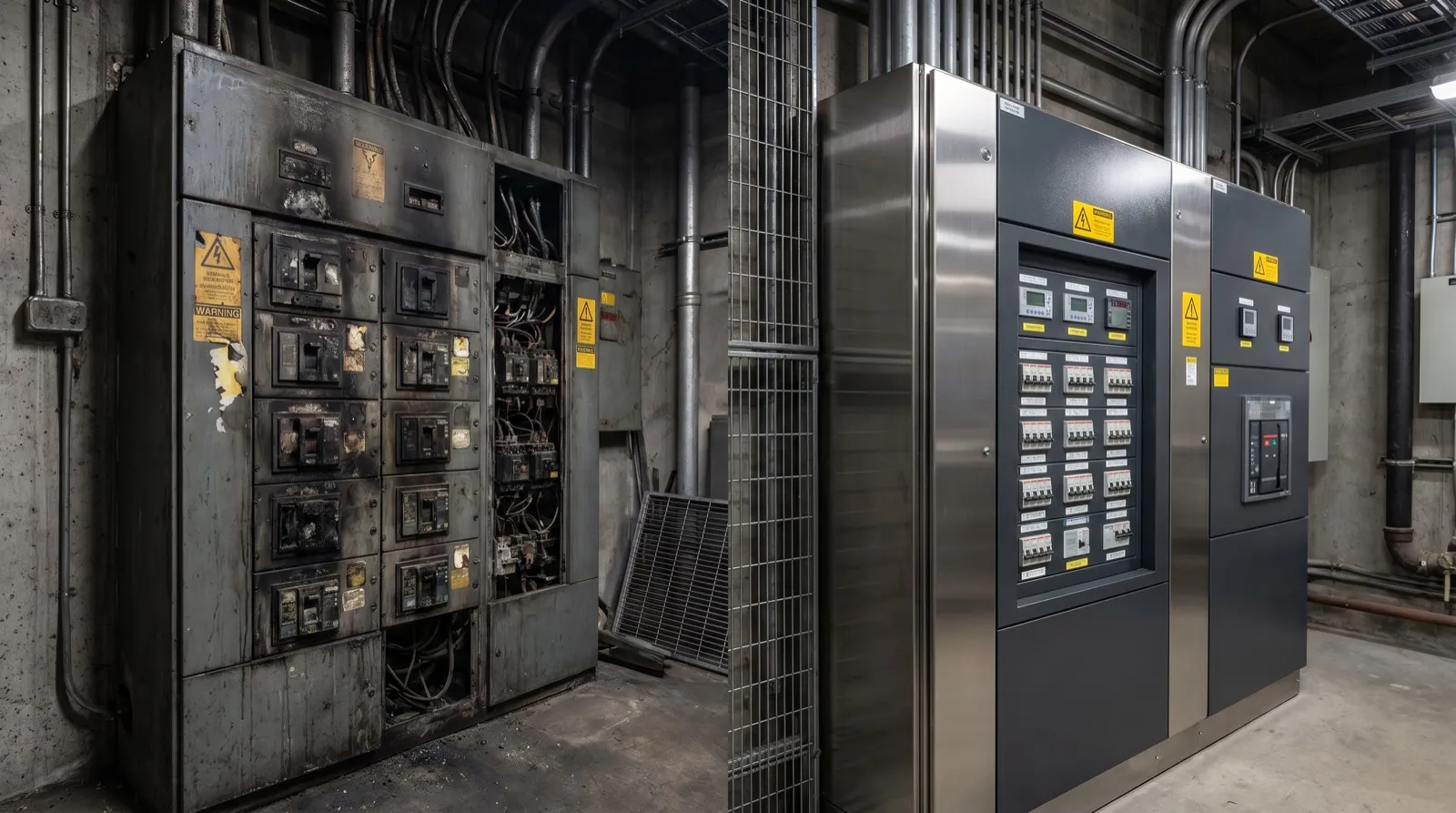
The switchboard is the single most important — and most ignored — piece of electrical infrastructure in any building. It is where the supply is distributed, protected and controlled, and when it is past its life it does not announce the fact politely. It gives warnings, and most of them are missed until the board lets go. Here are the signs we are trained to read on every site inspection, and what they mean.
1. Heat where there should be none
A switchboard panel should be barely warm to the touch. If a door, a cable gland or a breaker feels hot, something inside is dissipating energy it should not be — usually a loose termination or an overloaded circuit. Heat is the precursor to almost every switchboard fire, and a thermal imaging scan finds it before your hand ever would. This is why we scan boards under load rather than trusting a glance.
2. Nuisance tripping
A breaker that trips for no obvious reason is not being fussy — it is telling you something. It may be undersized for a load that has grown, sharing a circuit it was never meant to, or responding to harmonics from drives and electronics the original designer never anticipated. Resetting it is treating the symptom. Finding out why it tripped is the job.
3. Rewireable fuses or no RCD protection
If a board still runs ceramic rewireable fuses, or lacks residual current devices on its circuits, it predates modern safety expectations by decades. RCDs are what stand between a fault and a fatality, and their absence on a working board is not a quirk — it is a liability sitting in the plant room.
- Scorch marks, discolouration or a faint bakelite/burning smell around the board.
- An asbestos-backing panel — common in boards installed before the mid-1980s.
- No main switch isolation, or labelling so vague nobody can safely isolate a circuit.
- A fault rating below the network's available fault level — the gear cannot safely clear a short.
- Boards so full there is no room to add a circuit without cannibalising another.
A switchboard rarely fails loudly the first time. The trick is to act on the quiet warnings, not the smoke.
Upgrade before it chooses the moment for you
A switchboard upgrade is not a like-for-like swap. We assess the available fault level, the real present and future load, the protection coordination and the compliance gap against AS/NZS 3000, then build a board with the rating, the RCD protection and the expansion headroom the site actually needs. Done properly it is a one-time job that outlasts everything around it. Left too long, the board picks the moment to fail — and it is never a convenient one. If any of these signs are familiar, get the board inspected before it forces the conversation.