AS/NZS 3000:2018, colloquially known as the Wiring Rules, is the foundational Australian and New Zealand standard governing the design, installation, and verification of low-voltage electrical installations. Jointly published by Standards Australia and Standards New Zealand, it is referenced as a mandatory technical standard by every state and territory electrical safety regulator in Australia. For property owners, facility managers, and builders, understanding what it requires is not merely academic — non-compliant installations can trigger mandatory rectification orders, void insurance policies, and in the worst cases, cause electrical fires or electrocution. The 2018 edition introduced substantive revisions around arc-fault protection, earthing arrangements, and consumer mains configurations that continue to catch tradespeople and clients off-guard even years after publication.
Scope and Mandatory Application
The standard applies to electrical installations operating at voltages up to 1,000 V AC and 1,500 V DC, covering residential, commercial, and industrial premises. It sets out rules for switchboard construction, cable selection and routing, protection devices, earthing systems, and verification testing before energisation. Crucially, it is a performance-based standard: it specifies outcomes — safe, reliable operation under foreseeable conditions — rather than prescribing a single construction method for every situation. This gives licensed electrical contractors flexibility in design, but it also means that an installation must demonstrably satisfy the underlying performance intent, not merely follow a memorised checklist.
- All new electrical work in Australia must comply with AS/NZS 3000:2018 unless a specific transitional exemption applies.
- Major alterations or additions to existing installations bring the altered portion into compliance with the current edition.
- Certificate of Compliance for Electrical Work (CCEW) must reference the standard and confirm the installation has been tested to its verification requirements.
- Inspectors from state regulators (e.g. Energy Safe Victoria, NSW Fair Trading) can audit any completed installation against this standard at any time.
Earthing, MEN Systems, and Fault Current Paths
Section 5 of AS/NZS 3000:2018 addresses earthing and bonding in detail, and it is arguably the most safety-critical chapter in the document. Australian installations use the Multiple Earthed Neutral (MEN) system, where the neutral and earth conductors are linked at the Main Switchboard (MSB) — and only at the MSB in a standard residential supply. This single link creates the low-impedance fault current path that allows upstream overcurrent devices to operate within their rated clearing time when a fault to earth occurs. Interference with this arrangement — such as bonding neutral and earth at a sub-board or at the point of supply for a caravan park — can raise touch voltages on metallic enclosures to dangerous levels. The 2018 revision tightened the requirements around neutral integrity testing and made it explicit that the MEN link must be verified during commissioning with documented test results.
- MEN link must be established at the MSB supply point — never at sub-boards or downstream distribution boards.
- Main earthing conductor sizing is prescribed by Tables 5.1 and 5.2 relative to the active conductor cross-section.
- Equipotential bonding to water, gas, and structural metalwork must achieve a resistance to earth of less than 0.5 ohms in most configurations.
- Prospective fault current at the MSB must be calculated and matched against device breaking capacity (kA rating) — commonly 6 kA for residential, 10–25 kA for commercial.
Cable Selection: Voltage Drop, Current Capacity, and Thermal Constraints
AS/NZS 3000:2018 relies on the companion standard AS/NZS 3008.1.1:2017 for cable sizing, but it imposes the overarching constraint that voltage drop across any final sub-circuit must not exceed 5% of the nominal supply voltage from the point of supply to the furthest point of utilisation. For a 230 V single-phase circuit, that is a maximum permissible drop of 11.5 V. In practice, for a 32 A circuit running 50 metres in a commercial fitout, a 6 mm² twin-and-earth conductor is often borderline; an engineer may specify 10 mm² to provide headroom and reduce I²R losses. Beyond voltage drop, installation method, grouping factors, and ambient temperature all derate the continuous current-carrying capacity of a cable. A 2.5 mm² TPS cable installed in free air in a conduit with three other loaded circuits at 40°C ambient may be derated to well below its catalogued 24 A rating.
- Maximum voltage drop: 5% from point of supply to load (AS/NZS 3000 Clause 3.6).
- Derating factors for grouping, temperature, and installation method are found in AS/NZS 3008.1.1 Tables 21–30.
- Underground cables must satisfy burial depth requirements and use suitable armoured or conduit-enclosed conductors where mechanical damage is foreseeable.
- High-resistance connections (loose terminals, corroded lugs) cause localised heating that can lead to fire even if the cable itself is correctly sized.
Verification, Testing, and Documentation Requirements
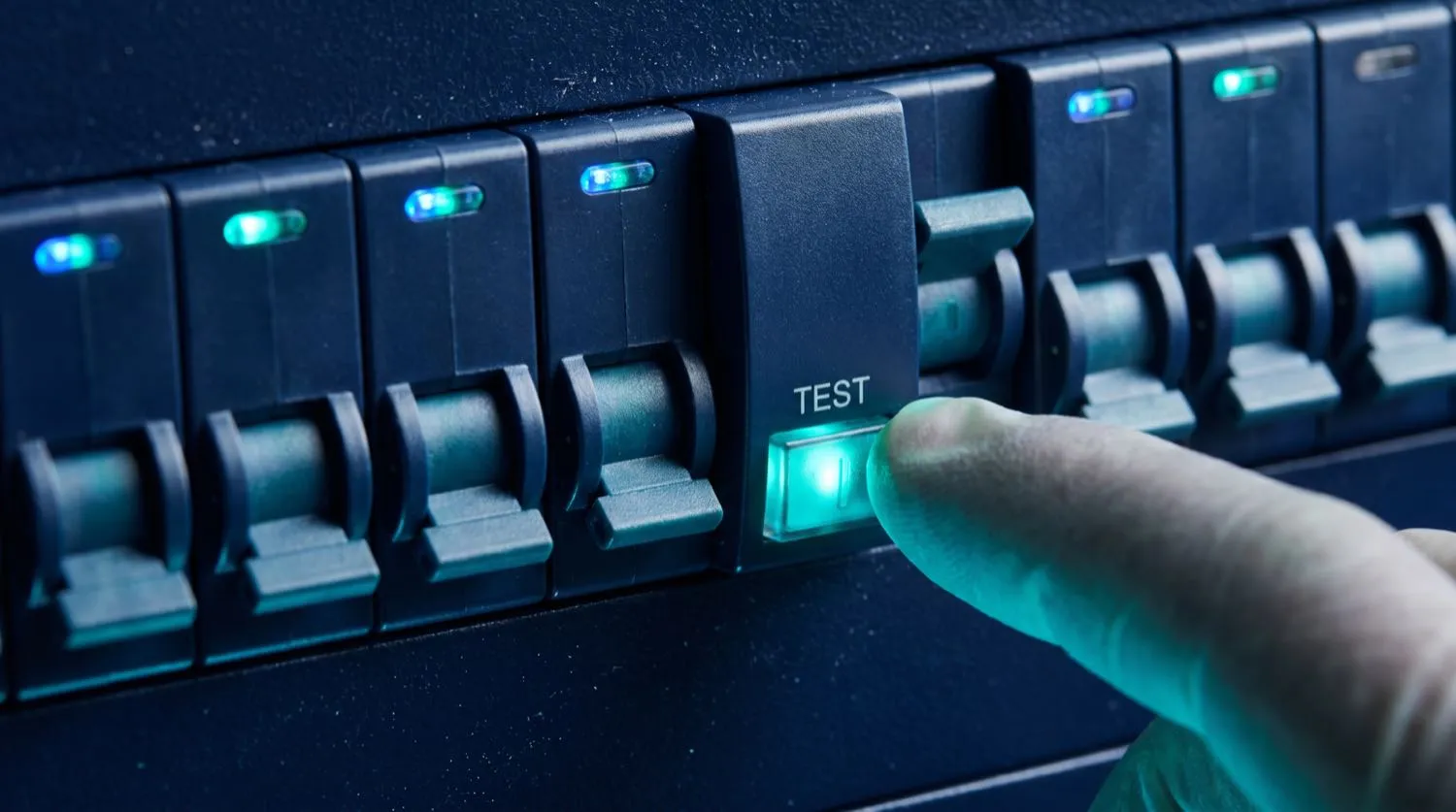
Chapter 8 of the standard mandates a defined sequence of verification tests that must be completed and recorded before an installation is energised or handed over. These are not optional quality checks — they are legal preconditions for issuing a compliant Certificate of Electrical Safety. The required tests include insulation resistance (typically 1 MΩ minimum at 500 V DC for new installations), continuity of protective conductors, polarity verification, earth fault loop impedance measurement, and RCD operating time testing at 30 mA. An RCD must trip in less than 300 milliseconds at rated tripping current (I∆n) and in less than 40 milliseconds at five times rated current (5 × I∆n), consistent with the physiological limits of ventricular fibrillation onset. Without documented test records referenced on the compliance certificate, the installation has no demonstrable legal basis for safety, regardless of how well it was physically constructed.
- Insulation resistance: minimum 1 MΩ for new wiring at 500 V DC test voltage.
- RCD trip time at 1× I∆n (30 mA): must not exceed 300 ms.
- RCD trip time at 5× I∆n (150 mA): must not exceed 40 ms.
- Earth fault loop impedance must be consistent with the clearing time of the upstream overcurrent device.
- All test results must be recorded on the compliance certificate or a separate verification schedule retained by the contractor.
What the 2018 Revision Changed — and Why It Matters
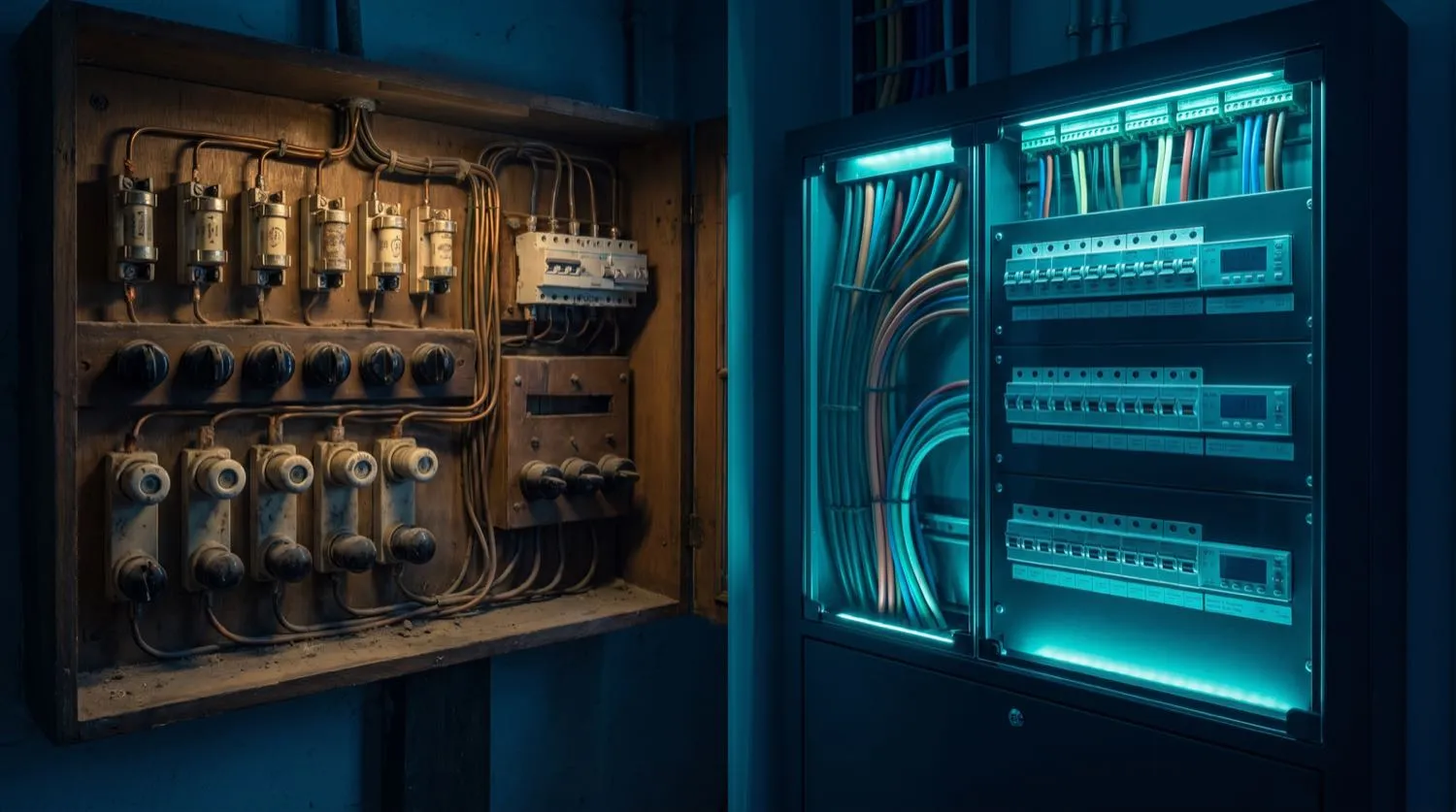
The 2018 edition introduced requirements for arc-fault detection devices (AFDDs) in specific high-risk circuits, expanded the guidance on extra-low voltage (ELV) installations including LED driver circuits, and updated rules around consumer mains and point-of-attachment configurations for underground service entries. It also incorporated more explicit guidance on the selection and co-ordination of residual-current devices with downstream circuit breakers — a topic of practical importance when a single RCD protects multiple final sub-circuits and nuisance tripping is a complaint. For property owners undertaking renovations or additions, the practical consequence is that any licensed electrician engaged for new work must apply the 2018 standard to the work they touch, and any discovered pre-existing non-compliances may trigger a duty-to-report obligation under state electrical safety legislation. Engaging a contractor who understands both the letter and the engineering rationale of the Wiring Rules is not a luxury; it is the minimum standard of due diligence.