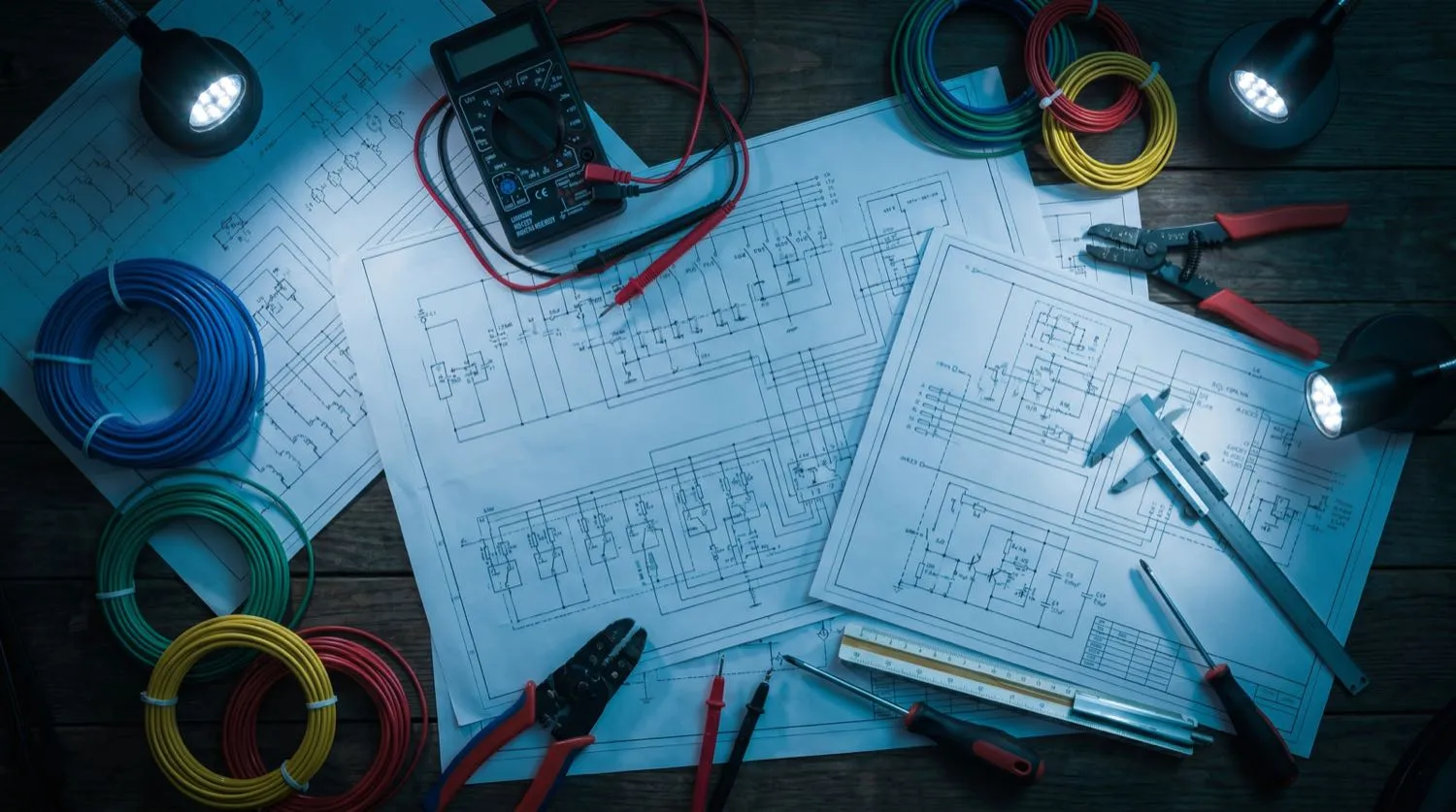
Commercial and industrial electrical installations represent some of the highest-value, highest-risk built assets in any property portfolio. A poorly maintained switchboard in a retail complex or a warehouse can trigger a ground fault that propagates to a catastrophic arc flash event, a situation where the plasma energy released from a fault arc reaches temperatures of 20,000°C and generates a pressure wave that can injure workers and destroy adjacent equipment in milliseconds. Beyond the immediate safety risk, unplanned electrical outages cost Australian businesses an estimated billions of dollars annually in lost production, spoiled inventory, and emergency rectification at weekend overtime rates. The regulatory framework — principally the Work Health and Safety Acts in each state, the Electrical Safety Act in Queensland, and the Energy Safe Victoria Act — imposes a positive duty on persons conducting a business or undertaking (PCBUs) to maintain electrical plant and installations in a safe condition. A structured, documented maintenance program is the most defensible evidence that this duty is being discharged.
The Regulatory Baseline: WHS, ESSR, and the Role of AS/NZS Standards
Australia's harmonised Work Health and Safety Regulations require PCBUs to manage risks associated with electrical work and electrical plant, and to maintain plant in accordance with manufacturer recommendations and relevant industry standards. The Electrical Safety Standards in Work Health and Safety Regulation 2017 (as updated in participating jurisdictions) specifies that electrical equipment used at a workplace must be inspected and tested at defined intervals based on equipment class and environment, with records maintained for inspection by the regulator. AS/NZS 3760:2022 (In-service safety inspection and testing of electrical equipment) is the nominated standard for portable and movable equipment testing, while fixed installation maintenance is governed by AS/NZS 3000:2018 verification requirements and, for switchgear, by AS/NZS 3000 and the manufacturer's installation and maintenance manuals. AS 1851 (Routine service of fire protection systems and equipment) is relevant where electrical systems intersect with fire detection, suppression, or emergency lighting — an area where electrical and fire safety compliance overlap and a gap in either discipline can create a systemic risk.
- WHS regulations: PCBU must manage electrical risks and maintain plant — general duty, not prescriptive interval.
- AS/NZS 3760:2022: defines test-and-tag inspection intervals for portable equipment (Class I and Class II) by environment and equipment type.
- AS/NZS 3000:2018: verification requirements provide the benchmark for what a compliant fixed installation looks like — used by inspectors and maintenance electricians alike.
- AS 1851: routine service intervals for fire-related electrical systems (emergency lighting, fire alarm panels, fan control, stairwell pressurisation).
- Failure to maintain records is often treated by regulators as equivalent to failure to maintain the installation — documentation is not optional.
Switchboard Inspection and Thermal Imaging — Finding Faults Before They Find You
The most cost-effective proactive maintenance activity for commercial electrical installations is periodic infrared thermographic inspection of switchboards, motor control centres (MCCs), and distribution boards. A calibrated thermal imaging camera, operated by a trained thermographer while the installation is under representative load (typically greater than 30% of maximum demand), reveals high-resistance connections as localised hot spots before they progress to insulation failure or arcing. A loose busbar bolt creating 50 milliohms of additional contact resistance at a 200 A bus will dissipate 2 watts of heat per bolt — barely perceptible to a visual inspection, but clearly visible as a 15–25°C temperature differential above ambient on a thermal image. Left unaddressed over twelve months of thermal cycling, the contact resistance will increase as the connection oxidises and the contact pressure relaxes, eventually reaching a condition where arcing begins. Annual thermographic surveys with documented temperature differential records (ΔT against a reference connection of the same type and load) provide both early fault detection and a defensible maintenance trail.
- Commission a thermographic survey annually or after any significant load change to the installation.
- International standards (ISO 18434-1) classify thermal anomalies by ΔT: minor (1–3°C above reference), moderate (4–15°C), severe (>15°C) — act on moderate and severe findings immediately.
- Thermography must be conducted under minimum 30% of maximum load to produce meaningful temperature differentials.
- Document all findings with thermal images, visible-light images, location reference, load at time of survey, and recommended remedial action timeline.
- Combine thermographic surveys with a visual inspection checklist: check cable termination torque, busbar bolt torque to manufacturer specification, enclosure IP rating integrity, and MCB mechanical condition.
Power Factor, Harmonics, and Energy Quality — the Hidden Cost Driver
Many commercial electricity tariffs include a power factor penalty clause that increases the billed demand charge when the site power factor falls below 0.9 lagging. A commercial premise drawing 500 kVA at 0.75 power factor is actually consuming only 375 kW of useful power; the remaining 330 kVAr of reactive current flows uselessly back and forth in the supply cables, heating conductors and transformer windings without doing productive work. A power factor correction (PFC) capacitor bank, sized by a licensed electrical engineer based on logged demand data, can raise the site power factor to above 0.95, reducing the reactive current drawn from the network and eliminating the penalty charge. On a 500 kVA tariff with a $10/kVA/month demand charge, improving power factor from 0.75 to 0.95 reduces the apparent demand from 500 kVA to approximately 395 kVA — a saving of over $12,000 per year before accounting for reduced I²R losses in the building wiring. However, power factor correction must be engineered carefully where harmonic-generating loads (variable speed drives, UPS systems, LED drivers, welding equipment) are present. Capacitor banks can resonate with system inductance at harmonic frequencies, amplifying harmonic currents and causing capacitor failure or nuisance tripping. In harmonic-rich environments, detuned capacitor banks or active harmonic filters are the appropriate solution.
- Log power factor, kVA demand, and total harmonic distortion (THD) over a representative two-week period before designing power factor correction.
- THD exceeding 5% on the voltage waveform at the point of common coupling (PCC) warrants harmonic filtering rather than simple capacitor correction.
- Capacitor banks in harmonic environments must be fitted with detuning reactors — typically tuned to create an anti-resonance point at the 4.7th harmonic to avoid 5th harmonic resonance.
- IEEE 519 and AS 61000 series define harmonic emission limits; exceeding these can trigger network complaints and regulatory notices.
- Active harmonic filters inject equal and opposite harmonic currents, achieving near-unity power factor and THD below 5% simultaneously — the correct solution for VFD-heavy installations.
Test-and-Tag Programs: Frequency, Scope, and Record-Keeping
AS/NZS 3760:2022 establishes testing and inspection intervals for in-service portable electrical equipment based on the environment in which the equipment operates. In a commercial office environment, Class I double-insulated equipment is typically inspected every 12 months. In a construction site or an environment where equipment is subject to physical stress, flexing, or exposure to liquids, the interval reduces to 3 months for leads and portable tools. The visual inspection is the primary defect-detection activity and must not be reduced to a perfunctory glance; the inspector must check the plug, the cable at both entry points, the body of the appliance for damage, and the rating label for suitability for the application. The electrical tests — insulation resistance at 500 V DC, earth continuity for Class I equipment, and RCD trip-time verification for portable RCDs — provide objective, measurable evidence of equipment safety. Records must include equipment identifier, test date, test results, inspector identity, and next test due date. These records are not merely a regulatory formality; they are the evidence that due diligence was exercised if a workplace injury investigation is ever commenced.
- Commercial office (low risk): Class I equipment tested and tagged every 12 months; Class II every 24 months.
- Construction site (high risk): extension leads and portable tools every 3 months.
- Inspection before each use is required for equipment in harsh or variable environments regardless of tag date.
- Records must be retained for at least 7 years in most states — align with your contract document retention policy.
- Out-of-service equipment must be tagged out with a defect label and removed from use immediately upon discovery of damage.
- RCDs used with portable equipment on construction sites: test before first use each day.
Building a Maintenance Schedule That Drives ROI
The economic case for structured electrical maintenance is compelling when presented in terms a CFO recognises. Unplanned electrical outages in commercial and industrial settings have an average cost — including lost production, emergency contractor rates, expedited equipment replacement, and regulatory investigation — that typically exceeds the cost of three to five years of proactive maintenance in a single event. The maintenance program should be structured around a tiered inspection calendar: daily operator checks of visual indicators and trip status; monthly RCD push-button functional tests and critical equipment inspections; quarterly portable equipment test-and-tag in higher-risk environments; annual thermographic surveys, switchboard inspections, earth continuity tests, and insulation resistance measurements; and five-yearly comprehensive installation verification against AS/NZS 3000:2018 for the full fixed installation. Each tier of activity should be documented in a maintenance management system that assigns responsibility, tracks completion, and generates a compliance dashboard visible to senior management. This is not bureaucracy for its own sake — it is the operational architecture that keeps an insurance policy valid, keeps a regulatory investigation from becoming a prosecution, and keeps the lights on.
- Daily: visual check of switchboard indicator lights, emergency lighting charge status, RCD trip status.
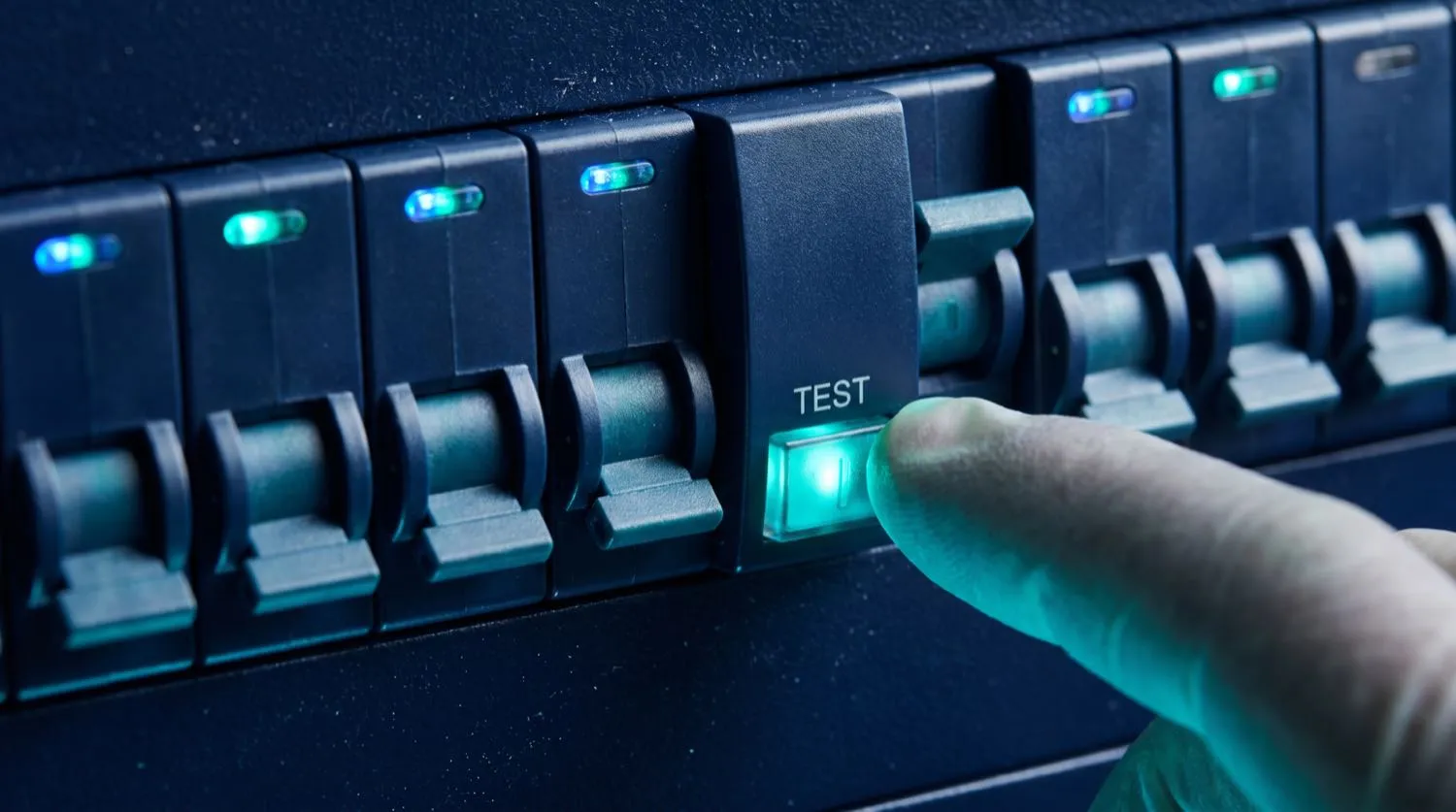
- Monthly: RCD push-button test for all switchboard-mounted devices; log results.
- Quarterly: portable equipment test-and-tag for high-risk environments; high-use extension lead inspection.
- Annually: infrared thermographic survey of all switchboards and MCCs under load; earth electrode resistance test; insulation resistance spot-checks; full portable equipment test-and-tag for office environments.
- Five-yearly: comprehensive fixed installation verification against AS/NZS 3000:2018 including continuity, insulation, loop impedance, and RCD timed-trip tests; update asset register and report to building owner.
- Document everything: an undocumented inspection is a legal liability, not an asset.