Home / Resources / Solar Payback & Savings, Explained Simply
Money · 7 min read
Solar Payback & Savings, Explained Simply
One of the first questions anyone asks about solar is: 'When will it pay for itself?' It's a great question, and the answer is more straightforward than you might think. Let's walk through the numbers together in plain English, so you can form a realistic picture of what solar savings actually look like.
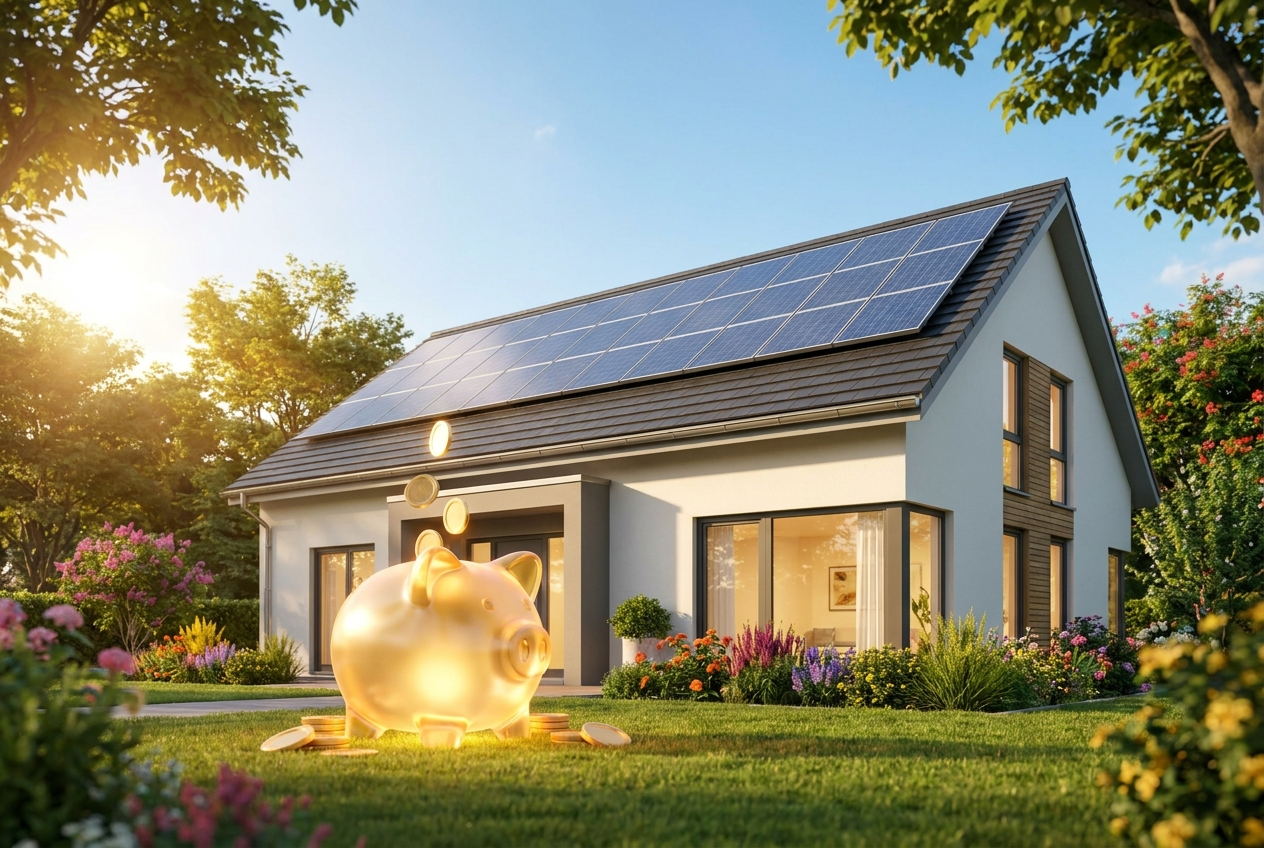
The payback period is the amount of time it takes for your electricity bill savings (and any income from selling excess power back to the grid) to add up to the original cost of your solar system. Once you've hit that point, every subsequent year of solar generation is essentially free electricity — and that can continue for two decades or more.
There's no single payback figure that applies to every home, because so many variables come into play: the size of your system, what you paid for it, how much electricity your household uses, when you use it, your electricity tariff rate, and how much your retailer pays you for surplus power. But we can walk through the key moving parts so you can estimate what might apply to your situation.
The Two Ways Solar Saves You Money
Solar savings come from two sources, and it's important to understand both:
- Self-consumption savings: When you use solar-generated electricity directly (rather than buying it from the grid), you avoid paying your retailer's usage rate. If your electricity costs, say, 25–35 cents per kilowatt-hour from the grid, every kWh you generate and use yourself saves you that amount. This is the most valuable form of solar saving.
- Feed-in tariff income: When your solar system produces more electricity than you're using at that moment, the surplus is exported to the electricity grid. Your retailer pays you a feed-in tariff — a per-kWh rate — for this exported power. Feed-in tariff rates vary by state and retailer and are generally lower than what you pay to buy electricity, typically in the range of 5–12 cents per kWh in many parts of Australia.
- Bill credits: Feed-in earnings appear as credits on your electricity bill, effectively reducing what you owe each quarter.
Because self-consumption savings are worth more than feed-in tariff income, the households that save the most are those who use a good portion of their solar generation directly — during daylight hours.
A Simple Payback Calculation
Let's say a household pays $8,000 for a solar system (after government rebates, which we'll cover in a separate article). Their annual electricity bill savings — combining self-consumption and feed-in tariff income — total $1,600 per year. Dividing the system cost by the annual savings gives a payback period of five years. After five years, the system effectively runs for free for the remainder of its 25-year life. That's a compelling return on investment.
In practice, Australian households with well-matched system sizes are commonly seeing payback periods in the range of four to eight years, though this varies based on the factors mentioned above. Systems installed in sunnier parts of the country — or for households with high daytime electricity use — tend to pay back faster.
What Affects Your Payback Period?
- System cost: The upfront price you pay (after rebates) is the starting point. Larger systems cost more but also generate more.
- System size vs your usage: A system sized to match your actual consumption will maximise savings without exporting large amounts at a low feed-in rate.
- When you use electricity: Using energy during daylight hours means more self-consumption and fewer kWh purchased from the grid.
- Your electricity tariff: Higher grid electricity prices mean every kWh of solar you use yourself saves more money.
- Your location and roof: Sunnier regions and well-oriented roofs generate more electricity, improving your return.
- Feed-in tariff rate: Varies by state and retailer; worth comparing when choosing an energy plan.
Don't Forget: Inflation Protects You
One often-overlooked benefit of solar is that it acts as a hedge against rising electricity prices. Electricity prices in Australia have risen significantly over the past decade, and that trend is expected to continue. Once your solar system is paid off, its ongoing generation cost is effectively zero. As grid electricity prices rise, your solar savings grow — making the investment more valuable over time, not less.
Photon's tip: Ask your installer for a personalised payback estimate based on your actual electricity bills and roof details. A reputable installer will model your expected generation, self-consumption, and savings — giving you a realistic, not optimistic, picture.
After Payback: The 'Free Energy' Years
A quality solar system should continue producing electricity reliably for 25 years or more. If your payback period is five to seven years, that leaves 18 to 20 years of generating electricity with no fuel cost whatsoever. The monetary value of that free electricity — especially accounting for rising grid prices — can be substantial. Many homeowners find their total lifetime savings significantly exceed the original system cost.
Understanding payback is really about understanding value over time. Solar isn't a quick win — it's a long-term investment that rewards patience. And unlike many investments, the return is predictable: the sun comes up every morning.
Let's go solar
Ready to make friends with the sun?
Get a free, no-pressure quote and a clear plan. Photon will walk you through every step — no jargon, promise.