Home / Services / Grid Interconnection
Grid Interconnection
Connecting to the grid without the headache
Grid interconnection is the formal process of safely linking your solar or battery system to the shared electricity network so you can export surplus power, draw power when you need it, and get paid a feed-in tariff for what you send back. Every grid-connected solar installation in Australia requires network distributor approval, and SolBuddy manages the entire process from application to energisation — you just turn the key.
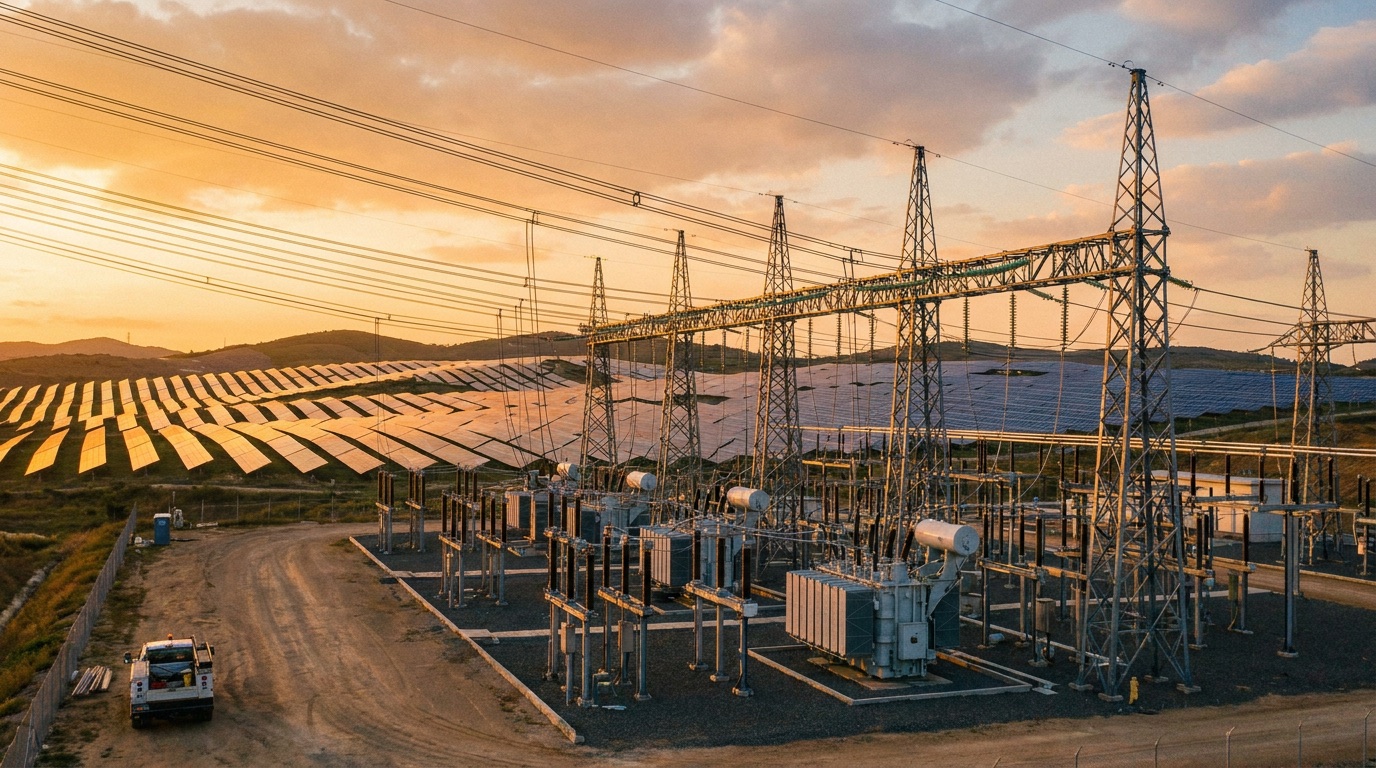
When most people think about going solar they picture panels on the roof and lower electricity bills. What happens in between — the formal process of connecting that solar system to the electricity grid — is less glamorous but absolutely essential. Grid interconnection refers to the set of technical standards, safety checks, and administrative approvals that allow your inverter to interact safely with the shared network that powers your street.
In Australia, the electricity grid is managed by distribution network service providers (DNSPs) — companies like Energex in Queensland, Ausgrid and Endeavour in New South Wales, United Energy in Victoria, and SA Power Networks in South Australia. Before your solar system is switched on, your DNSP must approve the connection to ensure your inverter will not cause voltage disturbances for your neighbours or create safety hazards for linesmen working on the network. SolBuddy knows the requirements of every major DNSP and navigates the process on your behalf.
Why does grid connection need formal approval?
The electricity grid is a finely balanced system. Hundreds of thousands of solar installations across Australia are all feeding power into the same network simultaneously on sunny days. Without technical standards and approvals, inverters could push voltage too high on suburban streets, causing problems for appliances in nearby homes. The AS 4777 standard governs how grid-connected inverters must behave — including voltage and frequency ride-through, anti-islanding protection, and reactive power settings. Every inverter SolBuddy installs is AS 4777 certified, and we configure it to the specific settings required by your local network.
The steps in a typical grid connection
- Design and scoping — SolBuddy assesses your site, sizes the system, and checks your existing meter and switchboard for compatibility.
- Network application — we submit a connection application to your DNSP, including single-line diagrams, inverter datasheets, and a proposed export limit if required.
- DNSP assessment — the network distributor reviews the application and either approves it, requests minor modifications, or (rarely, for very large systems) requires a formal connection agreement.
- Installation and inspection — our accredited installers fit the panels, inverter, and switchboard protection devices. The installation is inspected by a licensed electrical inspector.
- Meter upgrade — your energy retailer replaces your old accumulation meter with a bi-directional smart meter that records both import and export.
- Energisation — once all approvals and inspections are cleared, the system is switched on and your solar export and feed-in tariff billing begins.
Photon's tip: if your street is experiencing voltage problems or your DNSP sets a low export limit, adding a battery with export control can solve the issue — you store excess solar instead of exporting it, and still benefit from every kilowatt-hour your panels produce.
Export limits and what they mean for you
In areas with high solar penetration, DNSPs sometimes impose export limits — a cap on how much power your system can push back into the grid at any one time. A common limit is 5 kW per phase. This sounds restrictive but in practice it affects you less than you might think, because most household solar production is consumed on-site first before any surplus reaches the export limit. SolBuddy models your likely export profile and advises whether a battery or a larger system changes the economics.
Larger systems and embedded network connections
Systems above 30 kW (and sometimes above 10 kW, depending on the DNSP) follow a more involved process, including a formal connection agreement and potentially a power quality study. Commercial and industrial customers, caravan parks, apartment buildings with embedded networks, and rural properties on overhead lines all have specific requirements. SolBuddy has experience across all these scenarios and maintains direct relationships with DNSP technical teams, which means faster resolutions when questions arise.
Your responsibilities once connected
Once your system is approved and running, your obligations are straightforward: keep your inverter firmware updated (SolBuddy can set up automatic updates), ensure the inverter display remains accessible for inspection, and contact us if you plan to add more panels or a battery later — because any material change to the system requires a new or amended connection approval. We make it easy to expand your system over time without bureaucratic tangles.
Grid interconnection is the foundation on which everything else — feed-in tariffs, battery arbitrage, virtual power plants — is built. SolBuddy makes sure that foundation is solid, compliant, and completed without you losing a moment of sleep over paperwork.
Frequently asked questions
How long does grid connection approval take?
For standard residential systems under 10 kW, most DNSPs turn around approvals in two to four weeks. Larger systems or those in constrained network areas can take six to eight weeks. SolBuddy tracks your application and follows up with the DNSP proactively to avoid unnecessary delays.
Do I have to deal with my network distributor directly?
No — SolBuddy lodges the application on your behalf, responds to any DNSP queries, and notifies you once approval is granted. Your main interaction with the network distributor is essentially zero.
What happens if my street already has too much solar and the DNSP won't approve more export?
The DNSP may approve your system with a zero-export or low-export limit. This is becoming more common in some suburbs. In that case, a battery system with smart export control lets you use every kilowatt-hour your panels generate, storing what you cannot immediately use and drawing from the battery at night. SolBuddy will advise if this applies to your area before you commit to any system.
Can I connect a battery to the grid separately from my solar?
Yes. A battery can be connected as a standalone grid-interactive system even without solar panels, although the economics work best when paired with solar. The connection process is similar — DNSP application, inverter compliance, meter upgrade — and SolBuddy handles it the same way.
Let's go solar
Ready to make friends with the sun?
Get a free, no-pressure quote and a clear plan. Photon will walk you through every step — no jargon, promise.