Home / Services / Smart Home Energy
Smart Home Energy
Your home that thinks — and keeps the bills tiny.
Smart home energy automation takes your solar, battery, and appliances and connects them into a single intelligent system. Instead of manually trying to run the dishwasher when the sun is shining, your home does it for you — shifting loads, avoiding peak tariffs, and making the most of every kilowatt your panels generate.
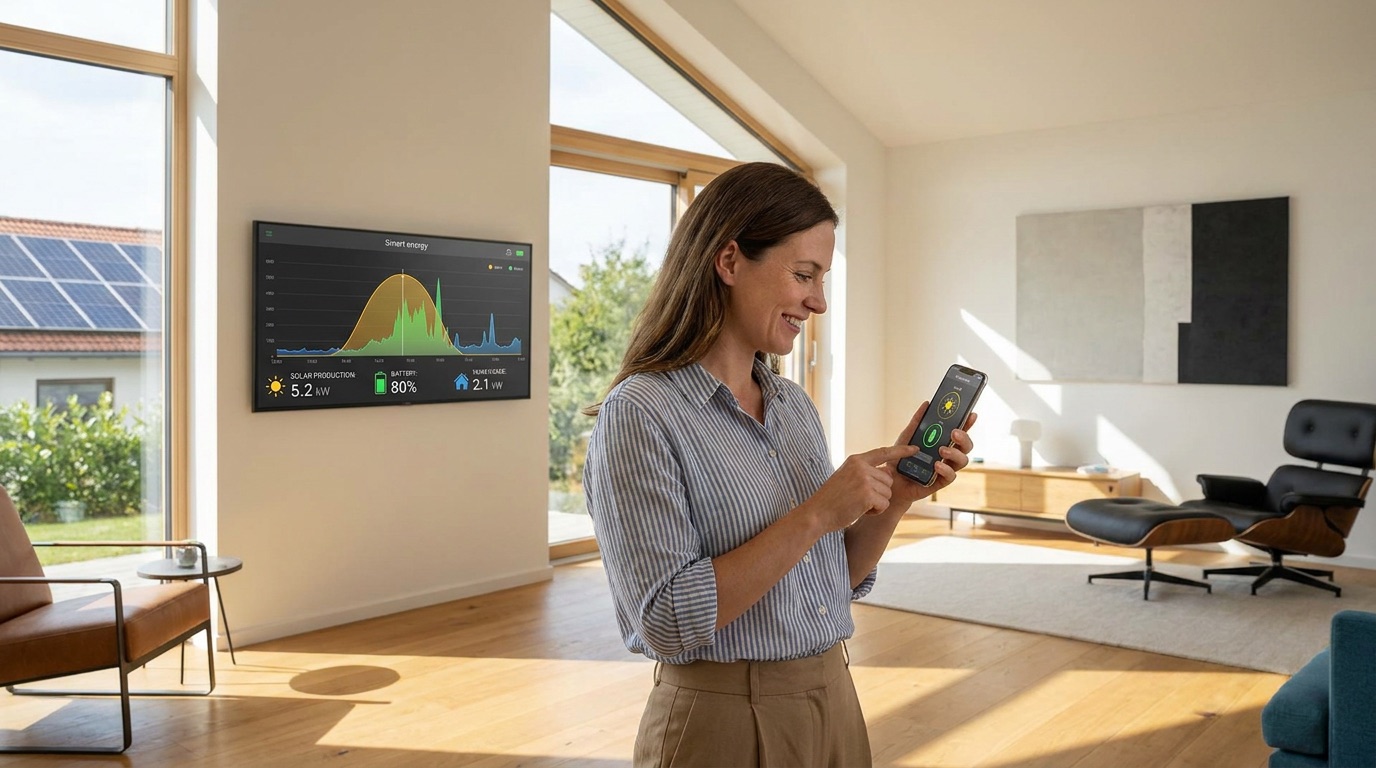
A solar system is a great start. A solar system with a smart energy manager is a different beast entirely. Smart home energy automation uses real-time data — what your panels are generating right now, what your household is consuming, what the grid tariff is at this moment — to make hundreds of small decisions every day that collectively add up to significantly lower bills.
At SolBuddy we design and install smart energy systems built around platforms like SolarEdge Home, SMA Sunny Home Manager, Fronius Solar.web, and third-party home energy managers like Amber Electric's smart shift. We integrate these with your inverter, battery, hot water system, EV charger, and major appliances to create a system that operates with minimal input from you once it is set up.
What does smart home energy actually do?
The core job is load shifting — moving flexible electricity use to times when it costs least or when you have the most solar surplus. Your hot water system is a classic example: it typically runs on a timer that was set at the factory, often drawing power from the grid at 2 am. A smart controller moves that heating cycle to 11 am when your solar is running at peak output and that hot water becomes essentially free.
The same principle applies to pool pumps, dishwashers, washing machines, battery charging schedules, and EV charging. A smart system watches the solar forecast for tomorrow and decides whether to charge your battery today or save the capacity for a low-sun day ahead. It monitors time-of-use tariffs in real time and avoids pulling from the grid during peak rate periods wherever possible.
The money side: what extra savings look like
Households that add smart automation on top of an existing solar-plus-battery system typically find an additional 15 to 30 per cent reduction in their net grid spend. The exact figure depends on your tariff structure, how many shiftable loads you have, and how large your solar and battery system is. Homes on time-of-use tariffs — where peak electricity can cost three to four times the off-peak rate — see the most dramatic gains because there is more price spread to exploit.
- Automatic solar diversion to hot water, pool pump, and EV charging during surplus generation windows
- Time-of-use tariff avoidance — the system draws from battery or solar during peak rate periods
- Dynamic feed-in optimisation that holds battery export until feed-in rates are highest (where applicable)
- Solar generation and weather forecasting integration to pre-charge the battery before a cloudy day
- Real-time dashboards and weekly energy reports so you can see exactly what the system is doing and why
Photon's tip: the biggest single win for most households is moving the hot water system onto solar diversion. It costs very little to set up and can save $300–$600 per year on its own, because heating water is typically the second-largest energy draw in an Australian home.
Smart controls and the apps you actually use
We configure everything so that day-to-day operation is hands-off. You'll have a smartphone app that shows you a live energy flow diagram — panels, battery, home use, grid import/export — and lets you override schedules when needed. If you want to run voice control through Google Home or Amazon Alexa for compatible devices, we can integrate those too. The idea is that the system does the work and you simply check in when you are curious.
What equipment do you need?
The hardware varies depending on what you already have. At minimum, a smart home energy setup requires a compatible inverter with monitoring capability (most inverters installed in the last five years qualify) and a smart meter or energy monitor at your switchboard. From there, we can add smart plugs for individual appliances, a dedicated hot water diverter (such as a Catch Power or iBoost unit), and integration with any existing smart home platform you use.
If you are starting from scratch, we design the whole system — solar panels, battery, smart inverter, energy manager, and any load controllers — as a single integrated package. This gives the cleanest result and the best overall savings because every component is chosen to work together rather than bolted on afterwards.
Installation and setup
A smart energy layer added to an existing solar-battery system is usually a one-day job. We install the energy manager hardware, configure the software, connect to your inverter via the local network, set up your appliance schedules, and walk you through the app before we leave. We also check in at the 30-day mark to review the data and fine-tune any schedules based on how the system has actually been performing. Getting the settings right for your household's real usage pattern is where the extra savings come from.
Frequently asked questions
My solar system is a few years old. Can I still add smart automation?
In most cases yes. The majority of inverters installed since 2018 have Modbus or API connectivity that allows an energy manager to read data and send commands. We'll check compatibility with your specific inverter model during the site assessment — it's one of the first things we look at.
Do I need a battery for smart home automation to work?
No, though a battery unlocks the full benefit. Even without a battery, smart automation can shift shiftable loads like hot water and pool pumping to solar generation windows, which cuts your import bill meaningfully. A battery adds the ability to arbitrage tariff rates and store energy for evening use.
Will the system keep working if my internet goes down?
The local control layer continues to operate on schedules that have already been programmed even without internet. Remote app access and cloud-based forecast integration require internet connectivity, but your hot water will still shift to the solar window and your battery will still charge from panels regardless.
How much does smart home energy automation cost to add?
A hot water diverter and smart meter integration typically costs $400 to $900 installed. A full energy manager with multi-load control and app dashboard sits in the $800 to $2,000 range depending on the platform and the number of controlled circuits. Most systems pay for themselves in one to three years from the additional savings they generate.
Let's go solar
Ready to make friends with the sun?
Get a free, no-pressure quote and a clear plan. Photon will walk you through every step — no jargon, promise.